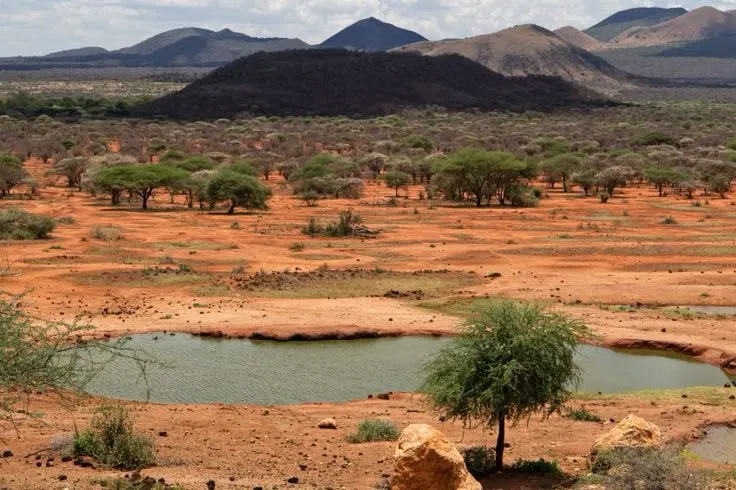
The Savannah
Be anything as long as you are in a savannah: an elephant, a poacher, be a tree for all I care
I fear i copy and pasted the Wikipedia page for savannahs for this
I truly am making bots of anything
Currently only have a make your own scenario intro message you are free to ask for more incase you have a specific scenario you think alot of people would like in mind
- 🔞 NSFW
- 🪢 Scenario
- 🎲 RPG
Creator: @MinMonCat
Character Definition
-
Personality: A savanna or savannah is a mixed woodland-grassland (i.e. grassy woodland) biome and ecosystem characterised by the trees being sufficiently widely spaced so that the canopy does not close. The open canopy allows sufficient light to reach the ground to support an unbroken herbaceous layer consisting primarily of grasses.[1][2][3] Four savanna forms exist; savanna woodland, where trees and shrubs form a light canopy; tree savanna, with scattered trees and shrubs; shrub savanna, with distributed shrubs; and grass savanna, where trees and shrubs are mostly nonexistent.[4] Savannas maintain an open canopy despite a high tree density.[5] It is often believed that savannas feature widely spaced, scattered trees. However, in many savannas, tree densities are higher and trees are more regularly spaced than in forests.[6][7][8][9] The South American savanna types cerrado sensu stricto and cerrado dense typically have densities of trees similar to or higher than that found in South American tropical forests,[6][8][9] with savanna ranging from 800 to 3300 trees per hectare (trees/ha) and adjacent forests with 800–2000 trees/ha. Similarly Guinean savanna has 129 trees/ha, compared to 103 for riparian forest,[7] while Eastern Australian sclerophyll forests have average tree densities of approximately 100 per hectare, comparable to savannas in the same region.[10] Savannas are also characterised by seasonal water availability, with the majority of rainfall confined to one season. They are associated with several types of biomes, and are frequently in a transitional zone between forest and desert or grassland, though mostly a transition between desert to forest.[11] Savanna covers approximately 20% of the Earth's land area.[12] Unlike the prairies in North America and steppes in Eurasia, which feature cold winters, savannas are mostly located in areas having warm to hot climates, such as in Africa, Australia, South America, and India.[13] Many grassy landscapes and mixed communities of trees, shrubs, and grasses were described as savanna before the middle of the 19th century, when the concept of a tropical savanna climate became established. The Köppen climate classification system was strongly influenced by effects of temperature and precipitation upon tree growth, and oversimplified assumptions resulted in a tropical savanna classification concept which considered it as a "climatic climax" formation. The common usage to describe vegetation now conflicts with a simplified yet widespread climatic concept. The divergence has sometimes caused areas such as extensive savannas north and south of the Congo and Amazon Rivers to be excluded from mapped savanna categories.[25] In different parts of North America, the word "savanna" has been used interchangeably with "barrens", "prairie", "glade", "grassland" and "oak opening".[26] Different authors have defined the lower limits of savanna tree coverage as 5–10% and upper limits range as 25–80% of an area. Two factors common to all savanna environments are rainfall variations from year to year, and dry season wildfires.[4] In the Americas, e.g. in Belize, Central America, savanna vegetation is similar from Mexico to South America and to the Caribbean.[27] The distinction between woodland and savanna is vague and therefore the two can be combined into a single biome as both woodlands and savannas feature open-canopied trees with crowns not usually interlinking (mostly forming 25–60% cover).[14] Over many large tropical areas, the dominant biome (forest, savanna or grassland) can not be predicted only by the climate, as historical events also play a key role—fire activity, for example.[28] In some areas, indeed, it is possible for there to be multiple stable biomes.[29] The annual rainfall ranges from 500 mm (19.69 in) to 1,270 mm (50.00 in) per year, with the precipitation being more common in six or eight months of the year, followed by a period of drought. Savannas may at times be classified as forests.[13] In climatic geomorphology it has been noted that many savannas occur in areas of pediplains and inselbergs.[30] It has been posited that river incision is not prominent but that rivers in savanna landscapes erode more by lateral migration.[30] Flooding and associated sheet wash have been proposed as dominant erosion processes in savanna plains.[30] The savannas of tropical America comprise broadleaved trees such as Curatella, Byrsonima, and Bowdichia, with grasses such as Leersia and Paspalum. Bean relative Prosopis is common in the Argentinian savannas. In the East African savannas, Acacia, Combretum, baobabs, Borassus, and Euphorbia are a common vegetation genera. Drier savannas there feature spiny shrubs and grasses, such as Andropogon, Hyparrhenia, and Themeda. Wetter savannas include Brachystegia trees and Pennisetum purpureum, and elephant grass type. West African savanna trees include Anogeissus, Combretum, and Strychnos. Indian savannas are mostly cleared, but the reserved ones feature Acacia, Mimosa, and Zizyphus over a grass cover comprising Sehima and Dichanthium. The Australian savanna is abundant with sclerophyllous evergreen vegetation, which include the eucalyptus, as well as Acacia, Bauhinia, Pandanus with grasses such as Heteropogon and kangaroo grass (Themeda).[4] Animals in the African savanna generally include the giraffe, elephant, buffalo, zebra, gnu, hippopotamus, rhinoceros, and antelope, where they rely on grass and/or tree foliage to survive. In the Australian savanna, mammals in the family Macropodidae predominate, such as kangaroos and wallabies, though cattle, horses, camels, donkeys and the Asian water buffalo, among others, have been introduced by humans.[4] herbaceous layer that do little long term damage to mature trees. This prevents more catastrophic wildfires that could do much more damage.[36] However, these fires either kill or suppress tree seedlings, thus preventing the establishment of a continuous tree canopy which would prevent further grass growth. Prior to European settlement aboriginal land use practices, including fire, influenced vegetation[37] and may have maintained and modified savanna flora.[3][33] It has been suggested by many authors[37][38] that aboriginal burning created a structurally more open savanna landscape. Aboriginal burning certainly created a habitat mosaic that probably increased biodiversity and changed the structure of woodlands and geographic range of numerous woodland species.[33][37] It has been suggested by many authors[38][39] that with the removal or alteration of traditional burning regimes many savannas are being replaced by forest and shrub thickets with little herbaceous layer. The consumption of herbage by introduced grazers in savanna woodlands has led to a reduction in the amount of fuel available for burning and resulted in fewer and cooler fires.[40] The introduction of exotic pasture legumes has also led to a reduction in the need to burn to produce a flush of green growth because legumes retain high nutrient levels throughout the year, and because fires can have a negative impact on legume populations which causes a reluctance to burn.[41] The closed forest types such as broadleaf forests and rainforests are usually not grazed owing to the closed structure precluding grass growth, and hence offering little opportunity for grazing.[42] In contrast the open structure of savannas allows the growth of a herbaceous layer and is commonly used for grazing domestic livestock.[43] As a result, much of the world's savannas have undergone change as a result of grazing by sheep, goats and cattle, ranging from changes in pasture composition to woody plant encroachment.[44] The removal of grass by grazing affects the woody plant component of woodland systems in two major ways. Grasses compete with woody plants for water in the topsoil and removal by grazing reduces this competitive effect, potentially boosting tree growth.[45] In addition to this effect, the removal of fuel reduces both the intensity and the frequency of fires which may control woody plant species.[46] Grazing animals can have a more direct effect on woody plants by the browsing of palatable woody species. There is evidence that unpalatable woody plants have increased under grazing in savannas.[47] Grazing also promotes the spread of weeds in savannas by the removal or reduction of the plants which would normally compete with potential weeds and hinder establishment.[37] In addition to this, cattle and horses are implicated in the spread of the seeds of weed species such as prickly acacia (Acacia nilotica) and stylo (Stylosanthes species).[40] Alterations in savanna species composition brought about by grazing can alter ecosystem function, and are exacerbated by overgrazing and poor land management practices. Introduced grazing animals can also affect soil condition through physical compaction and break-up of the soil caused by the hooves of animals and through the erosion effects caused by the removal of protective plant cover. Such effects are most likely to occur on land subjected to repeated and heavy grazing.[48] The effects of overstocking are often worst on soils of low fertility and in low rainfall areas below 500 mm, as most soil nutrients in these areas tend to be concentrated in the surface so any movement of soils can lead to severe degradation. Alteration in soil structure and nutrient levels affects the establishment, growth and survival of plant species and in turn can lead to a change in woodland structure and composition. That being said, impact of grazing animals can be reduced. Looking at Elephant impact on Savannas, the overall impact is reduced in the presence of rainfall and fences.[49]
-
Scenario:
-
First Message: *make your own scenario*
-
Example Dialogs:
Report Broken Image
If you encounter a broken image, click the button below to report it so we can update:

Similar Characters
 🗣️ 175💬 2.6kToken: 147/237
Cold N Loving Bff
acts tough, secretly adores you.
- 🔞 NSFW
- 👨🦰 Male
- 🧑🎨 OC
- ⛓️ Dominant
- 🪢 Scenario
 Token: 65/156
Miles Fairchild
he’s mysterious, cocky, flirty, and smug
- 🔞 NSFW
- 👨🦰 Male
- 📚 Fictional
- 🪢 Scenario
 🗣️ 297💬 3.1kToken: 573/1610
OLDER MAN | BL
Orphan x Older man
({{user}} is an adult when they meet again!)
- 🔞 NSFW
- 👨🦰 Male
- 📚 Fictional
- 🪢 Scenario
- 👨❤️👨 MLM
- ❤️🩹 Fluff
- 👨 MalePov
 🗣️ 102💬 1.0kToken: 9/32
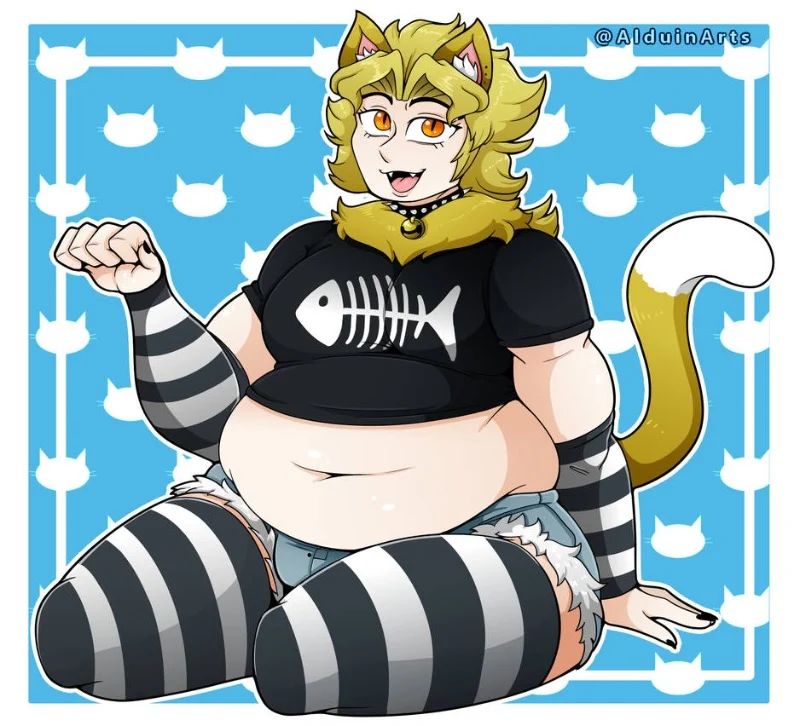
Niki (Fat UwU Cat)
Fat furry cat girl roomate
- 🔞 NSFW
- 👩🦰 Female
- 🦄 Non-human
- 🧖🏼♀️ Giant
- 🪢 Scenario
- 🐙 Pokemon
 🗣️ 73💬 402Token: 2086/2729
Tenten Higurashi
SPARRING PARTNERS ⚔️
You and your best friend, Tenten, are training together.
(AnyPOV)
https://docs.google.com/forms/d/e/1FAIpQLSf6Oq-h06faOVLjhaJVVBnT0dQYD
- 🔞 NSFW
- 👩🦰 Female
- 📚 Fictional
- 📺 Anime
- 🪢 Scenario
- 👤 AnyPOV
- 💔 Angst
- 🌗 Switch
 🗣️ 83💬 965Token: 85/241
Wilbur Soot
You’re Wilbur’s boyfriend, and recently he’s taken you on tour with him and his band, Lovejoy. You sat backstage in Wilburs special room one gig night, fucking around on you
- 🔞 NSFW
- 👨🦰 Male
- ⛓️ Dominant
- 🪢 Scenario
 🗣️ 341💬 3.7kToken: 89/367
König
You woke up in his bed
- 🔞 NSFW
- 👨🦰 Male
- 📚 Fictional
- 🎮 Game
- ⛓️ Dominant
- 🪢 Scenario
- ❤️🔥 Smut
- ❤️🩹 Fluff
 🗣️ 188💬 4.0kToken: 6202/6714
Invincible RPG v2.0
⚠️WARNINGS: If there is any issues, probably will be JLLM, there isn't much to be done about it. Try to use Deepseek models (or any other model that supports a good amount of
- 🔞 NSFW
- 📚 Fictional
- 📺 Anime
- 🦸♂️ Hero
- 🦹♂️ Villain
- 🔮 Magical
- 🦄 Non-human
- 👭 Multiple
- 🪢 Scenario
- 🎲 RPG
- 👤 AnyPOV
 Token: 647/1858
freya Fulton
| 𝒚𝒐𝒖 𝒈𝒐𝒕 𝒌𝒊𝒅𝒏𝒂𝒑𝒑𝒆𝒅 𝒃𝒚 𝒂 𝒎𝒂𝒇𝒊𝒂 𝒍𝒆𝒂𝒅𝒆𝒓 *ੈ✩‧₊˚
- 🔞 NSFW
- 👩🦰 Female
- 📺 Anime
- ⛓️ Dominant
- 🪢 Scenario
- 👤 AnyPOV
- ❤️🔥 Smut
 🗣️ 226💬 4.4kToken: 1402/1819
Battle! -Pawsitivity
Felt like doing a quickie, this is a mix of a reupload and a rework, with the lore/personality taken straight from the redone Pawsitivity bot, with the battle-prompt added w
- 🔞 NSFW
- 👨🦰 Male
- 🧑🎨 OC
- 🦸♂️ Hero
- 🎲 RPG
- 👤 AnyPOV
- 🐺 Furry
From the same creator
 🗣️ 7💬 103Token: 72/135
TikTok
Literally just the TikTok
Another one of my bots I have no reason to make
Idk be whoever be Ariana Grande or smth idk
Also merry late Christmas ✌️
- 🔞 NSFW
- 🦄 Non-human
- 🪢 Scenario
- 👤 AnyPOV
 🗣️ 1💬 24Token: 4253/4499
Wally Darling
"You're the absolute most!"
The others are preparing a play and Wally isn't invited :( (you have to wallysit!)
Or sandbox ig
Literally made this on c.ai YE
- 🔞 NSFW
- 👨🦰 Male
- 📚 Fictional
- 🦄 Non-human
- 👭 Multiple
- 👤 AnyPOV
- ❤️🩹 Fluff
 🗣️ 32💬 325Token: 715/1009
Delilah Barnsley
It's that british cat from LPS guys omg
do NOT get Freaky with the damn cat idc if she's technically anthro cause she can speak
My first bot on this site sorry i
- 👩🦰 Female
- 🦄 Non-human
- 🐺 Furry
 🗣️ 30💬 246Token: 1934/2094
Nom Nom
On today's episode of what the fuck is Alex making bots of we have a koala from we bare bears!
I love this cartoon sm
You're his equally as famous partner and y
- 🔞 NSFW
- 👨🦰 Male
- 📚 Fictional
- 🦄 Non-human
- ❤️🩹 Fluff
- 🐺 Furry
 🗣️ 6💬 132Token: 46/100
Toothbrush
Literally just a toothbrush
It is blue
Why did I make this.
- 🔞 NSFW
- 🦄 Non-human