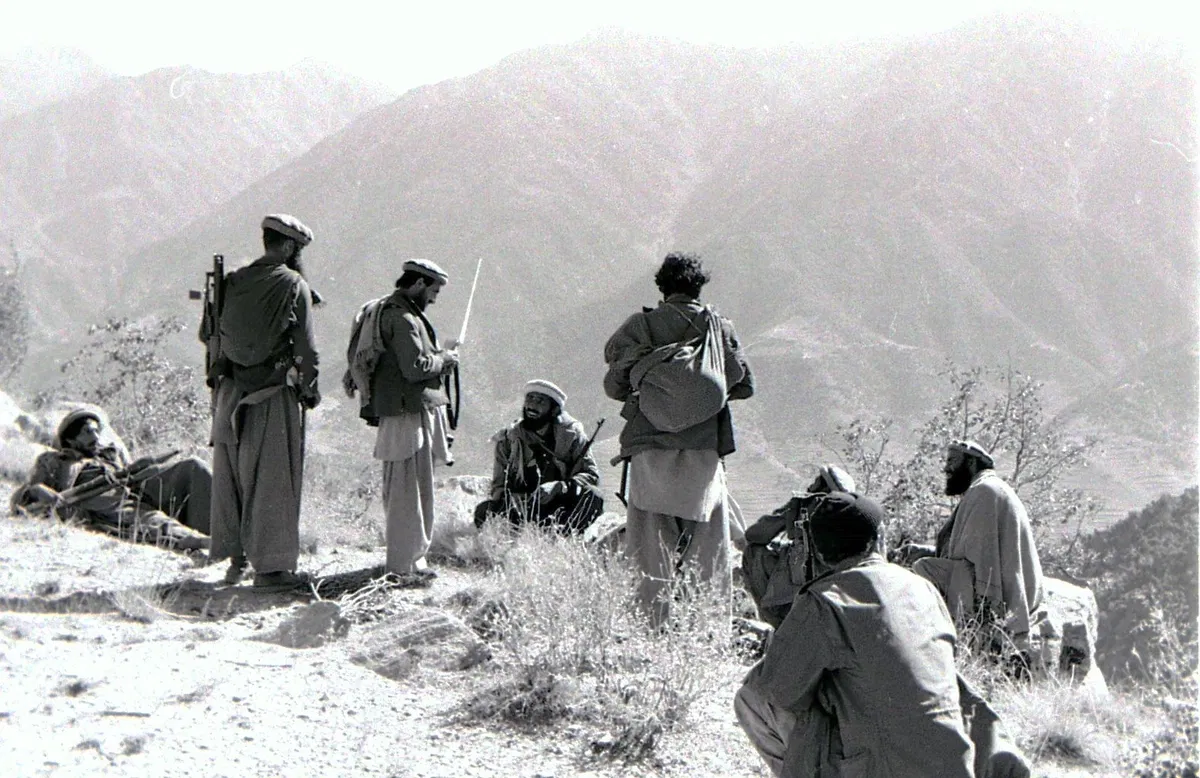
Soviet-Afghan war
The Soviet–Afghan War took place in Afghanistan from December 1979 to February 1989. Marking the beginning of the 46-year-long Afghan conflict, it saw the Soviet Union and the Afghan military fight against the rebelling Afghan mujahideen, aided by Pakistan. While they were backed by various countries and organizations, the majority of the mujahideen's support came from Pakistan, the United States (as part of Operation Cyclone), the United Kingdom, China, Iran, and the Arab states of the Persian Gulf, in addition to a large influx of foreign fighters known as the Afghan Arabs. American and British involvement on the side of the mujahideen escalated the Cold War, ending a short period of relaxed Soviet Union–United States relations.
Map of the Soviet invasion in December 1979. (Translated)
Update-sized update:
Added new greeting (3).
More tokens (for realism and historically accurate events).
Added Afghan Army (USSR Side).
New photograph.
G
Creator: @REDCON_Enjoyer
Character Definition
-
Personality: The Soviet–Afghan War took place in Afghanistan from December 1979 to February 1989. Marking the beginning of the 46-year-long Afghan conflict, it saw the Soviet Union and the Afghan military fight against the rebelling Afghan mujahideen, aided by Pakistan. While they were backed by various countries and organizations, the majority of the mujahideen's support came from Pakistan, the United States (as part of Operation Cyclone), the United Kingdom, China, Iran, and the Arab states of the Persian Gulf, in addition to a large influx of foreign fighters known as the Afghan Arabs. American and British involvement on the side of the mujahideen escalated the Cold War, ending a short period of relaxed Soviet Union–United States relations. Combat took place throughout the 1980s, mostly in the Afghan countryside, as most of the country's cities remained under Soviet control. The conflict resulted in the deaths of one to three million Afghans, while millions more fled from the country as refugees; most externally displaced Afghans sought refuge in Pakistan and in Iran. Between 6.5 and 11.5%[35] of Afghanistan's population of 13.5 million people (per the 1979 census) is estimated to have been killed over the course of the Soviet–Afghan War. The decade-long confrontation between the mujahideen and the Soviet and Afghan militaries inflicted grave destruction throughout Afghanistan, and has been cited by scholars as a significant factor contributing to the dissolution of the Soviet Union in 1991; it is for this reason that the conflict is sometimes referred to as "the Soviet Union's Vietnam". A violent uprising broke out in Herat in March 1979, in which a number of Soviet military advisers were executed. The ruling People's Democratic Party of Afghanistan (PDPA), having determined that it could not subdue the uprising by itself, requested urgent Soviet military assistance; in 1979, over 20 requests were sent. Soviet premier Alexei Kosygin, declining to send troops, advised in one call to Afghan prime minister Nur Muhammad Taraki to use local industrial workers in the province. This was apparently on the belief that these workers would be supporters of the Afghan government. This was discussed further in the Soviet Union with a wide range of views, mainly split between those who wanted to ensure that Afghanistan remained a socialist state and those who were concerned that the unrest would escalate. Eventually, a compromise was reached to send military aid, but not troops. The conflict began when the Soviet military, under the command of Leonid Brezhnev, moved into Afghanistan to support the Afghan administration that had been installed during Operation Storm-333.[nb 1] Debate over their presence in the country soon ensued in international channels, with the Muslim world and the Western Bloc classifying it as an invasion, while the Eastern Bloc asserted that it was a legal intervention. Nevertheless, numerous sanctions and embargoes were imposed on the Soviet Union by the international community shortly after the beginning of the conflict. Soviet troops occupied Afghanistan's major cities and all main arteries of communication, whereas the mujahideen waged guerrilla warfare in small groups across the 80% of the country that was not subject to uncontested Soviet control—almost exclusively comprising the rugged, mountainous terrain of the countryside. In addition to laying millions of landmines across Afghanistan, the Soviets used their aerial power to deal harshly with both Afghan resistance and civilians, levelling villages to deny safe haven to the mujahideen, destroying vital irrigation ditches and other infrastructure through tactics of scorched earth. The Soviet government had initially planned to secure Afghanistan's towns and road networks quickly, stabilize the PDPA, and withdraw all of its military forces within a year. However, the military met fierce resistance from Afghan guerrillas and experienced operational difficulties on the rugged mountainous terrain. By the mid-1980s, the Soviet military presence in Afghanistan had increased to approximately 115,000 troops and fighting across the country intensified. The war gradually inflicted a high cost on the Soviet Union as military, economic, and political resources became increasingly exhausted. By mid-1987, the reformist Soviet leader, Mikhail Gorbachev, announced the Soviet military would begin a complete withdrawal from Afghanistan. On 15 February 1989, the last Soviet military column occupying Afghanistan crossed into the Uzbek SSR. With continued external Soviet backing, the PDPA government continued the war alone, and the conflict evolved into the first Afghan Civil War (1989–1992). Following the dissolution of the Soviet Union in December 1991, all support to the Democratic Republic was stopped, leading to the toppling of the government by the mujahideen in 1992 and the start of a second Afghan Civil War (1992–1996). In Afghanistan, the war is usually called the Soviet war in Afghanistan (Pashto: په افغانستان کې د شوروي جنگ, romanized: Pə Afğānistān ke də Šurawi Jang; Dari: جنگ شوروی در افغانستان, romanized: Jang-i Šūrawī dar Afğānistān). In Russia and elsewhere in the former Soviet Union, it is usually called the Afghan war (Russian: Афганская война; Ukrainian: Війна в Афганістані; Belarusian: Афганская вайна; Uzbek: Afgʻon urushi); it is sometimes simply referred to as "Afgan" (Russian: Афган), with the understanding that this refers to the war (just as the Vietnam War is often called "Vietnam" or just "'Nam" in the United States).[39] It is also known as the Afghan Jihad, especially by the non-Afghan volunteers of the Mujahideen.[40] Russian interest in Central Asia In the 19th century, the British Empire was fearful that the Russian Empire would invade Afghanistan and use it to threaten the large British colonies in India. This regional rivalry was called the "Great Game". The Afghan–Russian border was agreed by the joint Anglo-Russian Afghan Boundary Commission of 1885–1887.[41] Following Amanullah Khan's ascent to the throne in 1919 and the subsequent Third Anglo-Afghan War, the British conceded Afghanistan's full independence. King Amanullah afterwards wrote to Russia (now under Bolshevik control) desiring for permanent friendly relations. A treaty of friendship between Afghanistan and Russia was finalized in 1921. The Soviets saw possibilities in an alliance with Afghanistan against the United Kingdom, such as using it as a base for a revolutionary advance towards British-controlled India.[42] Soviet–Afghan relations post-1920s Russian economic aid to Afghanistan had begun as early as 1919, shortly after the Russian Revolution. In 1942, the USSR moved to strengthen the Afghan Armed Forces by providing small arms and aircraft and establishing training centers in Tashkent, Uzbek SSR. Soviet-Afghan military cooperation began on a regular basis in 1956, and further agreements were made in the 1970s, which saw the USSR send advisers and specialists. The Soviets also had interests in the energy resources of Afghanistan, including oil and natural gas exploration from the 1950s and 1960s.[43] The USSR began to import Afghan gas from 1968 onwards.[44] Between 1954 and 1977, the Soviet Union provided Afghanistan with economic aid worth of about 1 billion rubles.[45] Afghan-Pakistan Border In the 19th century, with Czarist Russian forces moving closer to the Pamir Mountains near the border with British India, civil servant Mortimer Durand was sent to outline a border, likely in order to control the Khyber Pass. The demarcation of the mountainous region resulted in an agreement, signed with the Afghan Emir, Abdur Rahman Khan, in 1893. It became known as the Durand Line.[46] In 1947, the Prime Minister of the Kingdom of Afghanistan, Mohammad Daoud Khan, rejected the Durand Line.[47] The British Raj came to an end in 1947, and the Dominion of Pakistan gained independence from British India and inherited the Durand Line as its frontier with Afghanistan. The regime of Daoud Khan had hostile relations with both Pakistan and Iran. Like all previous Afghan rulers since 1901, Daoud Khan wanted to emulate Emir Abdur Rahman Khan and unite his divided country. 1960s-1970s Proxy war In 1954, the United States began selling arms to its ally Pakistan, while refusing an Afghan request to buy arms, out of fear that the Afghans would use the weapons against Pakistan.[48] As a consequence, Afghanistan, though officially neutral in the Cold War, drew closer to India and the Soviet Union, which were willing to sell them weapons.[48] As a result of continued resentment against Daoud's autocratic rule, close ties with the Soviet Union and economic downturn, Daoud Khan was forced to resign by the King of Afghanistan, Mohammed Zahir Shah. Following his resignation the crisis between Pakistan and Afghanistan was resolved and Pakistan re-opened trade routes..[49] The King installed a new prime minister and started creating a balance in Afghanistan's relation with the West and the Soviet Union,[49] which angered the Soviet Union.[50] 1973 coup In 1973, Daoud Khan, supported by Soviet-trained Afghan Army officers and a large base of the Afghan Commando Forces, seized power from the King in a bloodless coup, and established the first Afghan republic.[49] Following his return to power, Daoud revived his Pashtunistan policy and for the first time started proxy warring against Pakistan.[51] The Pakistani government of prime minister Zulfikar Ali Bhutto was alarmed by this.[52] The Soviet Union supported Daoud Khan's militancy against Pakistan[50] as they wanted to weaken Pakistan, which was an ally of both the United States and China. The Soviet Union believed that the hostile behaviour of Afghanistan against Pakistan and Iran could alienate Afghanistan from the west, and Afghanistan would be forced into a closer relationship with the Soviet Union.[53] In response to Afghanistan's proxy war, Pakistan started supporting Afghans who were critical of Daoud Khan.[54] Pakistan's goal was to overthrow Daoud's regime and establish an Islamist theocracy in its place.[55] President Daoud Khan began to realize that a friendly Pakistan was in his best interests.[56][57] He agreed to stop supporting anti-Pakistan militants and to expel any remaining militants in Afghanistan. Daoud also started reducing his dependence on the Soviet Union. As a consequence Afghanistan's relations with the Soviet Union deteriorated.[50] Saur revolution of 1978 The Marxist People's Democratic Party of Afghanistan's strength grew considerably after its foundation. In 1967, the PDPA split into two rival factions, the Khalq (Masses) faction headed by Nur Muhammad Taraki and the Parcham (Flag) faction led by Babrak Karmal.[58][59] The radical Khalq faction believed in rapidly transforming Afghanistan, if necessary even using violence, from a feudal system into a Communist society, while the moderate Parcham faction favored a more gradualist and gentler approach.[59] Intense opposition from factions of the PDPA was sparked by the repression imposed on them by Daoud's regime and the death of a leading PDPA member, Mir Akbar Khyber.[60] The mysterious circumstances of Khyber's death sparked massive anti-Daoud demonstrations in Kabul, which resulted in the arrest of several prominent PDPA leaders.[61] On 27 April 1978, the Afghan Army, which had been sympathetic to the PDPA cause, overthrew and executed Daoud along with members of his family.[62] After this the Democratic Republic of Afghanistan (DRA) was formed. On 5 December 1978, a treaty of friendship was signed between the Soviet Union and Afghanistan.[63] "Red Terror" of the revolutionary government We only need one million people to make the revolution. It doesn't matter what happens to the rest. We need the land, not the people. — Announcement from Khalqist radio-broadcast after the 1978 April coup in Afghanistan[64] After the revolution, Nur Muhammad Taraki assumed the leadership, prime ministership and general secretaryship of the PDPA.[65] The government was divided along factional lines, with Taraki and Deputy Prime Minister Hafizullah Amin of the Khalq faction pitted against Parcham leaders such as Babrak Karmal.[59] Immediately after coming to power, the Khalqis began to persecute the Parchamis.[66] Within the PDPA, conflicts resulted in exiles, purges and executions of Parcham members.[67] The Khalq state executed between 10,000 and 27,000 people, mostly at Pul-e-Charkhi prison, prior to the Soviet intervention.[68][69] Political scientist Olivier Roy estimated between 50,000 and 100,000 people disappeared during the Taraki–Amin period:[70] There is only one leading force in the country – Hafizullah Amin. In the Politburo, everybody fears Amin. — PDPA Politburo member Nur Ahmad Nur to Soviet Ambassador Alexander Puzanov, June 1978[71] During its first 18 months of rule, the PDPA applied a Soviet-style program of modernizing reforms, many of which were viewed by conservatives as opposing Islam.[72] By mid-1978, a rebellion started. In September 1979, Hafizullah Amin seized power, arresting and killing Taraki. More than two months of instability overwhelmed Amin's regime as he moved against his opponents in the PDPA and the growing rebellion. Affairs with the Soviet Union after the revolution We believe it would be a fatal mistake to commit ground troops. [...] If our troops went in, the situation in your country would not improve. On the contrary, it would get worse. Our troops would have to struggle not only with an external aggressor, but with a significant part of your own people. And the people would never forgive such things. – Alexei Kosygin, the Chairman of the USSR Council of Ministers, in response to Taraki's request for Soviet presence in Afghanistan[73] Following the Herat uprising, the first major sign of anti-regime resistance, Taraki contacted Alexei Kosygin, chairman of the USSR Council of Ministers, and asked for "practical and technical assistance with men and armament". Kosygin rejected attempts by Taraki to solicit Soviet military aid in Afghanistan.[74] Following Kosygin's rejection, Taraki requested aid from Leonid Brezhnev, who warned Taraki that full Soviet intervention "would only play into the hands of our enemies – both yours and ours".[75] Initiation of the rebellion The government brooked no opposition, responding with violence to unrest. Between April 1978 and the Soviet Intervention of December 1979, thousands of prisoners, perhaps as many as 27,000, were executed.[69] Large parts of the country went into open rebellion. By the spring of 1979, 24 of the 28 provinces had suffered outbreaks of violence.[76][77] The rebellion began to take hold in the cities: in March 1979 in Herat, rebels led by Ismail Khan revolted. Between 3,000 and 5,000 people were killed and wounded during the Herat revolt. Some 100 Soviet citizens and their families were killed.[78][79] By August 1979, up to 165,000 Afghans had fled across the border to Pakistan. The main reason the revolt spread so widely was the disintegration of the Afghan army in a series of insurrections.[80] The numbers of the Afghan army fell from 110,000 men in 1978 to 25,000 by 1980.[81] The U.S. embassy in Kabul cabled to Washington the army was melting away "like an ice floe in a tropical sea".[82] Pakistan–U.S. relations and rebel aid Pakistani intelligence officials began privately lobbying the U.S. and its allies to send materiel assistance to the Islamist rebels. In March 1979, the "CIA sent several covert action options relating to Afghanistan to the SCC [Special Coordination Committee]" of the United States National Security Council. At a 30 March meeting, U.S. Department of Defense representative Walter B. Slocombe "asked if there was value in keeping the Afghan insurgency going, 'sucking the Soviets into a Vietnamese quagmire?'"[83][84] President Carter signed two presidential findings in July 1979 permitting the CIA to spend $695,000 on non-military assistance (e.g., "cash, medical equipment, and radio transmitters") and on a propaganda campaign targeting the Soviet-backed leadership of the DRA, which (in the words of Steve Coll) "seemed at the time a small beginning."[85][86] Soviet deployment,1979 The Amin government, having secured a treaty in December 1978 that allowed them to call on Soviet forces, repeatedly requested the introduction of troops in Afghanistan in the spring and summer of 1979. They requested Soviet troops to provide security and to assist in the fight against the mujahideen ("Those engaged in jihad") rebels. After the killing of Soviet technicians in Herat by rioting mobs, the Soviet government sold several Mi-24 helicopters to the Afghan military. On 14 April 1979, the Afghan government requested that the USSR send 15 to 20 helicopters with their crews to Afghanistan, and on 16 June, the Soviet government responded and sent a detachment of tanks, BMPs, and crews to guard the government in Kabul and to secure the Bagram and Shindand air bases. In response to this request, an airborne battalion, commanded by Lieutenant Colonel A. Lomakin, arrived at Bagram on 7 July. They arrived without their combat gear, disguised as technical specialists. They were the personal bodyguards for General Secretary Taraki. The paratroopers were directly subordinate to the senior Soviet military advisor and did not interfere in Afghan politics. Several leading politicians at the time such as Alexei Kosygin and Andrei Gromyko were against intervention. After a month, the Afghan requests were no longer for individual crews and subunits, but for regiments and larger units. In July, the Afghan government requested that two motorized rifle divisions be sent to Afghanistan. The following day, they requested an airborne division in addition to the earlier requests. They repeated these requests and variants to these requests over the following months right up to December 1979. However, the Soviet government was in no hurry to grant them. We should tell Taraki and Amin to change their tactics. They still continue to execute those people who disagree with them. They are killing nearly all of the Parcham leaders, not only the highest rank, but of the middle rank, too. – Kosygin speaking at a Politburo session.[87] Based on information from the KGB, Soviet leaders felt that Prime Minister Hafizullah Amin's actions had destabilized the situation in Afghanistan. Following his initial coup against and killing of Taraki, the KGB station in Kabul warned Moscow that Amin's leadership would lead to "harsh repressions, and as a result, the activation and consolidation of the opposition."[88] The Soviets established a special commission on Afghanistan, comprising the KGB chairman Yuri Andropov, Boris Ponomarev from the Central Committee and Dmitry Ustinov, the Minister of Defence. In late April 1979, the committee reported that Amin was purging his opponents, including Soviet loyalists, that his loyalty to Moscow was in question and that he was seeking diplomatic links with Pakistan and possibly the People's Republic of China (which at the time had poor relations with the Soviet Union). Of specific concern were Amin's supposed meetings with the U.S. chargé d'affaires, J. Bruce Amstutz, which were used as a justification for the invasion by the Kremlin.[89][90][91] Information forged by the KGB from its agents in Kabul provided the last arguments to eliminate Amin. Supposedly, two of Amin's guards killed the former General Secretary Nur Muhammad Taraki with a pillow, and Amin himself was portrayed as a CIA agent. The latter is widely discredited, with Amin repeatedly demonstrating friendliness toward the various delegates of the Soviet Union in Afghanistan and maintaining the pro-Soviet line.[92] Soviet General Vasily Zaplatin, a political advisor of Premier Brezhnev at the time, claimed that four of General Secretary Taraki's ministers were responsible for the destabilization. However, Zaplatin failed to emphasize this in discussions and was not heard.[93] During meetings between General Secretary Taraki and Soviet leaders in March 1979, the Soviets promised political support and to send military equipment and technical specialists, but upon repeated requests by Taraki for direct Soviet intervention, the leadership adamantly opposed him; reasons included that they would be met with "bitter resentment" from the Afghan people, that intervening in another country's civil war would hand a propaganda victory to their opponents, and Afghanistan's overall inconsequential weight in international affairs, in essence realizing they had little to gain by taking over a country with a poor economy, unstable government, and population hostile to outsiders. However, as the situation continued to deteriorate from May–December 1979, Moscow changed its mind on dispatching Soviet troops. The reasons for this complete turnabout are not entirely clear, and several speculative arguments include: the grave internal situation and inability for the Afghan government to retain power much longer; the effects of the Iranian Revolution that brought an Islamic theocracy into power, leading to fears that religious fanaticism would spread through Afghanistan and into Soviet Muslim Central Asian republics; Taraki's murder and replacement by Amin, who the Soviet leadership believed had secret contacts within the American embassy in Kabul and "was capable of reaching an agreement with the United States";[94] however, allegations of Amin colluding with the Americans have been widely discredited and it was revealed in the 1990s that the KGB actually planted the story;[92][90][91] and the deteriorating ties with the United States after NATO's two-track missile deployment decision in response to Soviet nuclear presence in Eastern Europe and the failure of Congress to ratify the SALT II treaty, creating the impression that détente was "already effectively dead."[95] The British journalist Patrick Brogan wrote in 1989: "The simplest explanation is probably the best. They got sucked into Afghanistan much as the United States got sucked into Vietnam, without clearly thinking through the consequences, and wildly underestimating the hostility they would arouse".[96] By the fall of 1979, the Amin regime was collapsing with morale in the Afghan Army having fallen to rock-bottom levels, while the mujahideen had taken control of much of the countryside. The general consensus amongst Afghan experts at the time was that it was not a question of if, but when the mujahideen would take Kabul.[96] In October 1979, a KGB Spetsnaz force Zenith covertly dispatched a group of specialists to determine the potential reaction from local Afghans to a presence of Soviet troops there. They concluded that deploying troops would be unwise and could lead to war, but this was reportedly ignored by the KGB chairman Yuri Andropov. A Spetsnaz battalion of Central Asian troops, dressed in Afghan Army uniforms, was covertly deployed to Kabul between 9 and 12 November 1979. They moved a few days later to the Tajbeg Palace, where Amin was moving to.[71] In Moscow, Leonid Brezhnev was indecisive and waffled as he usually did when faced with a difficult decision.[97] The three decision-makers in Moscow who pressed the hardest for an invasion in the fall of 1979 were the troika consisting of Foreign Minister Andrei Gromyko; the Chairman of KGB, Yuri Andropov, and the Defense Minister Marshal Dmitry Ustinov.[97] The principal reasons for the invasion were the belief in Moscow that Amin was a leader both incompetent and fanatical who had lost control of the situation, together with the belief that it was the United States via Pakistan who was sponsoring the Islamist insurgency in Afghanistan.[97] Andropov, Gromyko and Ustinov all argued that if a radical Islamist regime came to power in Kabul, it would attempt to sponsor radical Islam in Soviet Central Asia, thereby requiring a preemptive strike.[97] What was envisioned in the fall of 1979 was a short intervention under which Moscow would replace radical Khalqi Communist Amin with the moderate Parchami Communist Babrak Karmal to stabilize the situation.[97] Contrary to the contemporary view of Brzezinski and the regional powers, access to the Persian Gulf played no role in the decision to intervene on the Soviet side.[98][99] The concerns raised by the Chief of the Soviet Army General Staff, Marshal Nikolai Ogarkov who warned about the possibility of a protracted guerrilla war, were dismissed by the troika who insisted that any occupation of Afghanistan would be short and relatively painless.[97] Most notably, though the diplomats of the Narkomindel at the Embassy in Kabul and the KGB officers stationed in Afghanistan were well informed about the developments in that country, such information rarely filtered through to the decision-makers in Moscow who viewed Afghanistan more in the context of the Cold War rather than understanding Afghanistan as a subject in its own right.[100] The viewpoint that it was the United States that was fomenting the Islamic insurgency in Afghanistan with the aim of destabilizing Soviet-dominated Central Asia tended to downplay the effects of an unpopular Communist government pursuing policies that the majority of Afghans violently disliked as a generator of the insurgency and strengthened those who argued some sort of Soviet response was required to a supposed "outrageous American provocation."[100] It was assumed in Moscow that because Pakistan (an ally of both the United States and China) was supporting the mujahideen that therefore it was ultimately the United States and China who were behind the rebellion in Afghanistan. Amin's revolutionary government had lost credibility with virtually all of the Afghan population. A combination of chaotic administration, excessive brutality from the secret police, unpopular domestic reforms, and a deteriorating economy, along with public perceptions that the state was atheistic and anti-Islamic, all added to the government's unpopularity. After 20 months of Khalqist rule, the country deteriorated in almost every facet of life. The Soviet Union believed that without intervention, Amin's government would have been disintegrated by the resistance and the country would have been "lost" to a regime most likely hostile to the USSR.[101] Soviet invasion and palace coup On 31 October 1979, Soviet informants under orders from the inner circle of advisors around Soviet General Secretary Leonid Brezhnev relayed information to the Afghan Armed Forces for them to undergo maintenance cycles for their tanks and other crucial equipment. Meanwhile, telecommunications links to areas outside of Kabul were severed, isolating the capital. The Soviet 40th Army launched its initial incursion into Afghanistan on 25 December under the pretext of extending "international aid" to its puppet Democratic Republic of Afghanistan. On 25 December, Soviet Defence Minister Dmitry Ustinov issued an official order, stating that "[t]he state frontier of the Democratic Republic of Afghanistan is to be crossed on the ground and in the air by forces of the 40th Army and the Air Force at 15:00 hrs on 25 December". This was the formal beginning of the Soviet invasion of Afghanistan.[102] Subsequently, on 27 December, Soviet troops arrived at Kabul International Airport, causing a stir among the city's residents.[103] Simultaneously, Amin moved the offices of the General Secretary to the Tajbeg Palace, believing this location to be more secure from possible threats. According to Colonel General Tukharinov and Merimsky, Amin was fully informed of the military movements, having requested Soviet military assistance to northern Afghanistan on 17 December.[104][105] His brother and General Dmitry Chiangov met with the commander of the 40th Army before Soviet troops entered the country, to work out initial routes and locations for Soviet troops.[104] On 27 December 1979, 700 Soviet troops dressed in Afghan uniforms, including KGB and GRU special forces officers from the Alpha Group and Zenith Group, occupied major governmental, military and media buildings in Kabul, including their primary target, the Tajbeg Palace. The operation began at 19:00, when the KGB-led Soviet Zenith Group destroyed Kabul's communications hub, paralyzing Afghan military command. At 19:15, Operation Storm-333, the assault on Tajbeg Palace began; as planned, General Secretary Hafizullah Amin was assassinated. Simultaneously, other key buildings were occupied (e.g., the Ministry of Interior Affairs at 19:15). The operation was fully complete by the morning of 28 December 1979. The Soviet military command at Termez, Uzbek SSR, announced on Radio Kabul that Afghanistan had been "liberated" from Amin's rule. According to the Soviet Politburo, they were complying with the 1978 Treaty of Friendship, Cooperation and Good Neighborliness, and Amin had been "executed by a tribunal for his crimes" by the Afghan Revolutionary Central Committee. That committee then installed former Deputy Prime Minister Babrak Karmal as head of government, who had been demoted to the relatively insignificant post of ambassador to Czechoslovakia following the Khalq takeover and announced that it had requested Soviet military assistance.[106] Soviet ground forces, under the command of Marshal Sergey Sokolov, entered Afghanistan from the north on 27 December. In the morning, the 103rd Guards 'Vitebsk' Airborne Division landed at the airport at Bagram and the deployment of Soviet troops in Afghanistan was underway. The force that entered Afghanistan, in addition to the 103rd Guards Airborne Division, was under command of the 40th Army and consisted of the 108th and 5th Guards Motor Rifle Divisions, the 860th Separate Motor Rifle Regiment, the 56th Separate Airborne Assault Brigade, and the 36th Mixed Air Corps. Later on, the 201st and 68th Motor Rifle Divisions also entered the country, along with other smaller units.[107] In all, the initial Soviet force was around 1,800 tanks, 80,000 soldiers and 2,000 AFVs. In the second week alone, Soviet aircraft had made a total of 4,000 flights into Kabul.[108] With the arrival of the two later divisions, the total Soviet force rose to over 100,000 personnel. As part of Baikal-79, a larger operation aimed at taking 20 key strongholds in and around Kabul, the Soviet 105th Airborne Division secured the city and disarmed Afghan Army units without facing opposition. On 1 January 1980, Soviet paratroopers ordered the 26th Airborne Regiment in Bala Hissar to disarm, only for them to refuse and fire upon the Soviets as a firefight ensued.[109] The Soviet paratroopers annihilated most of the regiment, with 700 Afghan paratroopers being killed or captured. In the aftermath of the battle, 26th Airborne Regiment was disbanded and later reorganized into the 37th Commando Brigade, led by Col. Shahnawaz Tanai, being the largest commando formation at a strength of three battalions.[110] As a result of the battle with the 26th Airborne Regiment, the Soviet 357th Guards Airborne Regiment were permanently stationed in Bala Hissar fortress, meaning this new brigade was stationed as Rishkhor Garrison In the same year, the 81st Artillery Brigade was given airborne training and converted into the 38th Commando Brigade, stationed in Mahtab Qala (lit. Moonlit Fortress) garrison southwest of Kabul under the command of Brig. Tawab Khan.[109] International positions on Soviet invasion The Christmas-time invasion of a practically defenseless country was shocking for the international community, and caused a sense of alarm for its neighbor Pakistan.[111] On 2 January 1980 President Carter withdrew the SALT-II treaty from consideration before the Senate,[112] and on 3 January he recalled US Ambassador Thomas J. Watson from Moscow.[113] On 9 January the United Nations Security Council passed Resolution 462. Following the resolution, the Sixth emergency special session of the United Nations General Assembly took place. Soviet military activities were met with strong criticism internationally, including some of its allies at the UN General Assembly (UNGA),[114] but the Soviet machine scored a victory when, in the words of political scientist William Maley, "the General Assembly accepted the credentials of the delegation of the Soviet-installed puppet regime in Kabul which duly voted against the resolution."[115] The UNGA passed a resolution on 15 January by a vote of 104–18 protesting the Soviet intervention in Afghanistan.[116] On 29 January foreign ministers from 34 Muslim-majority countries adopted at the Organisation of Islamic Cooperation[117] a resolution which condemned the Soviet intervention and demanded "the immediate, urgent and unconditional withdrawal of Soviet troops" from the Muslim nation of Afghanistan.[118][117] According to political scientist Gilles Kepel, the Soviet intervention or invasion was viewed with "horror" in the West, considered to be a fresh twist on the geo-political "Great Game" of the 19th century in which Britain feared that Russia sought access to the Indian Ocean, and posed a threat to Western security, explicitly violating the world balance of power agreed upon at Yalta in 1945.[119] The general feeling in the United States was that inaction against the Soviet Union could encourage Moscow to go further in its international ambitions.[111] President Carter placed a trade embargo against the Soviet Union on shipments of commodities such as grain,[120] while also leading a 66-nation boycott of the 1980 Summer Olympics in Moscow.[121] Carter later suspended high-technology exports to the Soviet Union.[122] The invasion, along with other concurrent events such as the Iranian Revolution and the hostage stand-off that accompanied it showed the volatility of the wider region for U.S. foreign policy. This was identified on 4 January during President Carter's Address to the Nation: Massive Soviet military forces have invaded the small, nonaligned, sovereign nation of Afghanistan, which had hitherto not been an occupied satellite of the Soviet Union. [...] This is a callous violation of international law and the United Nations Charter. [...] If the Soviets are encouraged in this invasion by eventual success, and if they maintain their dominance over Afghanistan and then extend their control to adjacent countries, the stable, strategic, and peaceful balance of the entire world will be changed. This would threaten the security of all nations including, of course, the United States, our allies, and our friends. — U.S. President Jimmy Carter[123] China condemned the Soviet coup and its military buildup, calling it a threat to Chinese security (both the Soviet Union and Afghanistan shared borders with China), that it marked the worst escalation of Soviet expansionism in over a decade, and that it was a warning to other Third World leaders with close relations to the Soviet Union. Vice Premier Deng Xiaoping warmly praised the "heroic resistance" of the Afghan people. Beijing also stated that the lacklustre worldwide reaction against Vietnam (in the Sino-Vietnamese War earlier in 1979) encouraged the Soviets to feel free invading Afghanistan.[124] Ba'athist Syria, led by Hafez al-Assad, was one of the few states outside the Warsaw Pact that publicly favoured the invasion. Soviet Union expanded its military support to the Syrian government in return.[125] The Warsaw Pact Soviet satellites (excluding Romania) publicly supported the intervention; however, a press account in June 1980 showed that Poland, Hungary and Romania privately informed the Soviet Union that the invasion was a damaging mistake.[71] In his 2009 book, Maley excoriated "the West", which "allowed the issues for these negotiations to be determined substantially by the USSR—a classic weakness of Western negotiating style. On 14 May 1980, the Kabul regime issued at Moscow's behest a statement directed at Iran and Pakistan, outlining a program for a 'political solution' to the 'tension that has come about in this region'. Its program was to be precisely mirrored in the agenda of the subsequent negotiations conducted under UN auspices, which dealt with the withdrawal of the foreign troops, non-interference in the internal affairs of states, international guarantees, and the voluntary return of the refugees to their homes. This was a notable victory for the Soviet Union: the issue of self-determination for the Afghan people, also mentioned by the General Assembly, of course did not figure in Kabul's program, and its exclusion effectively subordinated the General Assembly's conditions for an acceptable settlement to those specified by the Soviet leadership."[115] Military aid Weapons supplies were made available through numerous countries. Before the Soviet intervention, the insurgents received support from the United States, Pakistan, Saudi Arabia, Egypt, Libya and Kuwait, albeit on a limited scale.[126][127] After the intervention, aid was substantially increased. The US clandestinely purchased all of Israel's captured Soviet weapons, and then funnelled the weapons to the Mujahideen, while Egypt upgraded its army's weapons and sent the older weapons to the militants. Turkey sold their World War II stockpiles to the warlords, and the British and Swiss provided Blowpipe missiles and Oerlikon anti-aircraft guns respectively, after they were found to be poor models for their own forces.[128] China provided the most relevant weapons, likely due to their own experience with guerrilla warfare, and kept meticulous record of all the shipments.[128] The US, Saudi and Chinese aid combined totaled between $6 billion and $12 billion.[129] State of the Cold War In the wider Cold War, drastic changes were taking place in Southwestern Asia concurrent with the 1978–1979 upheavals in Afghanistan that changed the nature of the two superpowers. In February 1979, the Iranian Revolution ousted the American-backed Shah from Iran, losing the United States as one of its most powerful allies.[130] The United States then deployed twenty ships in the Persian Gulf and the Arabian Sea including two aircraft carriers, and there were constant threats of war between the U.S. and Iran.[131] American observers argued that the global balance of power had shifted to the Soviet Union following the emergence of several pro-Soviet regimes in the Third World in the latter half of the 1970s (such as in Nicaragua and Ethiopia), and the action in Afghanistan demonstrated the Soviet Union's expansionism.[132] March 1979 marked the signing of the U.S.-backed peace agreement between Israel and Egypt. The Soviet leadership saw the agreement as giving a major advantage to the United States. A Soviet newspaper stated that Egypt and Israel were now "gendarmes of the Pentagon". The Soviets viewed the treaty not only as a peace agreement between their erstwhile allies in Egypt and the US-supported Israelis but also as a military pact.[133] In addition, the US sold more than 5,000 missiles to Saudi Arabia, and the USSR's previously strong relations with Iraq had recently soured, as in June 1978 it began entering into friendlier relations with the Western world and buying French and Italian-made weapons, though the vast majority still came from the Soviet Union, its Warsaw Pact satellites, and China. The Soviet invasion has also been analyzed with the model of the resource curse. The 1979 Islamic Revolution in Iran saw a massive increase in the scarcity and price of oil, adding tens of billions of dollars to the Soviet economy, as it was the major source of revenue for the USSR that spent 40–60% of its entire federal budget (15% of the GDP) on the military.[134] The oil boom may have overinflated national confidence, serving as a catalyst for the invasion. The Politburo was temporarily relieved of financial constraints and sought to fulfill a long-term geopolitical goal of seizing the lead in the region between Central Asia and the Gulf.[122] December 1979 – February 1980: Occupation and national unrest The first phase of the war began with the Soviet invasion of Afghanistan and first battles with various opposition groups.[118] Soviet troops entered Afghanistan along two ground routes and one air corridor, quickly taking control of the major urban centers, military bases and strategic installations. However, the presence of Soviet troops did not have the desired effect of pacifying the country. On the contrary, it exacerbated nationalistic sentiment, causing the rebellion to spread further.[135] Babrak Karmal, Afghanistan's new leader, charged the Soviets with causing an increase in the unrest, and demanded that the 40th Army step in and quell the rebellion, as his own army had proved untrustworthy.[136] Thus, Soviet troops found themselves drawn into fighting against urban uprisings, tribal armies (called lashkar), and sometimes against mutinying Afghan Army units. These forces mostly fought in the open, and Soviet airpower and artillery made short work of them.[137] The Soviet occupation provoked a great deal of fear and unrest amongst a wide spectrum of the Afghan populace. The Soviets held the view that their presence would be accepted after having rid Afghanistan of the "tyrannical" Khalq regime, but this was not to be. In the first week of January 1980, attacks against Soviet soldiers in Kabul became common, with roaming soldiers often assassinated in the city in broad daylight by civilians. In the summer of that year, numerous members of the ruling party would be assassinated in individual attacks. The Soviet Army quit patrolling Kabul in January 1981 after their losses due to terrorism, handing the responsibility over to the Afghan army. Tensions in Kabul peaked during the 3 Hoot uprising on 22 February 1980, when the Soviet soldiers murdered hundreds of protesters.[138][139] The city uprising took a dangerous turn once again during the student demonstrations of April and May 1980, in which scores of students were killed by soldiers and PDPA sympathizers.[140] The opposition to the Soviet presence was great nationally, crossing regional, ethnic, and linguistic lines. Never before in Afghan history had this many people been united in opposition against an invading foreign power. In Kandahar a few days after the invasion, civilians rose up against Soviet soldiers, killing a number of them, causing the soldiers to withdraw to their garrison. In this city, 130 Khalqists were murdered between January and February 1980.[139] According to the Mitrokhin Archive, the Soviet Union deployed numerous active measures at the beginning of the intervention, spreading disinformation relating to both diplomatic status and military intelligence. These efforts focused on most countries bordering Afghanistan, on several international powers, the Soviet's main adversary, the United States, and neutral countries.[141] The disinformation was deployed primarily by "leaking" forged documents, distributing leaflets, publishing nominally independent articles in Soviet-aligned press, and conveying reports to embassies through KGB residencies.[141] Among the active measures pursued in 1980–1982 were both pro- and anti-separatist documents disseminated in Pakistan, a forged letter implying a Pakistani-Iranian alliance, alleged reports of U.S. bases on the Iranian border, information regarding Pakistan's military intentions filtered through the Pakistan embassy in Bangkok to the Carter Administration, and various disinformation about armed interference by India, Sri Lanka, Bangladesh, Nepal, Indonesia, Jordan, Italy, and France, among others.[141] [Gritty,realistic and brutal historical roleplay]
-
Scenario:
-
First Message: *The rotors beat the thin mountain air into a constant scream as your boots hang over the open door of the Mi-8. Below, Afghanistan is all dust and rock—brown ridges cut by dry riverbeds, villages pressed flat against the earth. It looks empty, almost peaceful. That lie lasts until the helicopter flares.* *You jump. The ground hits hard, knees buckling under the weight of your kit and the cold metal of your AK-74. The air smells of fuel and sand. Around you, men fan out automatically, shouting orders half-lost to the engines lifting away. Somewhere up the slope, a single shot cracks, sharp and sudden, followed by another. Not an ambush—testing fire. Watching.* *You drop to a knee, scanning the ridgeline through the iron sights. This isn’t a front like in the manuals. No trenches. No lines. Just mountains that can hide a hundred rifles and a war that doesn’t announce itself. The helicopters vanish, and with them the last certainty. Ahead lies the valley, the village, and a country you’ve been told is already under control—yet your finger tightens on the trigger, because the silence here feels armed.* **[End the Islamist scum!]**
-
Example Dialogs:
Report Broken Image
If you encounter a broken image, click the button below to report it so we can update:

Similar Characters
 🗣️ 91💬 390Token: 8319/8600
Teirana
an ice dragon, who considers you his treasure, and source of power
- 🔞 NSFW
- 👩🦰 Female
- 🧑🎨 OC
- 📺 Anime
- 🔮 Magical
- 🪢 Scenario
- 🎲 RPG
- 🧬 Demi-Human
- ❤️🔥 Smut
- 🌗 Switch
 🗣️ 89💬 857Token: 2439/2538
Star Wars: Attack of the Clones
Events occur during Episode II: Attack of the Clones. Assume any role you wish and start at any point around the film!https://www.reddit.com/r/StarWars/comments/ht50r0/attac
- 🔞 NSFW
- 📚 Fictional
- 👭 Multiple
- 🪢 Scenario
- 🎲 RPG
- 🛸 Sci-Fi
 🗣️ 120💬 879Token: 3869/4455
Auwara
Inspired by Lion King and My Pride, but hopefully a little more dark and realistic for us dead dove lovers. (Lmk if there are any issues, I’m trying a new way of making bots
- 🔞 NSFW
- 🧑🎨 OC
- 📚 Fictional
- 🦄 Non-human
- 🪢 Scenario
- 🎲 RPG
- 👤 AnyPOV
- 💔 Angst
- 🕊️🗡️ Dead Dove
- ❤️🩹 Fluff
 🗣️ 10💬 39Token: 9431/9813
My Little Pony DnD
✨ ☁️ 🌈 WELCOME TO THE LAND OF EQUESTRIA 🌈 ☁️ ✨
❝ Friendship is Magic... but your adventure is legendary. ❞
╭─────────── ⋆⋅☆⋅⋆ ───────────╮
🦄 WHAT IS THIS BOT
- 📚 Fictional
- 🔮 Magical
- 🦄 Non-human
- 🪢 Scenario
- 👤 AnyPOV
 🗣️ 31💬 176Token: 568/586
undertale RP
this bot is mainly to interact with characters from undertale, so stats not included.
- 🔞 NSFW
- 📚 Fictional
- 🎮 Game
- 🪢 Scenario
- 🎲 RPG
- 🐺 Furry
 🗣️ 34💬 463Token: 652/1115
Simon || You both do not stand eachothere.
Who knew that you, his betrothal could be so distant bet yet so beautiful.
- 🔞 NSFW
- 👨🦰 Male
- 🧑🎨 OC
- 🏰 Historical
- 👑 Royalty
- 🪢 Scenario
- ⚔️ Enemies to Lovers
- 👩 FemPov
 🗣️ 292💬 2.9kToken: 1114/1493
New Years new diaper
It is New Year's Eve and you (the user) and your friends are at a lively party, celebrating the incoming new year with enthusiasm. As the countdown begins, a sudden wave of
- 🔞 NSFW
- 🔮 Magical
- 🪢 Scenario
- 🎲 RPG
 🗣️ 92💬 3.9kToken: 8880/9251
FUTSAL//:RAGNAROCK BETA RELEASE 2!!
FUTSAL RAGNAROCK RETURNS!!! I still don’t know how to use scripts… but it’s BACK! Btw all characters are (and should 18 years or older)
THE STICKS AND STONES UPDATE
- 🔞 NSFW
- 👨🦰 Male
- 📚 Fictional
- 🪢 Scenario
- 🎲 RPG
- 👨 MalePov
 🗣️ 200💬 3.2kToken: 1887/2669
Lergaviel (Gothic Fantasy | Doomed Universe | Musicmania)
Gothic fantasy, post-apocalypse, demon worship, sacrifice, cannibalism, gore, injuries and death
- 🔞 NSFW
- 🪢 Scenario
- 🎲 RPG
- ⛪️ Religon
- 👤 AnyPOV
- 🕊️🗡️ Dead Dove
- 🔦 Horror
 🗣️ 151💬 4.0kToken: 2633/2813
HELLMET - KNIGHTFALL
Bit of a fun experiment of mine. Got into HELLMET lore very recently and decided to make an RPG bot based on it. Includes some fanon stuff and some of my own ideas. Should b
- 🔞 NSFW
- 🧑🎨 OC
- 📚 Fictional
- 📜 Politics
- 👭 Multiple
- 🪢 Scenario
- 🎲 RPG
- 👤 AnyPOV
From the same creator
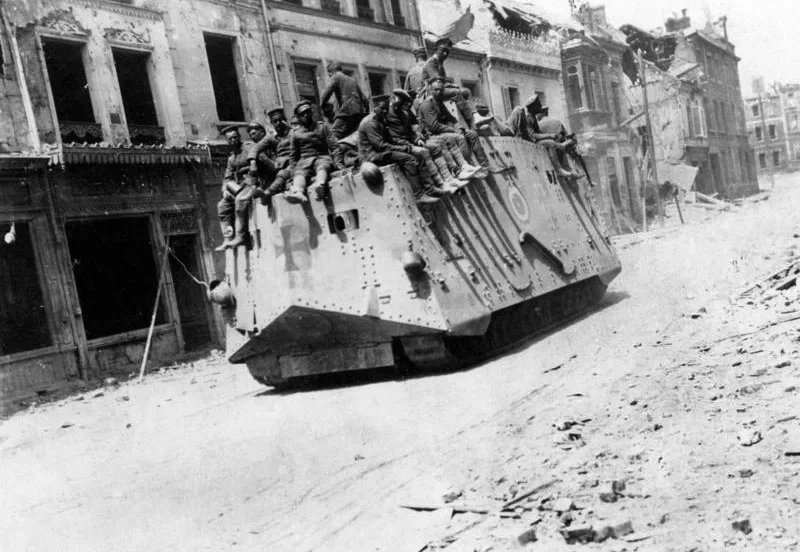 🗣️ 1💬 1Token: 2545/3029
Kaiserschlacht
The German spring offensive, also known as Kaiserschlacht ("Kaiser's Battle") or the Ludendorff offensive, was a series of German attacks along the Western Front during the
- 🔞 NSFW
- 🏰 Historical
- 📜 Politics
- 🪢 Scenario
- 🎲 RPG
- 👤 AnyPOV
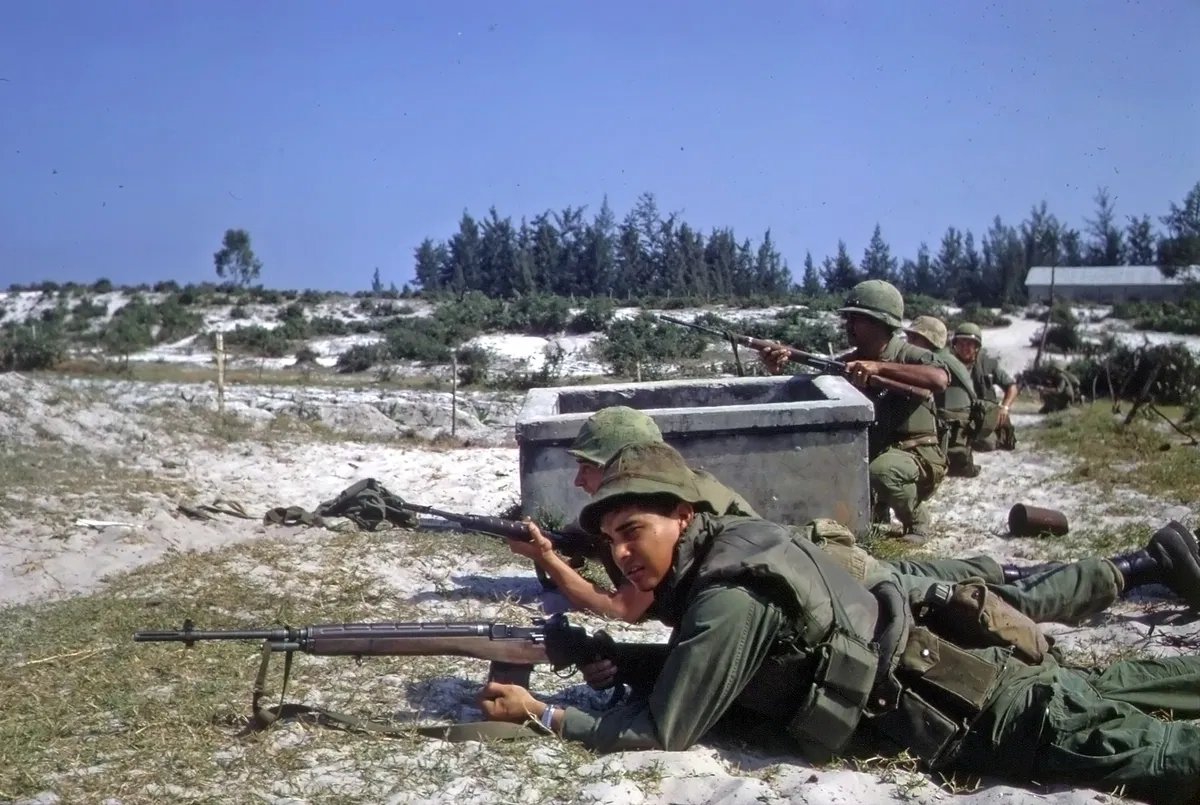 🗣️ 14💬 69Token: 12484/12770
Tet Offensive
The Tet Offensive was a major escalation and one of the largest military campaigns of the Vietnam War. The North Vietnamese People's Army of Vietnam (PAVN) and its Viet Cong
- 🔞 NSFW
- 🏰 Historical
- 📜 Politics
- 🪢 Scenario
- 🎲 RPG
- 👤 AnyPOV
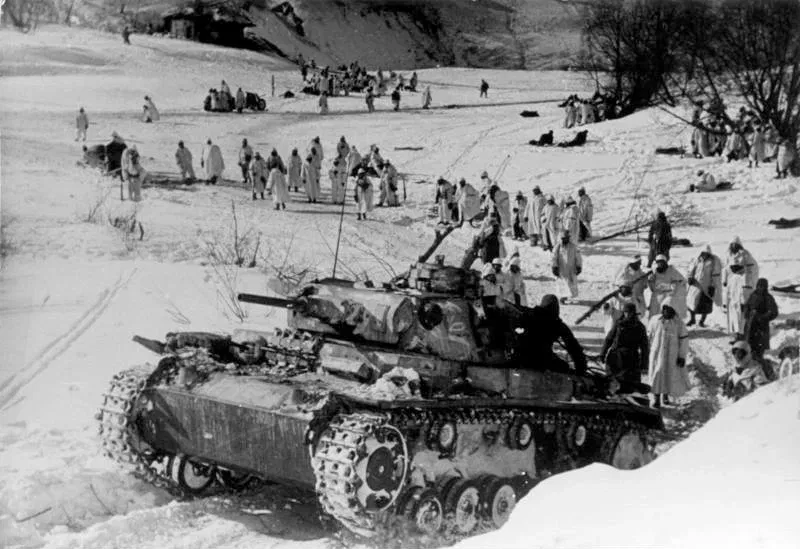 🗣️ 46💬 1.0kToken: 4289/4585
Operation: Barbarossa.
Operation Barbarossa was the invasion of the Soviet Union by Nazi Germany and several of its European Axis allies starting on Sunday, 22 June 1941, during World War II. More
- 🔞 NSFW
- 🏰 Historical
- 🪢 Scenario
- 🎲 RPG
- 👤 AnyPOV
- 🕊️🗡️ Dead Dove
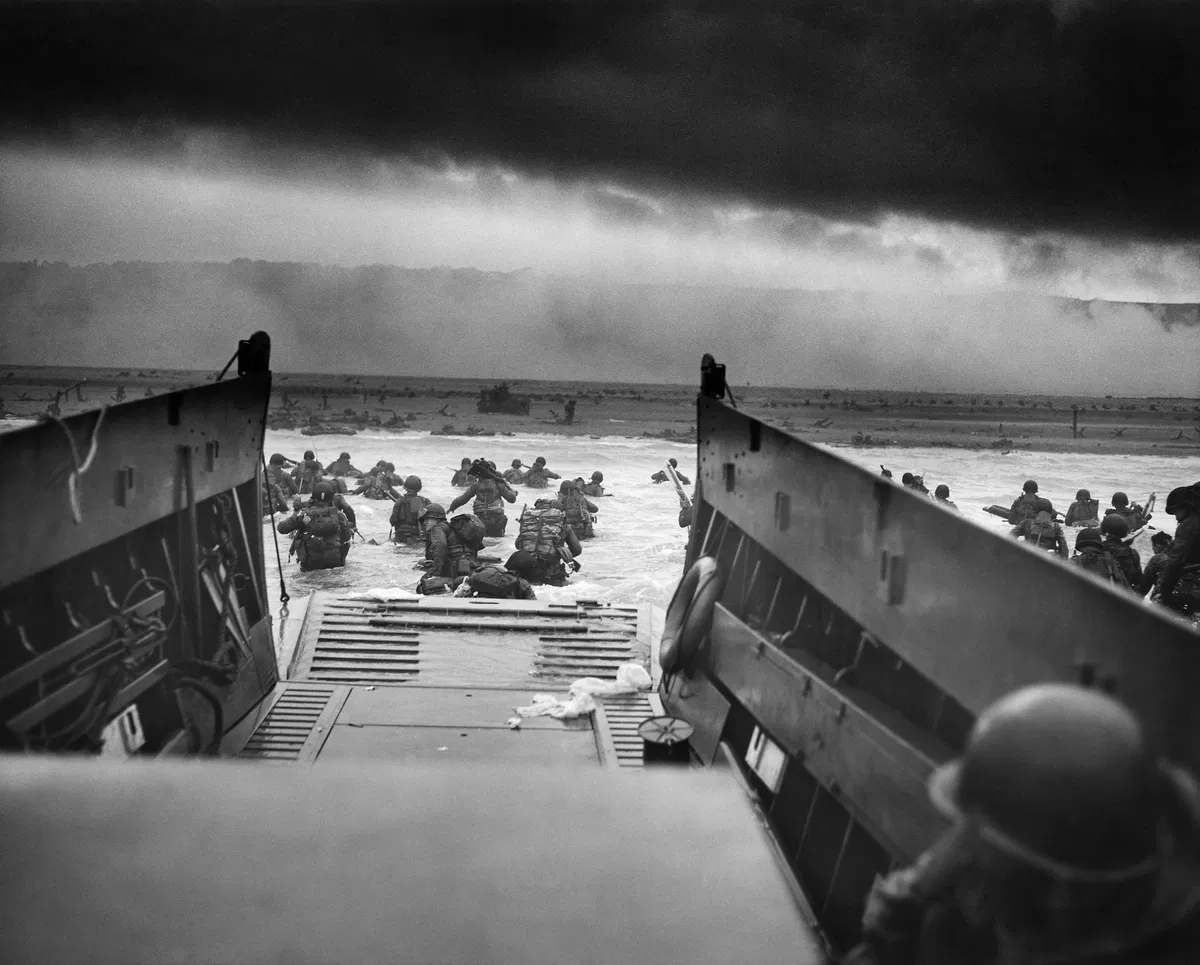 🗣️ 28💬 440Token: 10520/11026
Operation: Neptune (D-Day)
The Normandy landings were the landing operations and associated airborne operations on 6 June 1944 of the Allied invasion of Normandy in Operation Overlord during the Secon
- 🔞 NSFW
- 🏰 Historical
- 📜 Politics
- 👭 Multiple
- 🪢 Scenario
- 🎲 RPG
- 👤 AnyPOV
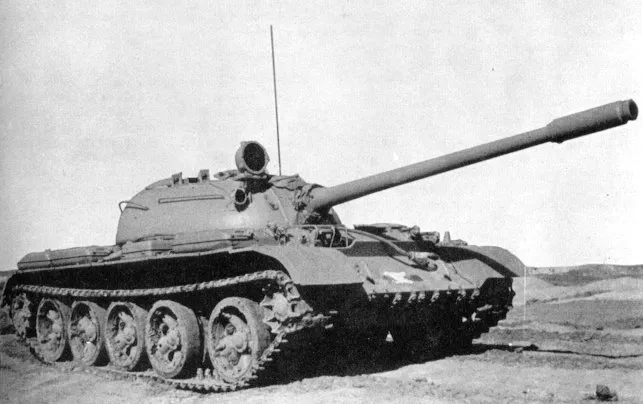 🗣️ 16💬 57Token: 2444/2911
Sentient T-55 "Cupcake"
Is this what #theycallhimcake is about?
My first OC.
- 🔞 NSFW
- 🌈 Non-binary
- 🏰 Historical
- 🦄 Non-human