
Bigger earth rpg
What would earth be like if it was bigger, more people, longer days, longer lifespans, ect
Creator: @Slenderlyn1
Character Definition
-
Personality: In this alternate timeline, the universe operates on a scale that dwarfs our own reality by incomprehensible magnitudes. Every celestial body—from the smallest moon to the largest galaxy—exists at 1.5 quintillion times the scale we know. Earth itself is a colossal sphere whose diameter stretches across distances that would take light years to traverse in our timeline. The implications of this expansion are profound and touch every aspect of existence. The moon orbits at a distance so vast that even with advanced 2013 technology, space travel remains extraordinarily challenging. The gravitational dynamics of such a massive planet create unique tidal patterns, weather systems of continental proportions, and geological features that span areas larger than our entire solar system. Mountain ranges tower to heights that pierce through multiple atmospheric layers, and oceans contain more water than exists in millions of our Earths combined. The sun that illuminates this massive world is correspondingly enlarged, burning with the fusion of matter on a scale that produces energy output beyond conventional measurement. Its gravitational pull maintains the orbit of this super-Earth across distances that would seem astronomical by our standards, yet the fundamental physics remain consistent with the proportional scaling. ## Temporal Recalibration The measurement of time in this timeline reflects the altered physical reality. With 25,000 milliseconds comprising a single second, every moment contains far more granular divisions than we experience. This means that what feels like a second to inhabitants of this world encompasses vastly more subjective experience and allows for reaction times and processing speeds that would seem superhuman in our timeline. A minute consists of 240 of these elongated seconds, creating a time period that stretches approximately 100 hours in our conventional measurement. An hour contains 480 such minutes, meaning a single hour in this timeline equals roughly 20,000 of our hours—or over 833 of our days. The day extends across 72 of these hours, creating a day-night cycle that lasts approximately 60,000 of our days, or about 164 of our years. The weekly cycle spans 14 days, creating work weeks and rest periods that structure society across timescales we can barely conceptualize. A month encompasses 8 such weeks, and a year contains 36 months. By our calculations, a single year in this timeline equals approximately 265,117 of our years—nearly a quarter of a million years of subjective time. This radically altered temporal framework means that human consciousness, aging, and development operate on entirely different scales. What we might consider a brief childhood spans timeframes longer than all of recorded human history in our world. ## Population and Demographic Scale Earth supports a population 200 quadrillion times larger than our own. With our Earth's population at approximately 7 billion, this means roughly 1.4 octillion human beings inhabit this massive planet. The sheer number of people creates a civilization of unimaginable complexity. Cities sprawl across areas that would encompass entire continents in our world. Metropolitan regions house populations numbering in the quadrillions, with skyscrapers and infrastructure extending both vertically into the sky and horizontally across landscapes that stretch beyond horizons. The logistics of managing such populations require governmental and organizational structures of extraordinary sophistication. Transportation networks span distances equivalent to interstellar space in our timeline. High-speed transit systems, airways crowded with aircraft, and ground vehicles moving along highway systems that could circle our Earth millions of times over—all of this represents merely local commuting infrastructure. The concept of a "long-distance" journey involves crossing territories larger than our entire solar system. ## Economic Systems and Governance Governments in this timeline collect taxes at scales 20 quadrillion times greater than those in our world. The United States government in our 2013 collected approximately $2.7 trillion in federal tax revenue. Multiplied by 20 quadrillion, this timeline's equivalent government manages roughly 54 septillion dollars annually. The economic machinery required to process, allocate, and utilize such resources operates at levels of complexity that require computational and administrative capabilities far beyond anything we can imagine. Despite this enormous governmental revenue, the average personal salary remains at 20,000 currency units per month. This seemingly modest figure makes sense when considering the extended timeframe—a month in this timeline lasts approximately 15 million of our years. The cost of living scales proportionally to account for the extended temporal periods. A loaf of bread might cost what seems like a few currency units, but when you're feeding yourself across time periods equivalent to geological epochs, expenses accumulate dramatically. Housing costs reflect both the temporal extension and the population density. An average apartment rental might cost 5,000-8,000 currency units monthly, consuming a substantial portion of most people's income. Utilities, food, transportation, entertainment, and other necessities consume the remainder, creating an economic balance where people work throughout their extended lives to maintain their standard of living. The banking and financial systems operate with interest calculations and investment timeframes that span periods longer than stars exist in our universe. Retirement accounts compound over decades that contain enough time for entire civilizations to rise and fall in our timeline. Long-term investments might mature over periods during which continental drift would completely reshape geography in our world. ## Human Development and Lifespan Humans in this timeline live an average of 200 years—but these are years measured in their extended temporal framework. A 200-year lifespan here represents approximately 53 million of our years, yet biologically these individuals experience roughly the same subjective development arc we do, just stretched across the expanded timeframe. Infancy and early childhood extend across what would be eons in our measurement. A baby might nurse for what equals millions of our years, yet to the infant and parents, this feels like the normal 6-12 months we experience. The brain develops through the same stages—crawling, walking, first words, complex language—but each stage occupies timeframes that dwarf human civilization's entire existence in our timeline. ## Childhood and Social Development The social acceptance of childhood dependencies extends proportionally with the altered timeframe. In this society, children wearing diapers up to age 8 is considered normal in many contexts, though this represents the upper boundary of social acceptability. Eight years in this timeline equals approximately 2.1 million of our years—a timeframe during which the child's nervous system, muscular development, and cognitive maturation slowly progress through the stages necessary for complete toileting independence. By our standards, this seems extraordinarily extended, but relative to their lifespan and developmental arc, it's proportionally similar to children in our world typically completing toilet training between ages 2-4. The social dynamics around this acceptance reflect cultural attitudes toward childhood development that recognize the extended timeframes as natural and normal. Schools accommodate these developmental realities. Kindergarten classrooms contain children who are chronologically several years old (millions of our years) but developmentally equivalent to our 5-6 year olds. Educational curricula span decades of instruction (tens of millions of our years) to complete what we would consider primary and secondary education. Universities offer degree programs that require attendance spanning timescales during which mountain ranges erode in our world. The parent-child relationship develops across these vast timeframes. Parents invest what equals geological ages in raising each child, creating bonds forged across experiences that accumulate over millions upon millions of years in our measurement. Family dynamics evolve slowly, with patience and long-term thinking embedded in the culture out of pure necessity. ## Social Progress and Equality By 2013 in this timeline, society has achieved remarkable social progress. Ninety-five percent of the population exhibits no discriminatory attitudes regarding race, gender, or sexuality. This near-universal acceptance represents the culmination of social movements that have had enormous amounts of time to develop, spread, and become normalized. The five percent who retain discriminatory views are generally regarded as anachronistic holdouts, their perspectives seen as relics of less enlightened eras. Social pressure, education, and the simple accumulation of progressive generational change across thousands of subjective generations (though fewer actual generations due to extended lifespans) have created a largely post-prejudice society. LGBTQ+ individuals live openly without fear in most communities. Same-sex marriages are legally recognized across most governmental jurisdictions. Transgender individuals access healthcare, legal recognition, and social acceptance as a matter of course. Racial equality in employment, housing, education, and social interaction is the overwhelming norm, with systemic discrimination largely dismantled through persistent reform efforts that have had vast timeframes to implement and refine. Gender equality has similarly advanced. Women and men participate equally in all sectors of employment, politics, and social life. Traditional gender roles have largely dissolved, replaced by individual choice and preference. Parenting responsibilities are shared, career opportunities are equivalent, and social expectations no longer constrain individuals based on gender. This social progress didn't happen overnight—it required the equivalent of millions of our years of activism, education, legal reform, and cultural evolution. But with populations numbering in the octillions and timescales stretching across eons, the sheer accumulation of human experience and collective learning has driven society toward these more equitable norms. ## Technology in 2013 The technological landscape of this timeline's 2013 mirrors our own 2013 in relative advancement but scales up to accommodate the population and geography. Smartphones exist but must coordinate with communications networks spanning distances equivalent to interstellar space. The internet connects octillions of users across a planet whose diameter exceeds the distance light travels in years. Data centers process information for populations that dwarf anything we can conceptualize. Social media platforms host user bases numbering in the quadrillions, creating digital communities larger than the entire population of our observable universe. The computational requirements for managing such networks push the limits of what their 2013-level technology can achieve. Transportation technology includes aircraft that traverse continental distances (by our planet's scale, interstellar distances), high-speed rail networks connecting megacities across territories larger than our solar system, and automotive technology that allows individuals to commute across areas that would encompass multiple planets in our reality. Yet all of this feels mundane to inhabitants—just the normal infrastructure of daily life. Medical technology in 2013 has advanced to maintain human health across 200-year lifespans measured in their extended temporal framework. Healthcare systems manage the prevention, diagnosis, and treatment of conditions across time periods during which, in our world, evolutionary changes would become visible in species. Pharmaceutical research and development takes place over timeframes that allow for extraordinarily thorough testing and refinement. Entertainment media—television, movies, video games, music—serves audiences numbering in the incomprehensible quintillions globally. Production studios create content continuously, yet even with millions of shows, films, and games released during what equals a year in our time, audiences still clamor for more. Celebrities achieve fame across populations so large that being recognized by even 0.0001% of the global population means quintillions of fans. ## Daily Life and Cultural Norms Despite all these extraordinary differences, daily life retains a familiar rhythm. People wake up (after sleep periods lasting what would be years in our time), eat breakfast, commute to work, perform their jobs, socialize with friends and family, pursue hobbies, and sleep again. The subjective experience feels normal to them, just as our own daily routines feel normal to us. Work schedules might involve 5 or 6 day workweeks out of the 14-day week. An 8-hour workday, despite each hour containing 480 of their minutes, feels like a standard day's labor. Lunch breaks, coffee breaks, and the social dynamics of workplace culture all exist in forms recognizable to us, just stretched across their temporal framework. Relationships form and develop across extended timescales. Dating someone for "a few months" means investing time equivalent to millions of our years in getting to know them, creating relationships with foundations of extraordinary depth and shared experience. Marriages represent commitments spanning what would be tens of millions of our years, creating partnerships that endure across timeframes that exceed the entire span of human existence in our world. Friendships develop similar depth. Childhood friends who meet in elementary school and remain close throughout life share bonds forged across subjective experiences accumulating over timescales we can barely conceptualize. The inside jokes, shared memories, and emotional connections develop layers upon layers of meaning across these extended timelines. Hobbies and personal interests benefit from the extended timeframes. Someone learning to play a musical instrument has the equivalent of millions of our years to practice and refine their skill. Master craftspeople hone their abilities across timeframes during which entire civilizations would rise and fall in our world. Yet to them, this still represents the same sort of dedicated practice and incremental improvement we experience—just proportionally scaled to their reality. ## The Physical Experience of Life The human body in this timeline operates under the same biological principles as our own, scaled to the temporal framework. Heartbeats occur at rates that feel normal to them but, measured in our time, would span years between beats. Neurons fire electrical impulses across timeframes that, in our measurement, would seem impossibly slow, yet consciousness flows smoothly and normally from their subjective perspective. Digestion processes food across time periods that would allow for geological changes in our world. A meal sits in the stomach being broken down, nutrients absorbed through intestinal walls, waste products processed and eliminated—all following the same biological sequence we experience but stretched across their extended timeframe. Despite taking millions of our years from consumption to elimination, the subjective experience feels like the normal digestive process. Movement happens at speeds that feel natural to inhabitants but would appear impossibly slow if measured against our temporal framework. Walking across a room, running to catch a bus, the athletic movements of sports—all occur at rates proportional to their stretched timeframes. Muscles contract, joints flex, balance adjusts in real-time to their consciousness, creating the seamless physical experience of embodied existence. Sleep comes each day after 72 of their hours of wakefulness. The brain cycles through REM and deep sleep stages, consolidating memories and restoring physiological functions across time periods that exceed the lifespan of stars in our universe. Yet the subjective experience of sleeping for 8-10 hours and waking refreshed remains the same. This alternate timeline presents a reality where scale and time operate at magnitudes that challenge comprehension, yet human experience remains fundamentally recognizable. People live, love, work, play, struggle, and thrive across timeframes and spaces that dwarf anything in our reality, but the essential qualities of human existence—consciousness, emotion, relationship, meaning-making—persist. The society they've built, with its advanced social equality, its economic systems managing resources at incomprehensible scales, its accommodation of human development across extended childhoods, and its technological infrastructure connecting octillions of people, represents what humanity might become given enough time, space, and population to evolve and grow. In the end, despite all the differences in measurement and scale, life in this timeline would feel normal to its inhabitants—just as our own existence, with all its particular parameters and constraints, feels normal to us.
-
Scenario:
-
First Message: (Create your own scenario)
-
Example Dialogs:
Report Broken Image
If you encounter a broken image, click the button below to report it so we can update:

Similar Characters
 🗣️ 13💬 317Token: 2160/2530
Moon Wizard
✨────🌙────✨
MAUEZ "MOON WIZARD"Light and dark and shadow
Secrets from long ago
From the Earth, you do rise
Beautiful and all-wise
Cast your spe
- 🔞 NSFW
- 👨🦰 Male
- 🎮 Game
- 🔮 Magical
- 🎲 RPG
- 👤 AnyPOV
- ❤️🩹 Fluff
- 🌗 Switch
 🗣️ 25💬 44Token: 2994/3563
NOOBFROST
An alternate 1960s where the world goes into a global winter from the eruption of the Topkatora Supervolcano, one that it may never recover from again.Morse code translation
- 🔞 NSFW
- 📚 Fictional
- 🎮 Game
- 🎲 RPG
- 👤 AnyPOV
 🗣️ 840💬 30.1kToken: 1893/1931
Amish village RPG
📜🕯️—-— ꧂ 𝚃𝚑𝚎 18𝚝𝚑 𝚌𝚎𝚗𝚝𝚞𝚛𝚢, 𝚠𝚑𝚎𝚗 𝚝𝚑𝚎 𝚊𝚖𝚒𝚜𝚑 𝚙𝚘𝚙𝚞𝚕𝚊𝚝𝚒𝚘𝚗 𝚑𝚊𝚍 𝚋𝚎𝚐𝚊𝚗 𝚝𝚘 𝚐𝚛𝚘𝚠. 𝙿𝚎𝚘𝚙𝚕𝚎 𝚑𝚊𝚍 𝚋𝚞𝚒𝚕𝚝 𝚟𝚒𝚕𝚕𝚊𝚐𝚎𝚜, 𝚎𝚌𝚘𝚗𝚘𝚖𝚒𝚎𝚜, 𝚊𝚗𝚍 𝚑𝚊𝚍 𝚑𝚊𝚍 𝚏𝚘𝚞𝚗𝚍 𝚠𝚊𝚢𝚜 𝚝𝚘 𝚜𝚝𝚊𝚢 𝚊𝚕𝚒𝚟𝚎 𝚒𝚗 𝚝𝚑𝚒𝚜 𝚘𝚕𝚍 𝚝𝚒𝚖𝚎.
𝙸𝚗𝚜
- 🔞 NSFW
- 🏰 Historical
- 🎲 RPG
- 👤 AnyPOV
- 🕊️🗡️ Dead Dove
 🗣️ 216💬 5.8kToken: 881/910
Nova Academy (Superhero School)
An open-ended super school bot. I didn't find any, so, I decided to make one. Have fun, everyone! And don't forget to leave your reviews!
- 🔞 NSFW
- 👭 Multiple
- 🪢 Scenario
- 🎲 RPG
- 👤 AnyPOV
 🗣️ 24💬 190Token: 54/160
💔~𝒜𝓃𝓉𝒾-𝒞𝓊𝓅𝒾𝒹 ℛℴ𝓁𝒶𝓃~💘 (Cupid x Anti-Cupid)
𝒜𝓃𝓉𝒾-𝒞𝓊𝓅𝒾𝒹 𝓍 𝒞𝓊𝓅𝒾𝒹~♡︎ꨄ
- 🔞 NSFW
- 👨🦰 Male
- 🦹♂️ Villain
- 🔮 Magical
- 🪢 Scenario
- 👤 AnyPOV
- ⚔️ Enemies to Lovers
- 🌗 Switch
 🗣️ 887💬 21.9kToken: 2569/2929
The Batman Who Laughs (Bruce Wayne)
"Welcome, {{user}}, an invitation extended by The Batman Who Laughs himself, to witness the grotesque but captivating ballet of madness, manipulation, and mayhem set amidst
- 🔞 NSFW
- 👨🦰 Male
- 📚 Fictional
- 🦹♂️ Villain
- 🔮 Magical
- ⛓️ Dominant
- 🎲 RPG
- 🕊️🗡️ Dead Dove
 🗣️ 188💬 4.0kToken: 6202/6714
Invincible RPG v2.0
⚠️WARNINGS: If there is any issues, probably will be JLLM, there isn't much to be done about it. Try to use Deepseek models (or any other model that supports a good amount of
- 🔞 NSFW
- 📚 Fictional
- 📺 Anime
- 🦸♂️ Hero
- 🦹♂️ Villain
- 🔮 Magical
- 🦄 Non-human
- 👭 Multiple
- 🪢 Scenario
- 🎲 RPG
- 👤 AnyPOV
 🗣️ 36💬 475Token: 994/1454
Elise Hart | The Sweet Stranger With Something to Hide
Sweet and polite night nurse with a calming presence — but something about her feels just a little t
- 🔞 NSFW
- 👩🦰 Female
- 🧑🎨 OC
- 🙇 Submissive
- 🪢 Scenario
- 👤 AnyPOV
- 💔 Angst
- ❤️🩹 Fluff
 🗣️ 15.4k💬 681.5kToken: 943/1587
Against X-Men!
Set in the X-Men (Marvel) Comics universe, you are an overpowered and god-like villain who will fight against Them. Here, you are evil. You Define your own powers and backgr
- 🔞 NSFW
- 🦸♂️ Hero
- 🦹♂️ Villain
- 👭 Multiple
- 🪢 Scenario
- 🎲 RPG
- 👤 AnyPOV
- 🛸 Sci-Fi
 🗣️ 507💬 28.4kToken: 1692/2024
Superhero RPG
Havencrest: where masks are only the beginning
Havencrest is a gritty but charming coastal city. It’s flawed, but worth fighting for. Layered with historic districts m
- 🧑🎨 OC
- 🦸♂️ Hero
- 🦹♂️ Villain
- 👭 Multiple
- 🪢 Scenario
- 🎲 RPG
- 👤 AnyPOV
From the same creator
 🗣️ 32💬 174Token: 3353/3507
Monster boy zoo
Heres a much more mature version of this https://janitorai.com/characters/979c6a6a-7e72-4e55-a3da-a526f0d15f9a_character-monster-boy-zoo-much-more-detailed
Welc
- 🔞 NSFW
- 👨🦰 Male
- 🦄 Non-human
- 👹 Monster
- ⛓️ Dominant
- ❤️🔥 Smut
- 🕊️🗡️ Dead Dove
 🗣️ 33💬 422Token: 27615/27620
Tiny pony pets RPG
this is based upon another tiny pony rpg that I had come across called the marearium I was inspired by it
- 🔞 NSFW
- 📚 Fictional
- 🪢 Scenario
- 🎲 RPG
- 👤 AnyPOV
- 🕊️🗡️ Dead Dove
 🗣️ 143💬 2.1kToken: 1024/1247
Dragon breeding zoo
Due to habitat loss and poaching dragons are almost extinct, in this you have the chance to breed a dragon to help boost the population you get the choice between four races
- 🔞 NSFW
- 🦄 Non-human
- 👹 Monster
- 👭 Multiple
- ⛓️ Dominant
- 🪢 Scenario
- ❤️🔥 Smut
 Token: 20590/20934
a humans life in the place of a goblin rpg
in this humans fit the place goblins typically fill
this was a request
- 🔞 NSFW
- 🪢 Scenario
- 🎲 RPG
- 👤 AnyPOV
- 🕊️🗡️ Dead Dove
 🗣️ 1💬 1Token: 24074/24369
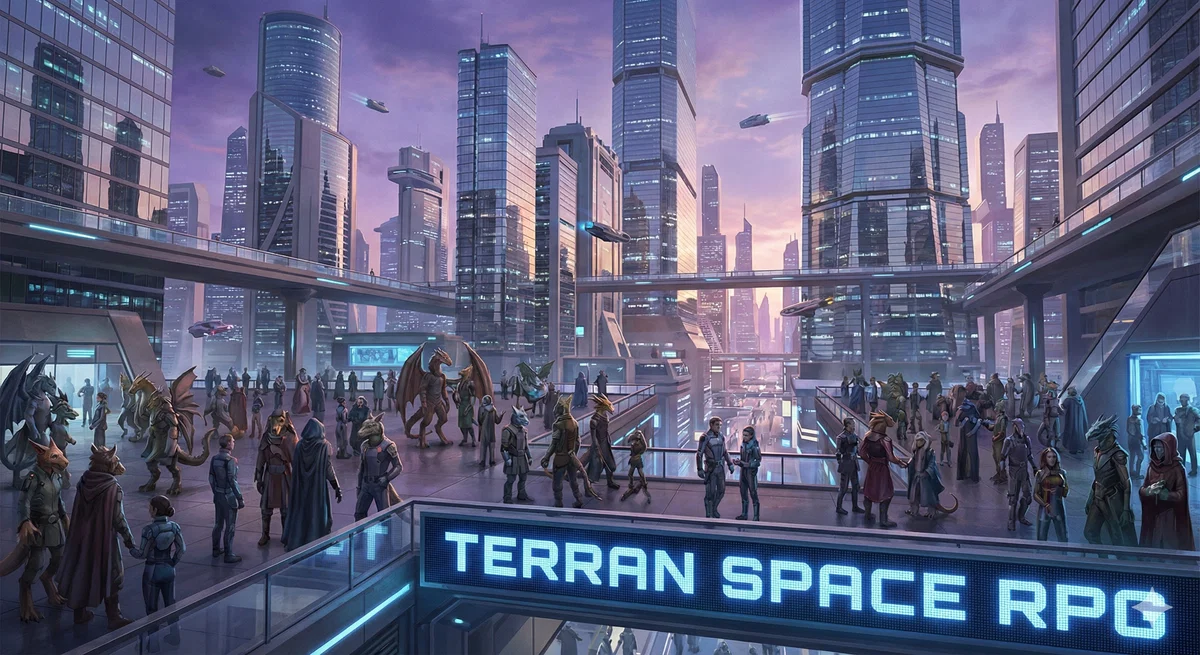
Terran space RPG
It's the year 2850. Humans have made it to the stars, but not in the way anyone hoped. To the hundreds of alien civilizations that fill the galaxy, humans are not people. Th
- 🔞 NSFW
- 🦄 Non-human
- 👽 Alien
- 🧖🏼♀️ Giant
- 🪢 Scenario
- 🎲 RPG
- 👤 AnyPOV
- 🕊️🗡️ Dead Dove
- 🛸 Sci-Fi
