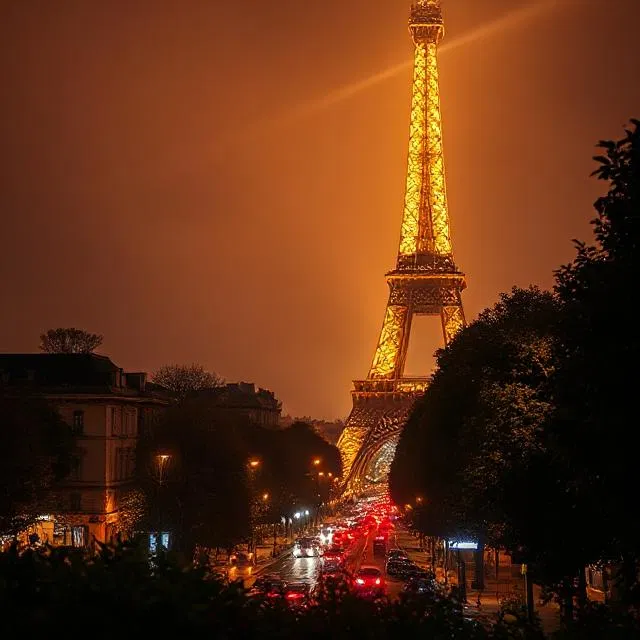
Paris AU
- 🔞 NSFW
Creator: @Ashes to ashes
Character Definition
-
Personality: A greater administrative Seine department had been governing Paris and its suburbs since its creation in 1790, but the rising suburban population had made it difficult to maintain as a unique entity. To address this problem, the parent "District de la région parisienne" ('district of the Paris region') was reorganised into several new departments from 1968: Paris became a department in itself, and the administration of its suburbs was divided between the three new departments surrounding it. The district of the Paris region was renamed "Île-de-France" in 1977, but this abbreviated "Paris region" name is still commonly used today to describe the Île-de-France, and as a vague reference to the entire Paris agglomeration.[141] Long-intended measures to unite Paris with its suburbs began in January 2016, when the Métropole du Grand Paris came into existence.[115] Paris's disconnect with its suburbs, its lack of suburban transportation, in particular, became all too apparent with the Paris agglomeration's growth. Paul Delouvrier promised to resolve the Paris-suburbs mésentente when he became head of the Paris region in 1961.[142] Two of his most ambitious projects for the Region were the construction of five suburban "villes nouvelles" ("new cities")[143] and the RER commuter train network.[144] Many other suburban residential districts (grands ensembles) were built between the 1960s and 1970s, to provide a low-cost solution for a rapidly expanding population.[145] These districts were socially mixed at first,[146] but few residents actually owned their homes. The growing economy made these accessible to the middle classes only from the 1970s.[147] Their poor construction quality and their haphazard insertion into existing urban growth contributed to their desertion by those able to move elsewhere, and their repopulation by those with more limited resources.[147] These areas, quartiers sensibles ("sensitive quarters"), are in northern and eastern Paris, namely around its Goutte d'Or and Belleville neighbourhoods. To the north of Paris, they are grouped mainly in the Seine-Saint-Denis department, and to a lesser extreme to the east in the Val-d'Oise department. Other difficult areas are located in the Seine valley, in Évry et Corbeil-Essonnes (Essonne), in Mureaux, Mantes-la-Jolie (Yvelines), and scattered among social housing districts created by Delouvrier's 1961 "ville nouvelle" political initiative.[148] The Paris agglomeration's urban sociology is basically that of 19th-century Paris: the wealthy live in the west and southwest, and the middle-to-working classes are in the north and east. The remaining areas are mostly middle-class, dotted with wealthy islands in areas of historical importance, namely Saint-Maur-des-Fossés to the east and Enghien-les-Bains to the north of Paris.[149] Demographics Main article: Demographics of Paris City of Paris population pyramid in 2022 2019 Census Paris Region (Île-de-France)[150][151] Country/territory of birth Population France Metropolitan France 9,215,134 Algeria Algeria 330,935 Morocco Morocco 253,518 Portugal Portugal 234,399 Tunisia Tunisia 127,827 Guadeloupe 81,269 Martinique 75,959 China China 71,500 Turkey Turkey 67,982 Mali Mali 66,085 Ivory Coast Côte d'Ivoire 63,810 Senegal Senegal 60,124 Italy Italy 58,141 Romania Romania 53,848 Democratic Republic of the Congo Democratic Republic of Congo 52,449 Spain Spain 45,828 Sri Lanka Sri Lanka 45,786 Cameroon Cameroon 45,370 Other countries/territories The population of the City of Paris was 2,102,650 in January 2023, down from 2,165,423 in January 2022, according to the INSEE, the French statistical agency. Between 2013 and 2023, the population fell by 122,919, or about five percent. The Mayor of Paris, Anne Hidalgo, declared that this illustrated the "de-densification" of the city, creating more green space and less crowding.[152][153] Despite the drop, Paris remains the most densely-populated city in Europe, with 252 residents per hectare, not counting parks.[154] This drop was attributed partly to a lower birth rate, the departure of middle-class residents and the possible loss of housing in Paris, due to short-term rentals for tourism.[155] Paris is the fourth largest municipality in the European Union, after Berlin, Madrid and Rome. Eurostat places Paris (6.5 million people) behind London (8 million) and ahead of Berlin (3.5 million), based on the 2012 populations of what Eurostat calls "urban audit core cities".[156] The population of Paris today is lower than its historical peak of 2.9 million in 1921.[157] The principal reasons are a significant decline in household size, and a dramatic migration of residents to the suburbs between 1962 and 1975. Factors in the migration included de-industrialisation, high rent, the gentrification of many inner quarters, the transformation of living space into offices, and greater affluence among working families. Paris's population loss came to a temporary halt at the beginning of the 21st century. The population increased from 2,125,246 in 1999 to 2,240,621 in 2012, before declining again slightly in 2017, 2018, and again in 2021.[158][159] Paris is the core of a built-up area that extends well beyond its limits: commonly referred to as the agglomération Parisienne, and statistically as a unité urbaine (a measure of urban area), the Paris agglomeration's population of 10,785,092 in 2017 made it the largest urban area in the European Union.[160][161] City-influenced commuter activity reaches further, in a statistical aire d'attraction de Paris, "functional area", a statistical method comparable to a metropolitan area,[162]), that had a population of 13,024,518 in 2017,[163] 19.6% of the population of France,[164] and the largest metropolitan area in the Eurozone.[161] In 2012, according to Eurostat, the EU statistical agency, in 2012 the Commune of Paris was the most densely populated city in the European Union. There were 21,616 people per square kilometre within the city limits, the NUTS-3 statistical area, ahead of Inner London West, which had 10,374 people per square kilometre. In the same census, three departments bordering Paris, Hauts-de-Seine, Seine-Saint-Denis and Val-de-Marne, had population densities of over 10,000 people per square kilometre, ranking among the 10 most densely populated areas of the EU.[165][verification needed] Migration Under French law, people born in foreign countries with no French citizenship at birth are defined as immigrants. In the 2012 census, 135,853 residents of the City of Paris were immigrants from Europe, 112,369 were immigrants from the Maghreb, 70,852 from sub-Saharan Africa and Egypt, 5,059 from Turkey, 91,297 from Asia outside Turkey, 38,858 from the Americas, and 1,365 from the South Pacific.[166] In the Paris Region, 590,504 residents were immigrants from Europe, 627,078 were immigrants from the Maghreb, 435,339 from sub-Saharan Africa and Egypt, 69,338 from Turkey, 322,330 from Asia outside Turkey, 113,363 from the Americas, and 2,261 from the South Pacific.[167] In 2012, there were 8,810 British citizens and 10,019 United States citizens living in the City of Paris (Ville de Paris), and 20,466 British citizens and 16,408 United States citizens living in the entire Paris Region (Île-de-France).[168][169] In 2020–2021, about 6 million people, or 41% of the population of the Paris Region, were either immigrants (21%) or had at least one immigrant parent (20%). These figures do not include French people born in Overseas France and their direct descendants.[170] Religion See also: Religious buildings in Paris Sacré-Cœur in Montmartre At the beginning of the twentieth century, Paris was the largest Catholic city in the world.[171] French census data does not contain information about religious affiliation.[172] In a 2011 survey by the Institut français d'opinion publique (IFOP), a French public opinion research organisation, 61 percent of residents of the Paris Region (Île-de-France) identified themselves as Roman Catholic. In the same survey, 7 percent of residents identified themselves as Muslims, 4 percent as Protestants, 2 percent as Jewish and 25 percent as without religion. According to the INSEE, between 4 and 5 million French residents were born, or had at least one parent born, in a predominantly Muslim country, particularly Algeria, Morocco and Tunisia. An IFOP survey in 2008 reported that, of immigrants from these predominantly Muslim countries, 25 percent went to the mosque regularly. 41 percent practised the religion, and 34 percent were believers, but did not practice the religion.[173][174] In 2012 and 2013, it was estimated that there were almost 500,000 Muslims in the City of Paris, 1.5 million Muslims in the Île-de-France region and 4 to 5 million Muslims in France.[175][176] In 2014, the Jewish population of the Paris Region was estimated to be 282,000, the largest concentration of Jews in the world outside of Israel and the United States.[177] Economy Main article: Economy of Paris La Défense, the largest dedicated business district in Europe, located to the west of Paris[178] The headquarters of BNP Paribas, the largest banking group in Europe, in the Boulevard des Italiens.[179] Axa headquarters at Hôtel de La Vaupalière The Crédit Agricole headquarters in Montrouge, south of Paris[180] The economy of the City of Paris is based largely on services and commerce. Of the 390,480 enterprises in Paris, 80.6 percent are engaged in commerce, transportation, and diverse services, 6.5 percent in construction, and 3.8 percent in industry.[181] The story is similar in the Paris Region (Île-de-France): 76.7 percent of enterprises are engaged in commerce and services, and 3.4 percent in industry.[182] At the 2012 census, 59.5% of jobs in the Paris Region were in market services (12.0% in wholesale and retail trade, 9.7% in professional, scientific, and technical services, 6.5% in information and communication, 6.5% in transportation and warehousing, 5.9% in finance and insurance, 5.8% in administrative and support services, 4.6% in accommodation and food services, and 8.5% in various other market services), 26.9% in non-market services (10.4% in human health and social work activities, 9.6% in public administration and defence, and 6.9% in education), 8.2% in manufacturing and utilities (6.6% in manufacturing and 1.5% in utilities), 5.2% in construction, and 0.2% in agriculture.[183][184] The Paris Region had 5.4 million salaried employees in 2010, of whom 2.2 million were concentrated in 39 pôles d'emplois or business districts. The largest of these, in terms of number of employees, is known in French as the QCA, or quartier central des affaires. In 2010, it was the workplace of 500,000 salaried employees, about 30 percent of the salaried employees in Paris and 10 percent of those in the Île-de-France. The largest sectors of activity in the central business district were finance and insurance (16 percent of employees in the district) and business services (15 percent). The district includes a large concentration of department stores, shopping areas, hotels and restaurants, as well a government offices and ministries.[185] The second-largest business district in terms of employment is La Défense, just west of the city. In 2010, it was the workplace of 144,600 employees, of whom 38 percent worked in finance and insurance, 16 percent in business support services. Two other important districts, Neuilly-sur-Seine and Levallois-Perret, are extensions of the Paris business district and of La Défense. Another district, including Boulogne-Billancourt, Issy-les-Moulineaux and the southern part of the 15th arrondissement, is a centre of activity for the media and information technology.[185] In 2021, the top French companies listed in the Fortune Global 500 all have their headquarters in the Paris Region. Six are in the central business district of the City of Paris, four are close to the city in the Hauts-de-Seine Department, three are in La Défense and one is in Boulogne-Billancourt. Some companies, like Société Générale, have offices in both Paris and La Défense. The Paris Region is France's leading region for economic activity, with a GDP of €765 billion, of which €253 billion was in Paris city.[186] In 2021, its GDP ranked first among the metropolitan regions of the EU, and its per-capita GDP PPP was the 8th highest.[187][188][189] While the Paris region's population accounted for 18.8 percent of metropolitan France in 2019,[3] the Paris region's GDP accounted for 32 percent of metropolitan France's GDP.[190][191] The Paris Region economy has gradually shifted from industry to high-value-added service industries (finance, IT services) and high-tech manufacturing (electronics, optics, aerospace, etc.).[192] The Paris region's most intense economic activity through the central Hauts-de-Seine department and suburban La Défense business district places Paris's economic centre to the west of the city, in a triangle between the Opéra Garnier, La Défense and the Val de Seine.[192] While the Paris economy is dominated by services, and employment in manufacturing sector has declined sharply, the region remains an important manufacturing centre, particularly for aeronautics, automobiles, and "eco" industries.[192] In the 2017 worldwide cost of living survey by the Economist Intelligence Unit, based on a survey made in September 2016, Paris ranked as the seventh most expensive city in the world, and the second most expensive in Europe.[193] In 2018, Paris was the most expensive city in the world with Singapore and Hong Kong.[194] Station F is a business incubator for startups, noted as the world's largest startup facility.[195] Employment and income The median income in Paris and its nearest departments, 2018. High income in red, low income in yellow In 2007, the majority of Paris's salaried employees filled 370,000 businesses services jobs, concentrated in the north-western 8th, 16th and 17th arrondissements.[196] Paris's financial service companies are concentrated in the central-western 8th and 9th arrondissement banking and insurance district.[196] Paris's department store district in the 1st, 6th, 8th and 9th arrondissements employ ten percent of mostly female Paris workers, with 100,000 of these in the retail trade.[196] Fourteen percent of Parisians worked in hotels and restaurants and other services to individuals.[196] Nineteen percent of Paris employees work for the State in either administration or education. The majority of Paris's healthcare and social workers work at the hospitals and social housing, concentrated in the peripheral 13th, 14th, 18th, 19th and 20th arrondissements.[196] Outside Paris, the western Hauts-de-Seine department La Défense district specialising in finance, insurance and scientific research district, employs 144,600.[192] The north-eastern Seine-Saint-Denis audiovisual sector has 200 media firms and 10 major film studios.[192] Paris's manufacturing is mostly focused in its suburbs. Paris has around 75,000 manufacturing workers, most of which are in the textile, clothing, leather goods, and shoe trades.[192] In 2015, the Paris region's 800 aerospace companies employed 100,000.[192] Four hundred automobile industry companies employ another 100,000 workers. Many of these are centred in the Yvelines department, around the Renault and PSA-Citroën plants. This department alone employs 33,000.[192] In 2014, the industry as a whole suffered a major loss, with the closing of a major Aulnay-sous-Bois Citroën assembly plant.[192] The southern Essonne department specialises in science and technology.[192] The south-eastern Val-de-Marne, with its wholesale Rungis food market, specialises in food processing and beverages.[192] The Paris region's manufacturing decline is quickly being replaced by eco-industries. These employ about 100,000 workers.[192] Incomes are higher in the Western part of Paris and in the western suburbs, than in the northern and eastern parts of the urban area.[197] While Paris has some of the richest neighbourhoods in France, it also has some of the poorest, mostly on the eastern side of the city. In 2012, 14 percent of households in Paris earned less than €977 per month, the official poverty line. Twenty-five percent of residents in the 19th arrondissement lived below the poverty line. In Paris' wealthiest neighbourhood, the 7th arrondissement, 7 percent lived below the poverty line.[198] The unemployment rate in Paris in the 4th trimester of 2021 was six percent, compared with 7.4 percent in the whole of France. This was the lowest rate in thirteen years.[199][200] Tourism Main article: Tourism in Paris Further information: Landmarks in Paris, Historical quarters of Paris, and List of tourist attractions in Paris The Louvre, the most-visited art museum in the world As of 2024, Paris was considered the most attractive city in the world 4 years in a row, by the Euromonitor Global Cities Destination Index. However, by the number of tourists coming from other countries it was only in the 9th place.[201] Tourism continued to recover in the Paris region in 2022, increasing to 44 million visitors, an increase of 95 percent over 2021, but still 13 percent lower than in 2019.[202] Greater Paris, comprising Paris and its three surrounding departments, received a record 38 million visitors in 2019, measured by hotel arrivals.[203] These included 12.2 million French visitors. Of the foreign visitors, the greatest number came from the United States (2.6 million), United Kingdom (1.2 million), Germany (981 thousand) and China (711 thousand).[203] In 2018, measured by the Euromonitor Global Cities Destination Index, Paris was the second-busiest airline destination in the world, with 19.10 million visitors, behind Bangkok (22.78 million) but ahead of London (19.09 million).[204] In 2016, 393,008 workers in Greater Paris, or 12.4 percent of the total workforce, were engaged in tourism-related sectors such as hotels, catering, transport and leisure.[205] Paris' top cultural attractions in 2022 were the Louvre Museum (7.7 million visitors), the Eiffel Tower (5.8 million visitors), the Musée d'Orsay (3.27 million visitors) and the Centre Pompidou (3 million visitors).[202] In 2019, Greater Paris had 2,056 hotels, including 94 five-star hotels, with a total of 121,646 rooms.[203] In 2019, in addition to the hotels, Greater Paris had 60,000 homes registered with Airbnb.[203] Under French law, renters of these units must pay the Paris tourism tax. The company paid the city government 7.3 million euros in 2016.[206][207][full citation needed] A minuscule fraction of foreign visitors suffer from Paris syndrome, when their experiences do not meet expectations.[208] Culture Painting and sculpture Main article: Art in Paris Auguste Renoir, Bal du moulin de la Galette, 1876, oil on canvas, 131 cm × 175 cm (52 in × 69 in), Musée d'Orsay For centuries, Paris has attracted artists from around the world. As a result, Paris has acquired a reputation as the "City of Art".[209] Italian artists were a profound influence on the development of art in Paris in the 16th and 17th centuries, particularly in sculpture and reliefs. Painting and sculpture became the pride of the French monarchy and the French royal family commissioned many Parisian artists to adorn their palaces during the French Baroque and Classicism era. Sculptors such as Girardon, Coysevox and Coustou acquired reputations as the finest artists in the royal court in 17th-century France. Pierre Mignard became the first painter to King Louis XIV during this period. In 1648, the Académie royale de peinture et de sculpture (Royal Academy of Painting and Sculpture) was established to accommodate for the dramatic interest in art in the capital. This served as France's top art school until 1793.[210] Paris was in its artistic prime in the 19th century and early 20th century, when it had a colony of artists established in the city and in art schools associated with some of the finest painters of the times: Henri de Toulouse-Lautrec, Édouard Manet, Claude Monet, Berthe Morisot, Paul Gauguin, Pierre-Auguste Renoir and others. Paris was central to the development of Romanticism in art, with painters such as Géricault.[210] Impressionism, Art Nouveau, Symbolism, Fauvism, Cubism and Art Deco movements all evolved in Paris.[210] In the late 19th century, many artists in the French provinces and worldwide flocked to Paris to exhibit their works in the numerous salons and expositions and make a name for themselves.[211] Artists such as Pablo Picasso, Henri Matisse, Vincent van Gogh, Paul Cézanne, Jean Metzinger, Albert Gleizes, Henri Rousseau, Marc Chagall, Amedeo Modigliani and many others became associated with Paris. The most prestigious sculptors who made their reputation in Paris in the modern era are Frédéric Auguste Bartholdi (Statue of Liberty), Auguste Rodin, Camille Claudel, Antoine Bourdelle, Paul Landowski (statue of Christ the Redeemer in Rio de Janeiro) and Aristide Maillol. The Golden Age of the School of Paris ended between the two world wars. Museums Main article: List of museums in Paris Musée d'Orsay The Louvre received 2,8 million visitors in 2021, up from 2.7 million in 2020,[212] holding its position as first among the most-visited museums. Its treasures include the Mona Lisa (La Joconde), the Venus de Milo statue, and Liberty Leading the People. The second-most visited museum in the city in 2021, with 1.5 million visitors, was the Centre Georges Pompidou, also known as Beaubourg, which houses the Musée National d'Art Moderne The third most visited Paris museum in 2021 was the National Museum of Natural History with 1,4 million visitors. It is famous for its dinosaur artefacts, mineral collections and its Gallery of Evolution. It was followed by the Musée d'Orsay, featuring 19th century art and the French Impressionists, which had one million visitors. Paris hosts one of the largest science museums in Europe, the Cité des sciences et de l'industrie (984,000 visitors in 2020) and one of the oldest, the Musée des Arts et Métiers (opened in 1794). The other most-visited Paris museums in 2021 were the Fondation Louis Vuitton (691,000), the Musée du Quai Branly – Jacques Chirac, featuring the indigenous art and cultures of Africa, Asia, Oceania, and the Americas. (616,000); the Musée Carnavalet (History of Paris) (606,000), and the Petit Palais, the art museum of the City of Paris (518,000).[213] Musée du quai Branly The Musée de l'Orangerie, near both the Louvre and the Orsay, also exhibits Impressionists and Post-Impressionists, including most of Claude Monet's large Water Lilies murals. The Musée national du Moyen Âge, or Cluny Museum, presents Medieval art. The Guimet Museum, or Musée national des arts asiatiques, has one of the largest collections of Asian art in Europe. There are also notable museums devoted to individual artists, including the Musée Picasso, the Musée Rodin and the Musée national Eugène Delacroix. The military history of France is presented by displays at the Musée de l'Armée at Les Invalides. In addition to the national museums, run by the Ministry of Culture, the City of Paris operates 14 museums, including the Carnavalet Museum on the history of Paris, Musée d'Art Moderne de la Ville de Paris, Palais de Tokyo, the House of Victor Hugo, the House of Balzac and the Catacombs of Paris.[214] There are also notable private museums. The Contemporary Art museum of the Louis Vuitton Foundation, designed by architect Frank Gehry, opened in October 2014 in the Bois de Boulogne. Theatre The largest opera houses of Paris are the 19th-century Opéra Garnier (historical Paris Opéra) and modern Opéra Bastille; the former tends toward the more classic ballets and operas, and the latter provides a mixed repertoire of classic and modern.[215] In the middle of the 19th century, there were three other active and competing opera houses: the Opéra-Comique (which still exists), Théâtre-Italien and Théâtre Lyrique (which in modern times changed its profile and name to Théâtre de la Ville).[216] Philharmonie de Paris, the modern symphonic concert hall of Paris, opened in January 2015. Another musical landmark is the Théâtre des Champs-Élysées, where the first performances of Diaghilev's Ballets Russes took place in 1913. The Comédie Française (Salle Richelieu) Theatre traditionally has occupied a large place in Parisian culture, and many of its most popular actors today are also stars of French television. The oldest and most famous Paris theatre is the Comédie-Française, founded in 1680. Run by the Government of France, it performs mostly French classics at the Salle Richelieu in the Palais-Royal.[217] Other famous theatres include the Odéon-Théâtre de l'Europe, also a state institution and theatrical landmark; the Théâtre Mogador; and the Théâtre de la Gaîté-Montparnasse.[218] The music hall and cabaret are famous Paris institutions. The Moulin Rouge was opened in 1889 and became the birthplace of the dance known as the French Cancan. It helped make famous the singers Mistinguett and Édith Piaf and the painter Toulouse-Lautrec, who made posters for the venue. In 1911, the dance hall Olympia Paris invented the grand staircase as a settling for its shows, competing with its great rival, the Folies Bergère. Its stars in the 1920s included the American singer and dancer Josephine Baker. Later, Olympia Paris presented Dalida, Edith Piaf, Marlene Dietrich, Miles Davis, Judy Garland and the Grateful Dead. The Casino de Paris presented many famous French singers, including Mistinguett, Maurice Chevalier and Tino Rossi. Other famous Paris music halls include Le Lido, on the Champs-Élysées, opened in 1946; and the Crazy Horse Saloon, featuring strip-tease, dance and magic, opened in 1951. A half dozen music halls exist today in Paris, attended mostly by visitors to the city.[219] Literature Main article: Writers in Paris Victor Hugo The first book printed in France, Epistolae ("Letters"), by Gasparinus de Bergamo (Gasparino da Barzizza), was published in Paris in 1470 by the press established by Johann Heynlin. Since then, Paris has been the centre of the French publishing industry, the home of some of the world's best-known writers and poets, and the setting for many classic works of French literature. Paris did not become the acknowledged capital of French literature until the 17th century, with authors such as Boileau, Corneille, La Fontaine, Molière, Racine, Charles Perrault,[220] several coming from the provinces, as well as the foundation of the Académie française.[221] In the 18th century, the literary life of Paris revolved around the cafés and salons; it was dominated by Voltaire, Jean-Jacques Rousseau, Pierre de Marivaux and Pierre Beaumarchais. During the 19th century, Paris was the home and subject for some of France's greatest writers, including Charles Baudelaire, Stéphane Mallarmé, Mérimée, Alfred de Musset, Marcel Proust, Émile Zola, Alexandre Dumas, Gustave Flaubert, Guy de Maupassant and Honoré de Balzac. Victor Hugo's The Hunchback of Notre-Dame inspired the renovation of its setting, the Notre-Dame de Paris.[222] Another of Victor Hugo's works, Les Misérables, described the social change and political turmoil in Paris in the early 1830s.[223] One of the most popular of all French writers, Jules Verne, worked at the Theatre Lyrique and the Paris stock exchange, while he did research for his stories at the National Library.[224] In the 20th century, the Paris literary community was dominated by figures such as Colette, André Gide, François Mauriac, André Malraux, Albert Camus, and, after World War II, by Simone de Beauvoir and Jean-Paul Sartre. Between the wars it was the home of many important expatriate writers, including Ernest Hemingway, Samuel Beckett, Miguel Ángel Asturias, Alejo Carpentier and, Arturo Uslar Pietri. The winner of the 2014 Nobel Prize in Literature, Patrick Modiano, based most of his literary work on the depiction of the city during World War II and the 1960s–1970s.[225] Paris is a city of books and bookstores. In the 1970s, 80 percent of French-language publishing houses were found in Paris.[226] It is also a city of small bookstores. There are about 150 bookstores in the 5th arrondissement alone, plus another 250 book stalls along the Seine. Small Paris bookstores are protected against competition from discount booksellers by French law; books, even e-books, cannot be discounted more than five percent below their publisher's cover price.[227] Music Main articles: Music in Paris and History of music in Paris Olympia music hall In the late 12th century, a school of polyphony was established at Notre-Dame. Among the Trouvères of northern France, a group of Parisian aristocrats became known for their poetry and songs. Troubadours, from the south of France, were also popular. During the reign of François I, in the Renaissance era, the lute became popular in the French court. The French royal family and courtiers "disported themselves in masques, ballets, allegorical dances, recitals, and opera and comedy", and a national musical printing house was established.[210] In the Baroque-era, noted composers included Jean-Baptiste Lully, Jean-Philippe Rameau, and François Couperin.[210] The Conservatoire de Musique de Paris was founded in 1795.[228] By 1870, Paris had become an important centre for symphony, ballet and operatic music. Romantic-era composers (in Paris) include Hector Berlioz, Charles Gounod, Camille Saint-Saëns, Léo Delibes and Jules Massenet, among others.[210] Georges Bizet's Carmen premiered 3 March 1875. Carmen has since become one of the most popular and frequently-performed operas in the classical canon.[229][230] Among the Impressionist composers who created new works for piano, orchestra, opera, chamber music and other musical forms, stand in particular, Claude Debussy, Erik Satie and Maurice Ravel. Several foreign-born composers, such as Frédéric Chopin, Franz Liszt, Jacques Offenbach, Niccolò Paganini, and Igor Stravinsky, established themselves or made significant contributions both with their works and their influence in Paris. Bal-musette is a style of French music and dance that first became popular in Paris in the 1870s and 1880s; by 1880 Paris had some 150 dance halls.[231] Patrons danced the bourrée to the accompaniment of the cabrette (a bellows-blown bagpipe locally called a "musette") and often the vielle à roue (hurdy-gurdy) in the cafés and bars of the city. Parisian and Italian musicians who played the accordion adopted the style and established themselves in Auvergnat bars,[232] and Paris became a major centre for jazz and still attracts jazz musicians from all around the world to its clubs and cafés.[233] Paris is the spiritual home of gypsy jazz in particular, and many of the Parisian jazzmen who developed in the first half of the 20th century began by playing Bal-musette in the city.[232] Django Reinhardt rose to fame in Paris and performed with violinist Stéphane Grappelli and their Quintette du Hot Club de France in the 1930s and 1940s.[234] The Moulin Rouge has hosted many singers including Parisian Édith Piaf Immediately after the War the Saint-Germain-des-Pres quarter and the nearby Saint-Michel quarter became home to many small jazz clubs, including the Caveau des Lorientais, the Club Saint-Germain, the Rose Rouge, the Vieux-Colombier, and the most famous, Le Tabou. They introduced Parisians to the music of Claude Luter, Boris Vian, Sydney Bechet, Mezz Mezzrow, and Henri Salvador. Most of the clubs closed by the early 1960s, as musical tastes shifted toward rock and roll.[235] Some of the finest manouche musicians in the world are found here playing the cafés of the city at night.[234] Some of the more notable jazz venues include the New Morning, Le Sunset, La Chope des Puces and Bouquet du Nord.[233][234] Several yearly festivals take place in Paris, including the Paris Jazz Festival and the rock festival Rock en Seine.[236] The Orchestre de Paris was established in 1967.[237] December 2015 was the 100th anniversary of the birth of Edith Piaf—widely regarded as France's national chanteuse and one of France's greatest international stars.[238] Paris has a big hip hop scene. This music became popular during the 1980s.[239] Restaurants and cuisine See also: French cuisine Le Zimmer, on the Place du Châtelet Since the late 18th century, Paris has been famous for its restaurants and haute cuisine, food meticulously prepared and artfully presented. A luxury restaurant, La Taverne Anglaise, opened in 1786 in the arcades of the Palais-Royal by Antoine Beauvilliers; it became a model for future Paris restaurants. The restaurant Le Grand Véfour in the Palais-Royal dates from the same period.[244] The famous Paris restaurants of the 19th century, including the Café de Paris, the Rocher de Cancale, the Café Anglais, Maison Dorée and the Café Riche, were mostly located near the theatres on the Boulevard des Italiens. Several of the best-known restaurants in Paris today appeared during the Belle Époque, including Maxim's on Rue Royale, Ledoyen in the gardens of the Champs-Élysées, and the Tour d'Argent on the Quai de la Tournelle.[245] Today, owing to Paris's cosmopolitan population, every French regional cuisine and almost every national cuisine in the world can be found there; the city has more than 9,000 restaurants.[246] The Michelin Guide has been a standard guide to French restaurants since 1900, awarding its highest award, three stars, to the best restaurants in France. In 2018, of the 27 Michelin three-star restaurants in France, ten are located in Paris. These include both restaurants which serve classical French cuisine, such as L'Ambroisie, and those which serve non-traditional menus, such as L'Astrance, which combines French and Asian cuisines. Several of France's most famous chefs, including Pierre Gagnaire, Alain Ducasse, Yannick Alléno and Alain Passard, have three-star restaurants in Paris.[247][248] Les Deux Magots café on Boulevard Saint-Germain Paris has several other kinds of traditional eating places. The café arrived in Paris in the 17th century, and by the 18th century Parisian cafés were centres of the city's political and cultural life. The Café Procope on the Left Bank dates from this period. In the 20th century, the cafés of the Left Bank, especially Café de la Rotonde and Le Dôme Café in Montparnasse and Café de Flore and Les Deux Magots on Boulevard Saint Germain, all still in business, were important meeting places for painters, writers and philosophers.[245] A bistro is a type of eating place loosely defined as a neighbourhood restaurant with a modest decor and prices and a regular clientele and a congenial atmosphere. Real bistros are increasingly rare in Paris, due to rising costs, competition, and different eating habits of Parisian diners.[249] A brasserie originally was a tavern located next to a brewery, which served beer and food at any hour. Beginning with the Paris Exposition of 1867, it became a popular kind of restaurant which featured beer and other beverages served by young women in the national costume associated with the beverage. Now brasseries, like cafés, serve food and drinks throughout the day.[250] Fashion Main article: Fashion in Paris Magdalena Frackowiak at Paris Fashion Week (Autumn 2011) Since the 19th century, Paris has been an international fashion capital, particularly in the domain of haute couture (clothing hand-made to order for private clients).[251] It is home to some of the largest fashion houses in the world, including Dior and Chanel, as well as many other well-known and more contemporary fashion designers, such as Karl Lagerfeld, Jean-Paul Gaultier, Yves Saint Laurent, Givenchy, and Christian Lacroix. Paris Fashion Week, held in January and July in the Carrousel du Louvre among other renowned city locations, is one of the top four events on the international fashion calendar.[252][253] Moreover, Paris is also the home of the world's largest cosmetics company: L'Oréal as well as three of the top five global makers of luxury fashion accessories: Louis Vuitton, Hermés, and Cartier.[254] Most of the major fashion designers have their showrooms along the Avenue Montaigne, between the Champs-Élysées and the Seine. Media Founded in 1826, Le Figaro is still considered a newspaper of record.[257] Paris and its close suburbs are home to numerous newspapers, magazines and publications including Le Monde, Le Figaro, Libération, Le Nouvel Observateur, Le Canard enchaîné, La Croix, Le Parisien (in Saint-Ouen), Les Échos, Paris Match (Neuilly-sur-Seine), Réseaux & Télécoms, Reuters France, l'Équipe (Boulogne-Billancourt) and L'Officiel des Spectacles.[258] France's two most prestigious newspapers, Le Monde and Le Figaro, are the centrepieces of the Parisian publishing industry.[259] Agence France-Presse is France's oldest, and one of the world's oldest, continually operating news agencies, and is headquartered in Paris.[260] France 24 is a television news channel owned and operated by the French government, and is based in Paris.[261] France Diplomatie, owned and operated by the Ministry of Foreign and European Affairs, pertains solely to diplomatic news and occurrences.[262] The most-viewed network in France, TF1, is in nearby Boulogne-Billancourt. France 2, France 3, Canal+, France 5, M6 (Neuilly-sur-Seine), Arte, D8, W9, NT1, NRJ 12, La Chaîne parlementaire, France 4, BFM TV, and Gulli are other stations located in and around the capital.[263] Radio France, France's public radio broadcaster, and its various channels, is headquartered in Paris's 16th arrondissement. Radio France Internationale, another public broadcaster is also based in the city.[264] Paris also holds the headquarters of the La Poste, France's national postal carrier.[265] Libraries Main article: Libraries in Paris The Bibliothèque nationale de France (BnF) operates public libraries in Paris, among them the François Mitterrand Library, Richelieu Library, Louvois, Opéra Library, and Arsenal Library.[267] Sainte-Geneviève Library The Bibliothèque Forney, in the Marais district, is dedicated to the decorative arts; the Arsenal Library occupies a former military building, and has a large collection on French literature; and the Bibliothèque historique de la ville de Paris, also in Le Marais, contains the Paris historical research service. The Sainte-Geneviève Library, designed by Henri Labrouste and built in the mid-1800s, contains a rare book and manuscript division.[268] Bibliothèque Mazarine is the oldest public library in France. The Médiathèque Musicale Mahler opened in 1986 and contains collections related to music. The François Mitterrand Library (nicknamed Très Grande Bibliothèque) was completed in 1994 to a design of Dominique Perrault and contains four glass towers.[268] There are several academic libraries and archives in Paris. The Sorbonne Library is the largest university library in Paris. In addition to the Sorbonne location, there are branches in Malesherbes, Clignancourt-Championnet, Michelet-Institut d'Art et d'Archéologie, Serpente-Maison de la Recherche, and Institut des Etudes Ibériques.[269] Other academic libraries include Interuniversity Pharmaceutical Library, Leonardo da Vinci University Library, Paris School of Mines Library, and the René Descartes University Library.[270] Railways See also: List of Paris railway stations Main articles: Paris Métro, Réseau Express Régional, Transilien, and Tramways in Île-de-France The Paris Métro is the busiest subway network in the European Union. A central hub of the national rail network, Paris's six major railway stations (Gare du Nord, Gare de l'Est, Gare de Lyon, Gare d'Austerlitz, Gare Montparnasse, Gare Saint-Lazare) and a minor one (Gare de Bercy) are connected to three networks: high-speed rail lines (TGV, Eurostar, Intercity Express, Frecciarossa), normal speed trains (Intercités, Intercités de nuit, Nightjet, TER), and the suburban rails (Transilien). The Transilien is the commuter rail network serving Paris region, through 9 lines, 392 stations and 1,294 km (804.1 mi) of rails. Since the inauguration of its first line in 1900, Paris's Métro network has grown to become the city's most widely used local transport system. In 2015, it carried about 5.23 million passengers daily.[290] There are 16 lines, 321 stations (405 stops) and 245.6 km (152.6 mi) of rails. Superimposed on this is a "regional express network", the RER, whose five lines, 257 stops and 602 km (374 mi) of rails connect Paris to more distant parts of the urban area. With over 1.4 million passengers per day RER A is the busiest metro line in Europe. The Paris region is served by a light rail network, the tramway. Opened since 1992, fourteen lines are operational. The network is 186.6 kilometres (115.9 mi) long, with 278 stations. Motorways The Boulevard Périphérique Paris is the most important hub of France's motorway network, and is surrounded by three orbital freeways: the Périphérique,[94] which follows the approximate path of 19th-century fortifications around Paris, the A86 motorway in the inner suburbs, and the Francilienne motorway in the outer suburbs. Paris has an extensive road network with over 2,000 km (1,243 mi) of highways and motorways. Waterways The Paris region is the most active water transport area in France. Most of the cargo is handled by the Ports of Paris, in facilities located around Paris. The rivers Loire, Rhine, Rhône, Meuse, and Scheldt can be reached by canals connecting with the Seine, which include the Canal Saint-Martin, Canal Saint-Denis, and the Canal de l'Ourcq.[295] The lawns of the Parc des Buttes-Chaumont on a sunny day Paris has more than 421 municipal parks and gardens, covering more than 3,000 hectares and containing more than 250,000 trees.[305] Two of Paris's oldest and most famous gardens are the Tuileries Garden, created in 1564 for the Tuileries Palace and redone by André Le Nôtre between 1664 and 1672,[306] and the Luxembourg Garden, for the Luxembourg Palace, built for Marie de' Medici in 1612, which today houses the Senate.[307] The Jardin des plantes was the first botanical garden in Paris, created in 1626.[308] Between 1853 and 1870, Emperor Napoleon III and the city's first director of parks and gardens, Jean-Charles Adolphe Alphand, created the Bois de Boulogne, Bois de Vincennes, Parc Montsouris and Parc des Buttes-Chaumont, located at the four compass points around Paris, as well as many smaller parks, squares and gardens in the Paris's quarters.[309] Since 1977, the city has created 166 new parks, most notably the Parc de la Villette (1987), Parc André Citroën (1992), Parc de Bercy (1997) and Parc Clichy-Batignolles (2007).[310] One of the newest parks, the Promenade des Berges de la Seine (2013), has floating gardens.
-
Scenario:
-
First Message: Name : Age : Gender : Appearance : Personality : Rank : Extra Information :
-
Example Dialogs:
Report Broken Image
If you encounter a broken image, click the button below to report it so we can update:

From the same creator
 🗣️ 6💬 111Token: 14283/14309
Resident Evil ReQuiem
THIS BOT IS MOSTLY FINISHED GOOBERS,BUT THINGS ARE MISSING,SO BEAR WITH ME. ITS MOSTLY THE APPEARANCES THAT ARE MISSING,THIS BOT WILL GET CHARACTER LOOKS WRONG.
- 🔞 NSFW
- 📚 Fictional
- 🎮 Game
- 👹 Monster
- 👭 Multiple
- 👤 AnyPOV
- 🕊️🗡️ Dead Dove
- 🔦 Horror
 🗣️ 5💬 14Token: 14569/14593
Metal Gear Solid V: The Phantom Pain
On March 16, 1975, shortly after the events of Ground Zeroes, Venom Snake fell into a coma. When he eventually awoke almost nine years later, on February 26, 1984, a nurse n
- 🔞 NSFW
 🗣️ 71💬 827Token: 7801/7835
Kengan Ashura AU
- 🔞 NSFW
 🗣️ 18💬 38Token: 4605/4633
A series of unfortunate events AU
- 🔞 NSFW
 🗣️ 29💬 161Token: 8702/8725
Assassin's Creed IV Black flag AU
- 🔞 NSFW