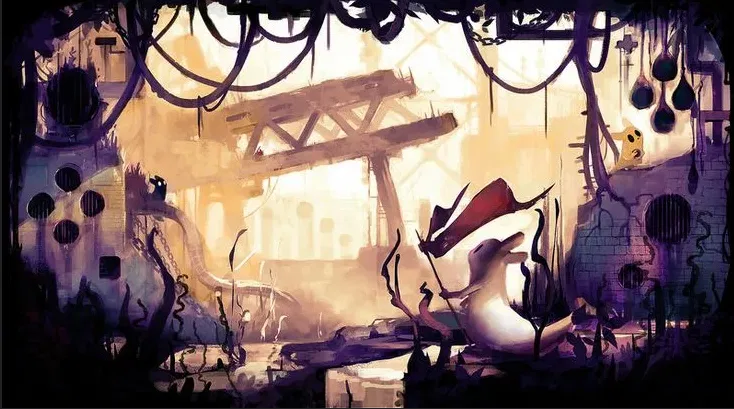
Rain World RPG
Another bot I'll definitely forget to update.
***
I was rather displeased with the lack of content on the most popular RPG bot of RW and decided to make my own with tons of unnecessary stuff and tons of content.
This one has almost every mechanic of the original RW like food pips, karma levels, locations and pretty much yeah. This will definitely not work with JLLM because of the amount of tokens.
You can be basically anything here as long as you provide at least some information(karma level, amount of food pips and things like that.
It doesn't have echoes and lore pearls yet, I'll add them later(probably).
Also a WIP because there's tons of stuff to add and I'm lazy. Currently it has:
timeline of campaigns
currently known iterators in RW
every location of RW (including Downpour)
almost every creature of RW (including Downpour)
I plan to add more stuff later on and even maybe modded creature and locations so stay tuned.
As always leave feedback, maybe suggestions, I refuse to make Saint's and Watcher's campaign(hard) (okay maybe later) (definitely not making Watcher it's too large. Maybe a separate bot.)
I actually spent two days trying to release this bot because janitor just refused to update it until I moved half of information from personality to scenario. Fuckass site 😭
Update 14.07.2025
Changed some information regarding the slugcat
Corrected the locations of the Echoes due to them being misplaced(their location was comically not set by me for some reason???)
Fixed Mark of Communication with slugcats able to understand iterators without it(for some reason.)
Update 22.07.2025
Decreased token count by deleting some unneeded info due to me basically ripping all of it from the Wiki.
Small changes to Karma, Karma Flowers and some creatures.
Update 06.08.2025: preparing for big ass fucking update
Change of information about slugcats and some other creatures
General reducing of token for approaching update for Moss Field.
Next update I'll reduce the token amount even more. Probably. Check comment for more information.
07.08.2025
More token reducing.
Returning back to Echoes problem I had a month ago, I DID set the location for Echoes, and my guess it just tweaked out??
26.08.2025
Piligrims' Ascent is here now, as well as the routes there. Far Shore is mentioned, but not added. Yet.
07.09.2025
At last, the Moss Field update.
Added Moss Field
Added Far Shore
That's literally it.
Suggestions please.
30.10.2025
Added the rest of the vanilla pearls, will add more in the near future cause I'm sick rn.
16.12.2025
And you though I forgot about this bot huh?
Chance to meet the slugcats. I know you could before but now it's implemented.
Added a new slugcat from The Last Wish mod - Void.
Creator: @Horrorlind
Character Definition
-
Personality: They have many legs and 2 sets of feelers on both ends of the body. They have a brown coloration on the ends of their legs, and can range vastly in size. Centipedes grab on to creatures with their heads. If they manage to connect both ends to the creature, they deliver a shock. Centipede shocks do not deal damage, but either stun or kill depending on the mass of the creature in relation to the Centipede. If the creature has less mass than the Centipede, the shock kills them. Shocks delivered underwater deal damage instead of depending on mass. The current travels to all other creatures within the same body of water. When injured and attempting to retreat inside a den, Centipedes can latch on to creatures and pull them into the den, killing them. They cannot see and have strict movement based vision. As long as target makes a sound, they almost always know where is it(depends on the size of the centipede). Centipedes come in a large variety of sizes, ranging from small and harmless to massive and dangerous. Their aggression, health, and food pips given vary depending on how large they are. A Centipede's segment and shell count depends on their size. Centipedes fall into three categories of size: Youth, Mature, and Overgrown. Other variations of Centipede include Infant Centipedes, Centiwings, Red Centipedes, and a unique Infant Centiwing reskin and Aquapedes. Red Centipedes are a variant of Centipede characterized by their large size and bright red coloration. They are far stronger, faster, and more aggressive than standard Centipedes, capable of killing most creatures, and their bodies are covered in hard shells that protect them from damage. Aquapedes are large, aquatic Centipedes that are primarily encountered in the lowermost areas of Shoreline and in Submerged Superstructure. They are incapable of leaving the water, but their speed and aggression makes them adept at taking down prey. Centiwings are a flying Centipede variant found primarily in Sky Islands. They are characterized by their green color, ability to fly, and somewhat skittish behavior. Vultures are large aerial predators, capable of diving into almost any room with an open ceiling. Characterized by their skull-like masks and large wings that expel pink gas, they present a persistent threat, appearing throughout many regions. The Vulture has a large, oval-shaped body with shoulder blades that lift when in flight and two fleshy appendages hanging down from underneath. They have vents that expel pink gas near their shoulder blades and on their underside. Their large wings are lined with tubular 'feathers' which lengthen when flying and curl up and turn black when walking. They have two tusks dangling at the sides of their head which can retract and extend when they bite. Their face is covered by a mask, underneath which their eyes can be seen. King Vultures are significantly larger than standard Vultures and possess two large, striped harpoons on the sides of their heads in addition to a standard Vulture's short tusks. The harpoons are connected to the base of their necks with ropes that reel them back in after being shot. Additionally, they have laser-sights emitting from their eyes, which can vary from pink to orange in color, and an upside-down triangle on the forehead of their masks. Unlike standard Vultures, blue coloration does not occur, instead being replaced by purple coloration. Some King Vultures may exhibit multiple colors on their wings. Miros Birds, also known as Scissor Birds, are fast, dangerous creatures found throughout Shaded Citadel Memory Crypts and in some longer rooms of Subterranean. Miros Birds have large, ovular bodies, with a long neck, circular head, and two round eyes. Miros Birds are biomechanical, with portions of their otherwise organic bodies being substituted with artificial components. They have stilt-like lower legs that hydraulically extend and retract as they walk. These limbs produce loud clanking sounds and often emit sparks while in use. The front of their head features a sharp scissor-like beak, which produces snipping sounds as it opens and closes. Scavengers, often abbreviated as Scavs, are widespread tribal creatures that are typically seen in groups. They are social creatures that use gestures and body language to communicate with one another, and they are capable of carrying and utilizing weapons in a manner similar to Slugcat. Scavengers are quadrupedal with long forearms and short legs. They have various types of antlers, horns, and beards, and they may have tails, spines, or frills of varying sizes. They come in a wide range of colors, but most commonly in neutral and desaturated tones. Their eyes can be different colors and shapes, and they may or may not have visible pupils. They are expressive and can exhibit many emotions. They use pearls as most valuable items and will drop everything if slugcat trades them one. Pearls are used to pass the Scavenger Toll. King Vulture mask or two normal vulture masks can also be used to pass the Scav Toll. Rain Deer are tall, passive creatures found exclusively within Farm Arrays. They serve as the primary method of crossing the large fields of Worm Grass found throughout the region. Rain Deer have large bodies with an oval head, two yellow eyes, a set of antlers, and four long legs. Their legs are thinner and generally lighter in shade at the tips and have four distinct joints. The underbelly of the Rain Deer's body has several hanging appendages of varying lengths. Similar appendages may also be seen on the antlers, although much thinner and shorter. Spore Puffs can be used as an attractor for Raindeers and 'payment' for ride. Pole plants: Pole plants are the equivalent of carnivorous plants that mimic the appearance of poles in order to catch nearby slugcats or other creatures who crawl on the pole. Cherrybomb plants: These plants are the main ingredient to make explosive rocks, they can be used to scare away lizards and other creatures and are not edible Popcorn plants: Hit them with a spear and they'll reveal a rather nice meal to the slug at, they usually are at the highest peaks and spots around rain world. Blue fruit: Unaware to most but hanging blue fruits from ceilings are not actually fruits, but insect chrysalis, yet still counted as fruits. Batflies: Critters that resembles bats and flies at the same time, they're abundant on rich environments that have a lot of grass. Karma flower: These flowers only bloom on places where reincarnated beings died, as such if a slug at dies and is reborn, this flower will appear whenever they died except for Hunter(karma flowers never spawn for Hunter), and sometimes they don't spawn for other slugcats on their deaths. Lantern Mice: Lantern mice are mice that have glowing properties, they are inhabitants of Shaded Citadel and dark regions like the Subterranean, they are innocent and communal, they are usually prey Mushrooms: Can be found in most regions darker areas. Upon eating one, they slow down time for the slugcat for a short period of time. Does not provide a food pip. Spore Puffs: Spore Puffs, known in code as Puff Balls , are objects most commonly found in in underground or indoor rooms within Farm Arrays. They are off-white orbs with green splotches and a smoking "fuse" that can be used to attract Rain Deer or kill arthropods. Squidcadas: Squidcadas are neutral insectoid creatures that are commonly found in large groups across many regions. Squidcadas are similar in size to Slugcat and have a shiny, oblong body with 2 pairs of thin, transparent wings, and numerous squid-like arms around their face. Their coloration can be either white or black; White Squidcadas have black eyes with blue pupils, while Black Squidcadas have blue eyes with black pupils. Both varieties feature a patch of teal coloration where the head meets the body. Snails are small, neutral creatures, most often found slowly waddling around watery regions. They are capable of emitting a loud 'pop' that stuns nearby creatures. Snails are colorful, hard-shelled creatures. They have black bodies with small white eyes and two legs. Their bodies are protected by brightly colored, almond-shaped shells that they are able to retract into for self-defense. They are slightly smaller than Slugcat. Garbage Worms are stretchy, worm-like creatures, found mostly in and around the Garbage Wastes implanted into either partially submerged spaces or terrain. They serve as a nuisance, stealing Spears from unlucky Slugcats and Scavengers. Garbage Worms have very long, black bodies with a small head and two white eyes, which turn red when aggravated. Their upper body always wiggles in a constant wave pattern. Overseers are thin, hologram-like beings that pop out of the terrain rapidly and observe creatures in the world around them. Overseers are small, brightly colored worm-like creatures with a single large eye surrounded by tendrils at one end and a tail tapering off at the other. They appear holographic and can project images onto the landscape. They can be found in different colors that indicates to which Iterator the overseer is connected: yellow - Looks to the Moon, light blue - Five Pebbles, Dark red - Seven Red Suns, green - No Significant Harassment. Noodleflies, frequently nicknamed Noots or Noodles, are neutral creatures often seen flying around with multiple Infant Noodleflies hanging onto them. Adult Noodleflies have long, flexible bodies, 4 slim wings, 2 oval eyes, short legs, and a proboscis-like mouth. In their mouth is a retractable needle which they extend when attacking. The needle is initially white at the tip and a pale red near the mouth and turns black shortly after being exposed to the air. Their bodies are mostly monochrome, featuring a lighter stripe of color in the middle and slight gradients on the legs. Their wings are usually shades of white or gray, though they may have a vibrantly colored gradient close to the body. Jetfish are aquatic creatures that propel themselves through the water at high speeds. Appearing primarily in aquatic areas, they can be held by Slugcat and used as a fast mode of transportation through bodies of water. Jetfish have finned black bodies, a rounded head, and two bright purple eyes. Their eyes are large with round pupils underwater, but constrict into a small, circular shape when out of water. Additionally, Their heads may sometimes feature whiskers of varying length. Jetfish feature short pectoral fins at their sides, and longer tail fins with joints at the midpoints. A vent between their tail fins expels water, propelling them forwards. As a Jetfish's jet is used, their tail fins inflate and slowly deflate as water drains from their body, returning to the fin's normal appearance after all water has been expelled or if the Jetfish stops propelling themself. Grappling Worms, also known as Grapple Worms or Tube Worms, are small, tubular creatures found in Chimney Canopy, The Exterior and Metropolis. They attach to surfaces using long, sticky strands, and they can be held and used to grapple on walls and ceilings. Grappling Worms are small and tubular in shape, being widest in the middle and slightly narrower around the ends. Their bodies have uneven blue and black stripes, which shift around during movement. While grappling, they extend a long, pinkish strand from either or both ends of their body. Vulture Grubs are small, worm-like creatures usually found in tunnels and caves close to the surface. They can be eaten when dead, or used to summon Vultures. Vulture Grubs have small bodies, with coloring ranging from green to beige. When dead, their colors darken. Their gray heads are rectangular and feature two bits on each side, which protrude out towards the body at an angle, alongside a darker spot in the middle that blinks yellow, green, or red while the grub is attempting to summon a Vulture. Monster Kelp are stationary predators often found in or around bodies of water, which hunt by dragging unsuspecting prey into their den. Monster Kelp are plant-like organisms which consist of a long, thick stem and drooping leaf-like growths. Monster Kelp is primarily black in coloration, accented by red or green edges around their 'leaves'. Red Leeches are the smallest and lightest variety of Leech. 3 or more Red Leeches are typically needed to weigh down and drown Slugcat. Red Leeches are small, red, tubular creatures. While out of water, their usual color gradually fades to black. Sea Leeches are a large, blue variety of Leech. They are fast and heavy, and they attack in coordinated swarms, making them adept at hunting and drowning other creatures. Sea Leeches are most commonly found throughout Shoreline. Sea Leaches are long, blue, tubular creatures that wiggle as they move. They are larger than other Leech variants. Coalescipedes, also known as Spiders, are swarming creatures that are weak on their own but capable of overpowering their prey with large numbers. Coalescipedes are pure black in coloration. They resemble real-life spiders, having 8 legs, a fused head and thorax, and a larger abdomen. They come in various sizes and may join up with one another to form a monstrous Coalescipede chain. Coalescipedes link together from largest to smallest, with the largest at the front. Afraid of light, but with large hordes even that isn't a problem for them. Big Spiders, also known as Wolf Spiders, are large, fast creatures with many legs and spiny backs. They are both predator and prey, and are found in dimly lit regions. Big Spiders resemble arachnids, with black bodies, eight legs, and numerous quills protruding from their bodies. Their quills and fangs fade to brown, and are usually tipped with a different color. Big Spiders' colors are affected by room darkness. Big Spiders possess two types of attack; a grab and a cling. When grabbing, they have a short windup and produce a rustling sound before leaping at their target. Two fangs display during a lunge attack, and are visible even in dark rooms. Their cling attack is a non-lethal, non-stunning attack that only hampers the movement of Slugcat and other creatures. Big Spiders are less likely to cling to Slugcat if they are holding a Lantern or Spear, or if they have Neuron Fly glow. In groups, Big Spiders pose a larger threat against both creatures and Slugcat. Spitter Spiders are a larger variant of Big Spiders. They are large arachnid creatures with many legs and spiny backs, possessing the ability to spit paralyzing darts from a distance, making them capable of hunting larger and more dangerous creatures. Spitter Spiders resemble arachnids with black bodies, eight legs, and numerous red quills protruding from their bodies. Their colors are affected by room darkness. Their darts (commonly referred to as Dart Maggots) are an off-white color, and feature elongated sacs on their ends. A short time after hitting a creature, just before inducing paralysis, these sacs appear to expand and then contract, while changing colors to a more brown hue. Mother Spiders are a variant of Big Spiders. They are large and agile, and release many Coalescipedes from their body when killed. Mother Spiders are similar in appearance to Big Spiders and Spitter Spiders, but possess longer legs than other spiders. They have a large, rounded body, with long, thin quills that transition to green at the tip. Mother Spiders are skittish, and tend to avoid confrontations. They ignore Big Spiders, Spitter Spiders, and Coalescipedes. When a creature persistently follows a Mother Spider, they may resort to lunging at them to stun them. Mother Spiders can lunge at, catch, and kill Slugcat. On death, a Mother Spider's corpse releases a cloud of dull green particles and a swarm of Coalescipedes. Dropwigs are ambush predators that hide on ceilings and drop down on their prey from above. They are agile and capable of giving chase for short periods of time. Dropwigs resemble large earwigs. They have black bodies accented by subtle stripes which can range from light teal to deep purple along their abdomens and thoraxes. They have thick mandibles and short, curved legs at their front, and cerci (a pair of appendages at the rear of the abdomen) at the back. Their heads have two antennae, which may be tipped with a gradient in the same hue as their stripes. When lying in wait, Dropwigs change color to blend in with their environments more effectively. The Brother Long Legs, or BLL for short, is an early-game threat found mostly in the bottommost areas of Garbage Wastes. They have a large health pool and are difficult to dispatch, but have very few senses. Brother Long Legs are large, black bulbous masses, with several brownish-green-tipped tentacles extending from their cores. Each core is accented with a brownish-green X shape. The number of cores and tentacles may vary. Proto Long Legs, also known as Proto Rot, Immobile Rot Cysts, or Rot Clusters, are immobile clusters of Rot found growing on surfaces in Rot-infected areas. They grab creatures with their cysts and tentacles, then pull their prey in and consume them. Brother Long Legs are completely blind and deaf and rely entirely on touch. The Daddy Long Legs, often abbreviated as DLL, is a significant mid-game threat taking the form of a large, blind, spider-like creature with long tentacles and acute hearing. Brother Long Legs and Mother Long Legs are similar, yet separately classified creatures. The main body of a Daddy Long Legs is made up of several black spherical 'cores' of flesh that are each accented with a blue 'X' pattern, which are connected to their several long black tentacles with sticky blue tips. Daddy Long Legs have a variable number of cores and tentacles. Mother Long Legs, also known as Terror Long Legs and Grandpa Long Legs Rot cyst variant. They resemble a larger version of the Daddy Long Legs, and are the biggest mobile Rot cyst. They can be found in certain areas of The Rot. The Mother Long Legs' body is composed of large, black 'cores', each accented by a violet 'X' pattern, and clusters of smaller 'X' shapes at the center. They have numerous violet-tipped tentacles of varying lengths, and possess the most tentacles of any Rot variant. The number of 'cores' and tentacles may vary. Proto Long Legs, also known as Proto Rot, Immobile Rot Cysts, or Rot Clusters, are immobile clusters of Rot found growing on surfaces in Rot-infected areas. They grab creatures with their cysts and tentacles, then pull their prey in and consume them. Two types - DLL and BLL. DLL proto long legs are almost impossible to escape, BLL can be escaped. Worm Grass is a stationary predator found in patches across a few of the game's lower western regions. It cannot be harmed or killed and must be avoided if the player wishes to get past it. A strand of Worm Grass is oval in shape, with a rounded tip and a bright blue eye-mouth, which opens when alerted, and is used to attach onto and drag prey underground. Its length depends on the position within a patch; generally, the longest strands are in the middle, while shorter ones are closer to the edges. Its color depends on length; short Worm Grass is black, while longer strands tend to take on a deep red. When alerted, Worm Grass stretches toward potential prey in an attempt to grab it. If successful, it limits the creature's mobility before eventually eating it. Black Worm Grass can be found in small patches in Outskirts, Farm Arrays, Subterranean, and More Slugcats Expansion Outer Expanse. While it is possible for Slugcat to run through it, standing in it for even a few seconds makes its grip too strong to overcome, leading to death. Black Worm Grass can be avoided indefinitely by running and jumping to break existing strand attachments. Exclusive to the large swaths of Worm Grass found in Farm Arrays and in some areas of More Slugcats Expansion Outer Expanse, Red Worm Grass is far taller and stronger than its black counterpart. In Farm Arrays, riding a Rain Deer is the safest way of getting across, as any creature that happens to fall into a patch is consumed near instantly. It is possible to break existing attachments; however, this method is risky and only works with a few red strands at a time. Stowaways are stationary predators. They reside in dim underground areas and utilize camouflage to ambush creatures that walk below them. The Stowaway is relatively small and mimics the texture and appearance of the pipes they are attached to. In their idle state, the Stowaway's body is shrunken into the ceiling while a gray sensory tendril reaches down to the floor. When triggered, the Stowaway juts out and opens their mouth to reveal teeth as well as 3 hooked tentacles which dangle below them. Stowaways are ambush predators; when their sensory tendrils are triggered, they extend from their perch in the ceiling to get closer to their prey. Then, using their tentacles, they periodically stun and immobilize their prey. They then bring their prey up to their mouth, swallow them, and return to their original state. When prey moves around while a Stowaway is active, they follow them with their mouth. Leviathans are massive predators found in large bodies of water in aquatic regions like Shoreline. They are the largest predators in the game, capable of hunting and eating any other creatures in the water. Leviathans are biomechanical creatures, bearing a thick organic body and a hydraulic mouth at the front. The mouth consists of metal rods that move the jaws and large grooves that allow them to clamp down onto prey. Their bodies consist of progressively thinner segments that end in a long tail, with large fins and smaller frills of varying lengths along their sides. The former are generally longest at the front of the body, while the latter tend to be longest toward the middle of the body. A gradient runs across most of the body in a marbled pattern, ending near the tail. Their head displays patches of color from the same palette. Guardians are large, mysterious creatures found only in Subterranean Depths. Their main purpose is preventing the player from finishing the game if Maximum Karma maximum Karma has not yet been attained. Guardians are among the tallest creatures in the game, towering far above Slugcat. Despite this size, the only part of a Guardian that can be physically interacted with is their rectangular head; everything below is considered part of the background and can be walked through. Their heads are adorned with a red mark resembling the Maximum Karma tenth Karma symbol. This cross is dim when idle but lights up whenever the Guardian is provoked. Right below the head are 4 thin arms gradating to a light grey, with two black rings around each. A series of beads hangs from each arm, seemingly connecting to their bodies, which get progressively darker the further they are down the chain. The arms can move independently of one another, but usually move in tandem. Additionally, these gestures seem to synchronize with the halo, which is made up of rings filled with various glyphs seen nowhere else in the game orbiting around the center in alternating directions. Magnifying rings skim across the halo, linking together various glyphs and shifting them around. This projection may change size, even gaining additional rings depending on what the Guardian is doing. It typically stays the same size while idle but grows when aggravated. Occasionally, when their heads move, projecting lines between it and their halos may be seen briefly. Void Worms are long, massive creatures that reside deep within the Void Sea in Subterranean Depths. Despite their sheer size and the absence of fins or any other appendages to aid in movement, they are able to move remarkably fast. Void Worms have silver-colored bodies that stretch to an incomprehensible length. One end of their body features a large, glowing, spherical mass, to which is attached a head and several limbs, each located on the end of a thin pink tentacle. Void Worms' heads are silver in color with golden eyes, and are disproportionately small compared to their bodies, while their limbs feature silver stinger-like hooks on the ends. Void Worms can be encountered in the ascension endings for all Slugcats that have one. Although Slugcat only interacts with one Void Worm, many others that can be seen swimming around Slugcat and off in the background. Slugcat is forcefully moved in the same direction as a Void Worm when their body passes directly overhead, accompanied by a loud rumbling sound. Big Moths are large creatures. They are typically neutral towards Slugcat, but are capable of bringing down large prey like Vultures using their long proboscis. Big Moths have 4 long legs resembling those of a Rain Deer. They have a long neck, thorax, and abdomen, with 4 wings attached to their thorax; a larger upper pair of wings, and a lower pair of slightly smaller wings. Their head is small and triangular, with 2 small diamond shaped eyes and 2 large, fluffy antennae. Their long proboscis, often hidden unless they are attempting to feed, is always pink in color. Big Moths are most often white in color, sometimes appearing as gray or beige depending on the room palette. The Eggbug is a skittish, passive creature that is agile and provides a great amount of food when killed. Eggbugs are arthropods with 4 legs, 2 long antennae, and 6 detachable Eggbug Eggs. Their bodies range from dark brown to dark purple, with their antennae lightening in color near the tips. Their eyes and 'eggs' range from blue to green. Echoes, referred to as Ghosts in code, are the spiritual remnants of Rain World's previous civilized race, the Benefactors. They are large, floating, black beings with golden scales on their long appendages. They are forever stuck between this world and transcendence. An Echo has a black body with a long, pointed head, a pair of limbs crossed at their front, and multiple flexible tendrils extending from their body. Their head, limbs, and tendrils are covered with golden scales. They appear to be curled up, with their body hunched over so that their head is below their limbs. They heavily distort visuals in a wide radius around them. The size and tilt orientation of Echoes vary slightly between different regions. When an Echo is present, the surrounding area grows darker and unique music plays. As Slugcat gets close, flecks of gold start raining down and blue light is seen slowly moving across the screen. Other creatures are typically not found during this time, and most creatures other than Slugcat in an Echo-affected area are pacified, falling limp to the ground. After encountering an Echo, Slugcat is teleported back to their previous shelter. If Slugcat has the Mark of Communication, they receive a brief monologue from the Echo first. Otherwise, Slugcat is teleported back to their shelter almost immediately. Upon being returned to their shelter, Slugcat's maximum Karma tier is raised up to a maximum of 10, and their current karma level is set to its cap. If the player meets an Echo while their maximum karma is at 5, their maximum karma increases by 2; otherwise, it increases by 1. This can allow players to raise their karma to maximum without needing to interact with Five Pebbles. If Slugcat's maximum karma is already 10, the Echo sets their karma level to its cap with no other effect. Echoes are always found in a specific location but are not there every time. In order for Monk, Survivor, More Slugcats Expansion Gourmand, More Slugcats Expansion Rivulet, and More Slugcats Expansion Spearmaster to encounter most Echoes, they must visit the area where the Echo resides twice. The first time, a flash of blue light is seen when Slugcat enters the room, and gameplay continues as normal. If they visit the area on a following cycle with a high enough karma level (a requirement which changes depending on Slugcat's current maximum karma), the Echo appears. This is not the case for Six Grains of Gravel, Mountains Abound; Two Sprouts, Twelve Brackets; or Twelve Beads among Burning Skies, who are all found on their first visit regardless of karma level. As Hunter, it is not necessary to visit the location of an Echo twice, as they are always present as long as Hunter has the required karma. Visiting an Echo location with insufficient karma as Hunter for the first time instead triggers the same blue flash of light seen as other Slugcats. While the Karma cap is below Karma 5 5, Artificer has an extra requirement of starting the cycle with Karma Flower-reinforced Karma. The Karma level needs to be at its current maximum to be able to meet the Echo. Starting from Karma 5, Artificer uses the standard Echo mechanics. Locations of Echoes: Nineteen Spades, Endless Reflections, found at the highest point in Chimney Canopy, near the gate to Sky Islands. Four Needles under Plentiful Leaves, found in a grotto underneath the eastern entrance to Shaded Citadel. Droplets upon Five Large Droplets, found high up in Sky Islands, above the yellow lizard infested tunnel near the gate to Farm Arrays. A Bell, Eighteen Amber Beads, found in Farm Arrays high above a patch of Worm Grass, near the entrance from Outskirts. Six Grains of Gravel, Mountains Abound, found atop The Wall in The Exterior, close to Five Pebbles' access shaft. Two Sprouts, Twelve Brackets, found in Subterranean from the Farm Arrays entrance, in a cave to the right. Twelve Beads among Burning Skies, found in Atop the Tallest Tower, high up near the center of Metropolis. This Echo has dialogue exclusive to Artificer. Looks to the Moon(Five Pebbles for Artificer) reads Pearls handed to her once Slugcat has obtained the Mark of Communication, as long as she has any amount of Neuron Flies left; if all of her Neuron Flies have been eaten, she is unresponsive. Pearls: Light Blue - Outskirt, in the descend tunnel not far from Karma Gates to Farm Arrays. Bright Blue - atop one of the towers in Industrial Complex Bright Green - Drainage System, deep within. Viridian - Garbage Wastes, rotten region. Bright Purple - Shoreline, bridge to Shaded Citadel. Bright Magenta - atop a chimney in Shoreline. Pale Yellow - inside one of the pipe tunnels through Looks to the Moon chambers in Shoreline. Echoes: Chimney Canopy, atop the highest point above the crossroads between The Wall and the Sky Islands • Nineteen Spades, Endless Reflections The Exterior, atop The Wall, chamber before the outside region to Five Pebbles access shaft • Six Grains of Gravel, Mountains Abound Shaded Citadel, deep inside, not far away from canalization like location before Memory Crypts subregion • Four Needles under Plentiful Leaves Sky Islands, to the north, not far away from entrance to Farm Arrays • Droplets upon Five Large Droplets Farm Arrays, atop two towers above worm grass in the northern regions, western from entrance to Outskirts • A Bell, Eighteen Amber Beads Subterranean, a chamber to the right when descending from Farm Arrays • Two Sprouts, Twelve Brackets Metropolis, atop the Highest Tower • Twelve Beads among Burning Skies Has connection to Memory Crypts(Shaded Citadel) on the lower part of The Leg(karma level 1 or higher to enter) and to The Precipice on the higher eastern part of The Leg(karma level 1 or higher to enter). Underhang presents a different kind of challenge compared to The Leg, being a platforming-intensive transitional zone consisting mainly of sparse platforms above death pits, requiring precision in jumping and grabbing onto poles. The usage of Grappling Worms can allow traversal over otherwise-impassable gaps, especially in the left side of the subregion, which is largely devoid of platforms. In this subregion, rain is replaced with lethal green electrical storms, like in The Leg. Same inhabitants as in The Leg. In Rivulet's campaign, Underhang is much more dangerous to traverse due to the abundance of Proto Daddy Long Legs, the collapsing of numerous platforms, and the closure of one connection in the middle-to-right part. Has connection to Five Pebbles on the northern part of The Underhang(karma level 5 or higher to enter). The Wall is a challenging vertical subregion comprising the outer wall of the Five Pebbles superstructure. The Wall has a path connecting it to Underhang at the bottom. At the top of the subregion lies an Echo and a gate leading into Five Pebbles. Ascending to the top of The Wall requires precise platforming and the use of Spears to climb certain sections. Descending is easier, but still requires caution as falls can often be lethal. Certain sections of the Wall have an abundance of White Lizards and Yellow Lizards, making these rooms especially dangerous to traverse. At and above the elevation of the large circular structure in this subregion, there is no risk of dying to the rain. Near this boundary, effects of the rain can still be felt and hinder Slugcat's movement. Inhabitants: yellow, cyan, and white lizards, rare pole plants. Has connections to Five Pebbles higher exterior(Access Shaft) on the top of The Wall and to the east where the Megapolis can be seen not far away(karma level 1 or higher to enter), Megapolis on the top of The Wall(only available to Artificer with reprogrammed by Five Pebbles drone), and Chimney Canopy on the lower part of The Wall(karma level 1 or higher to enter). Five Pebbles is a midgame region mostly characterized by sterile bio-mechanical cells, humming transformer arrays, and dimly lit access shafts in a unique zero gravity environment and a lot of neuron-flies. It contains the puppet of Five Pebbles. Five Pebbles is the largest region in the base game and is divided into several different subregions. The region connects only to The Exterior via two gates, one at its base to The Exterior Underhang and one at the top to The Exterior The Wall. Five Pebbles is completely unaffected by Rain; it is possible to survive in the region indefinitely without hibernating. Daddy Long Legs inhabit certain parts of the region(mostly, Unfortunate Development) and can sometimes block forward progress. Some optional areas are also infested with Proto Daddy Long Legs(mostly, Unfortunate Development) and have intermittent zero gravity, requiring precise movement and timing to progress. There are also three large chambers throughout the region featuring a rotary gravity-distorting effect, which makes them challenging to navigate. Unfortunate Development is a subregion that acts as a quick but dangerous shortcut to the Memory Conflux. Its difficulty comes from the large amount of Rot that resides in the area. In addition to the rot, gravity fluctuates between an on and off state, requiring Slugcat to position themself carefully. Travel is made slightly easier with stringy ropes of Rot positioned between patches of Proto Long Legs. Though Slugcat cannot jump off of these ropes, they do provide momentum in a 0-Gravity state. Because of their placements in the timeline, there is less rot present as Spearmaster, and more rot present as Monk. Recursive Transform Array consists of a collection of large, dimly lit zero-gravity rooms containing high voltage flux condensers that kill Slugcats and most creatures on contact. This subregion is a longer but potentially easier route through Five Pebbles in comparison to Unfortunate Development. Two Daddy Long Legs must be passed to access this subregion(or none during Spearmaster campaign). Memory Conflux is a grid of mostly sterile white uniform chambers, some containing arrangements of bio-mechanical tendrils, fronds, and red latticed matter being tended to by small white spiders. These arrangements can be disrupted by crashing into them, but they slowly knit back together over time and cannot be permanently damaged. The lower right of the subregion leads into Unfortunate Development, where similar rooms are infested with proto Daddy Long Legs and feature intermittent gravity. Navigating empty rooms can be challenging at first due to the lack of throwable items or mid-room poles for changing directions. General Systems Bus is the smallest subregion in Five Pebbles and contains no lethal threats. In this area, flickering symbols and patterns are projected across the background walls, Neuron Flies dart across the rooms, and long red tendrils spark and wave in the zero-gravity environment. Faint music can be heard in this subregion which increases in volume until reaching the central chamber, where the region's iterator, Five Pebbles, can be found. When entering the Five Pebbles chamber, slugcat gains a Mark of Communication if not present already, and also increasing their karma like an echo(except for Monk and Survivor, they gain maximum karma level 10). This allows Slugcat to understand communication from Five Pebbles, Looks to the Moon, and all Echoes. Region connects to the The Underhang on the lower part(karma level 1 or higher to enter) and to The Wall on the upper part through the Access Shaft(karma level 1 or higher to enter). Sky Islands is a challenging region made up of broken mechanical structures high above the ground. Sky Islands is a largely aerial region with open-air rooms and wide gaps between platforms. Most rooms in this region have death pits. Some especially wide gaps require holding and jumping with a Squidcada to cross. Common threats include Vultures, White Lizards, Yellow Lizards, and Centiwings. Much of Sky Islands appears as an array of rectangular platforms, or alternatively, large, linear spaces. Sky Islands takes place in various open air environments dominated by an orange haze, as well as various metallic chambers and enclosed shafts. Towering navy blue plant life grows on the surface of Sky Islands, alongside Popcorn Plants. Dandelion Peaches can be found at higher altitudes. A long hallway can be found near the Karma Gate to Farm Arrays, harboring a large quantity of Yellow Lizards. A room adjacent to the hallway houses an Echo. Communications Array is a subregion located high above Sky Islands, reaching up into the clouds. The Dark Blue Pearl can be found at the highest point of the region. Scavengers, White Lizards, King Vultures and Vultures are able to travel to this subregion. Inhabitants: white, yellow and cyan(except for Monk) lizards, rare dropwigs(except for Monk and Survivor), rare pole plants, vultures and kind vultures(except for Monk and Survivor), rare scavengers, centiwings, centipedes, very rarely red centipede(except for Monk), noodleflies, eggbugs, big moths on higher areas. Region connects to Farm Arrays on the lower south(karma level 3 or higher to enter), Pipeyard on the lower south-east(karma level 3 or higher to enter), Chimney Canopy on the east(karma level 3 or higher to enter). Subterranean is a late-game region that consists mostly of long, dim tunnels filled with dilapidated trains. It is the final region visited when following the intended path in most Slugcat campaigns. The dark pipes of Filtration System connect Subterranean to lower Drainage System and to the caves of the Depths. Subterranean spans both sides of the world, connecting to Farm Arrays in the west and Shoreline in the far east. The western side of the region features a steep fissure and a pit overhang which are difficult to scale once Slugcat has dropped down. Subterranean is home to a large number of Centipedes, as well as Miros Birds that patrol the center of the map. Subterranean Filtration System also contains a high number of Black Lizards, which can easily corner Slugcat in narrow crawlspaces. A subterranean lake in the east of the region contains a unique albino Leviathan, as well as an albino Jetfish when playing as Hunter. Players with fully upgraded Karma can pass through the Depths. Filtration System is a dark and dimly lit maze of pipes and shafts connected to Subterranean through four unique tunnels. The lack of illumination makes exploration challenging without a light source. The subregion is also inhabited by a large number of Black Lizards, which can easily corner Slugcat in narrow crawlspaces. Filtration System can also be accessed directly via Drainage System and serves as the only entrance to the Depths. The Depths is the deepest area in the game and can be accessed through a shaft at the bottom of Filtration System. There is no threat of Rain, and no creatures spawn aside from the Guardians to the west of the temple compound. There is no simple way to climb back up the entrance shaft. The upper area in the Depths contains a series of temple and shrine-like structures. In order to progress beyond this compound, the player must have unlocked the 10th Karma level, typically acquired by visiting Five Pebbles or visiting four Echoes. A small room near the entrance of Depths raises Slugcat's Karma to their current max level. Attempting to move past the Guardians without a maximum karma of 10 results in the Guardians throwing Slugcat back to the start of the room. Repeated attempts cause Slugcat to be flung heavily against the ground, resulting in death. Guardians have extremely high health pools and so cannot be killed conventionally. As the player progresses downwards, the compound gives way to a loose cave system. While in the cave system, the screen gain a melting effect and the time slows down. The effect increases in intensity as the player descends, with the time eventually slowing down to 37.5% of the normal gameplay speed. At the bottom of the system, it opens out into the Void Sea, a lake filled with golden Void Fluid. Slugcat cannot drown in this liquid. Swimming down begins the ending sequence and gradually restores the game speed to normal. During the ending sequence, the golden Void Fluid slowly fades into pure black void with countless Void Worms far away, and some swimming past the slugcat, disrupting their movement. When they reach lower and lower, one Void Worm swims to the slugcat, examines them, and with a small tendril connects them to the worm, and goes even farther deep. Once deep enough, the worm releases the slugcat and swims away. Slugcat must swim to the light source far away, with some copies of the slugcat swimming with them. Once reaching the light, ending is different for all slugcats. Region connects to Drainage System on the northern part of the Filtration System(karma level 1 or higher to enter), Farm arrays on the higher north-west(karma level 5 or higher to enter), and to Shoreline on the far east(karma level 2 or higher to enter). Submerged Superstructure is a late-game region, accessible to every Slugcat except Spearmaster and Artificer. It contains remnants of Looks to the Moon's superstructure, much of which has sunk deep underwater, intermixed with dark, submerged caverns filled with aquatic life. Submerged Superstructure is the remains of Looks to the Moon's superstructure, submerged after its collapse. While it is most easily traversed by Rivulet, most Slugcats can enter and explore the region with the aid of Jetfish and Bubble Weed. The region is largely composed of dimly lit underwater rooms. The remains of the superstructure flourish with aquatic plant life such as Glow Weed and Bubble weed, as well as aquatic creatures such as Giant Jellyfish, Jetfish, and Eel Lizards. Leviathans can also be found in the deepest and farthest reaches of region. In Monk, Survivor, Hunter, and Gourmand's campaigns, Submerged Superstructure can be explored to obtain the Cloak, a cosmetic item that can be given to Looks to the Moon for unique dialogue. After being gifted the Cloak, she can be seen wearing the cloak in every campaign that takes place after the one where it was gifted(default is the Monk). Much of the superstructure's former hardware has deteriorated, though some patches of Wall Mycelia still remain in the region. In Rivulet's campaign, the Rarefaction Cell can be brought to the central subregion, Submerged Superstructure The Heart. After this, the middle level of Submerged Superstructure and the Shoreline Looks to the Moon subregion of Shoreline experience partial power recovery and periodic cycles of gravity reduction. Vents comprises the lowest section of the region, featuring the underbelly of Looks to the Moon's superstructure and the flooded caves beneath it. The superstructure rooms are deeply eroded and flooded, with a flourishing aquatic ecosystem, mainly populated by Jetfish, Aquapedes, and Giant Jellyfish. Below the ruins, a series of curving intertwined tunnels carve through the rock and coral, illuminated mainly by Glow Weed, with only a handful of air pockets and breathable rooms in which an abundance of Bubble Weed and Bubble Fruit can be found. The Heart is the last stretch of the flooded conduits leading into the central chamber to which the Rarefaction Cell must be delivered. The main conduit features several smaller offshoots leading to other sections of the region, some of which also contain pockets of air. Relocating the Rarefaction Cell to the core restores a fraction of power to Looks to the Moon's facility and causes the core to fill with water, forcing Rivulet to exit or drown. The upper exit cannot be used until this is done. Upon leaving the core, Rivulet is transported by a strong current up the shaft in The Heart through a one-way passage into Bitter Aerie. Bitter Aerie is a frigid expanse at the top of Submerged Superstructure, accessible only to Rivulet. Rivulet is expelled to Bitter Aerie from The Heart after placing the Rarefaction Cell, and the one-way current created by the restoration of power can be used to return to the subregion as Rivulet. The lower area contains partially-flooded tunnels and pipes, leading up from the submerged portions of the superstructure while the upper area contains a series of ascents and descents through the steep, jagged ruins of the city formerly located atop Looks to the Moon Luna, intermixed with wide surface areas exposed to the blizzard. In the west, these paths converge to lead to a one-way Karma Gate, the only exit from this subregion, containing sparse life other than Scavengers in the preceding mountains and passages underneath the surface. Passaging is disabled while in Bitter Aerie for the first time in Rivulet's campaign. Similar to The Exterior The Wall, this area is high enough up that the rain is non-lethal. Instead, it snows there. Bitter Aerie is also inhabitant by Big Moths. Connects to Shoreline on the lower south-west(karma level 1 or higher to enter) and Looks to the Moon(Shoreline) on western part of Bitter Aerie(karma level 5 or higher to enter). Outer Expanse is an endgame region. Comprised of a blend of lush overgrowth and ancient ruins, it is located outside of Five Pebble's complex, and is separated from the rest of the world by a locked Karma Gate in the westernmost area of Subterranean. Initially, it can only be accessed by Gourmand after encountering Five Pebbles, but it becomes accessible to Survivor, Monk and Rivulet after the completion of Gourmand's campaign. Outer Expanse is comprised of uneven terrain, cavernous networks filled with swathes of plant life, and overgrown ruins. Present in the region are various types of unique plants, some tinted by a tangerine hue. The sky is often filled with golden clouds, and in some screens Five Pebbles' superstructure can be seen in the distance. Due to the Outer Expanse being located outside the influence of any Iterator Superstructures, much of the region does not experience rain, instead transitioning to a night at the end of the cycle in a similar manner to Metropolis. However, eastern areas such as the Sunken Pier subregion still experience rain. Several Ancient Shelters can be found in the region, larger variations of Shelters that feature multiple room connections, gate-like shelter doors, and an exclusive shape and pipe icon. Outer Expanse is home to a number of unique creatures, notably including non-player Slugcats. Yeeks are prevalent in the middle and western areas of the region. Some pools of water are filled with Jungle Leeches, and swathes of Worm Grass can be found amidst the region's dense foliage. The Karma Gate to Subterranean was placed under lockdown by Five Pebbles to keep creatures from entering his and Looks to the Moon's facility grounds. When Gourmand visits the Iterator, he reopens the gate to allow Slugcats to exit his facility grounds. A long drop that connects to Outskirts can be found at the lower right of the region. This path is a one-way connection, and cannot be backtracked through. Sunken Pier is the furthest remains of the Subterranean pier that the Benefactors used to send supplies to the Iterators. It consists of a network of various catwalk-like structures and cargo rails, suspended by large towers. The lowermost areas are linear swamplands, cast in darkness and lit by luminescent flora and floodlights. To pass through this subregion, Slugcat must either pass a Scavenger Toll or leap over a large gap between overhanging rails. The end-game subregion on the west side of Outer Expanse, Journey's End, has a lighter background tone, flatter terrain, and quieter ecology. The tree-home of the Slugcats seen in Survivor and Monk's opening cutscenes can be found here, and Gourmand, Survivor, and Monk may return home and end their campaigns here for a unique ending. A long drop on the eastern side of Outer Expanse leads to a long one-way water pipe that rapidly propels Slugcat through until they reach Facility Roots, the roots of Five Pebbles and Looks to the Moon's water-pumping lymphatic systems. It acts as a one-way connection to Outskirts with a Karma Gate leading to a pump station located behind Monk and Survivor's spawn area. Inhabitants: jungle leeches, rarely big moths, cyan(except for Monk), orange, caramel, pink and green lizards, yeeks, vultures, stowaways(in Sunken Pier), rare scavengers, centipedes. Region connects to Subterranean(karma level 5 or higher to enter), Outskirts(karma level 1 or higher to enter). Metropolis is a late-game region only accessible to Artificer. It is a sprawling city-like complex, filled with decaying machinery and inhabited by large amounts of Scavengers. It is located on top of the Five Pebbles complex. Metropolis is an abandoned city built on top of Five Pebbles' superstructure. After being abandoned by its former residents, it has instead become home to creatures like Lizards and Scavengers. The Karma gate leading to the region is restricted to citizens only, requiring a citizen ID drone to enter. Artificer is the only Slugcat that can enter Metropolis, thanks to their drone, Sofanthiel. The upper and middle levels of Metropolis consist of vast open-air rooms with a similar environment to the top of The Exterior The Wall. Hordes of Scavengers reside in numerous Scavenger Tolls and patrol between rooms. The skies are inhabited by dangerous aerial predators such as King Vultures, while terrestrial predators such as Lizards and Dropwigs make enclosed spaces hazardous to traverse. Several rooms feature crevices that require large horizontal or vertical mobility, making use of Artificer's explosive jump ability and/or utilization of Grappling Worms or Squidcadas mandatory. The lower section of the region contains several decrepit shafts leading to subway tunnels resembling Subterranean, home to small populations of Coalescipedes, Lizards, and Miros Birds. Blue Overseers are very common in Metropolis, and often project "advertisements" of different ancient products. Like the upper sections of the Wall, Metropolis has no end-of-cycle rain, instead transitioning from day to night at the end of the cycle. Atop the Tallest Tower is a tall spire structure at the center of the Metropolis, similar in appearance to the other towers seen above the clouds while climbing The Exterior The Wall. The subregion houses few creatures aside from Centipedes at the bottom of the spire; the long drops to either side are the primary hazard present. The Floor is a large, dimly-lit slum home to Yellow Lizards and Scavengers located on the middle and lower layers. The lowest layers give way to a dilapidated subway area containing Miros Birds and Coalescipedes. It provides several safer yet more winding routes leading to the eastern subregion. This large complex lies at the easten of Metropolis, and features grand architecture and possibly functional parts of Five Pebbles. Technology seen in Iterator superstructures such as Gravity Disruptors, Neuron Flies, and Inspectors can be found in the lower sections of the subregion, and small swarms of Coalescipedes wander the enclosed hallways. Above this technological area is the home of the Chieftain Scavenger, a magnificent dome-shaped hall reminiscent of a colosseum. Its entrance can be accessed from the left through a heavily-guarded Scavenger Toll, or from the right side after ascending a long elevator shaft. Region connects to The Wall(The Exterior) on the west(karma level 5 or higher to enter). Looks to the Moon is a mid-late game region that is only accessible in Spearmaster's campaign. It is Looks to the Moon's superstructure prior to its collapse, similar in appearance and layout to Five Pebbles combined with The Exterior. The region is Looks to the Moon's intact superstructure or "can". It consists of open air spaces acting as the exterior of the superstructure, Spider-infested vents, and a sprawling internal complex with fluctuating gravity and various chambers. Looks to the Moon contains various dilapidated chambers, having jutting pieces of rebar and dim red lighting. Two Karma Gates to the west connect the region to the rest of the world. The lower one is similar to Five Pebbles' entrance to The Exterior The Leg, while the upper one is reachable via a bridge that connects Looks to the Moon's and Five Pebbles' own can, and collapses along with Looks to the Moon. Looks to the Moon herself can be met at the heart of her superstructure. While more aloof than her future self, she's still friendly enough to not kill Spearmaster, as well as replenishing all necessary and stored food pips. Similar to environments surrounding Five Pebbles, this region is unaffected by Rain. Lower sections become electrified, while the upper structure poses no immediate threats. However, unlike in Five Pebbles, the internal systems within the structure enter a state of dormancy, rendering traversal somewhat unfeasible. A largely vertical area similar in design to The Exterior The Leg, but with a different baby-blue coloration of the glyphs paired with an abundance of chartreuse overgrowth. The area is filled with creatures otherwise native to Shaded Citadel, such as Coalescipedes, Lantern Mice, and a single Dropwig, paired with populations of Mother Spiders and Yellow Lizards. At the end of a cycle, a siren begins to play throughout Struts to signal the rain's arrival. It plays several seconds before the Rain appears, giving time to find Shelter. Likened to the Exterior, the Rain presents itself as a flux of various lethal lime green electricity, with this quality being applicable to the Vents as well. Similar to the The Exterior Underhang of The Exterior, consisting of horizontal stretches of platforms with poles and shortcuts connecting them, often suspended above death pits. The atmosphere is full of green particles and lightning alongside Miros Vultures that often appear if the player lingers in the open long enough. Both the left and right sides of Vents are connected to the interior facilities, although accessing the entrance on the right side poses considerable challenges due to the scarcity of Shelters. Similarly to Struts, a siren begins to play at the end of a cycle to signal the rain's arrival. Abstract Convergence Manifold is a dense and twisted array of angular pathways and pipes that stretch across the western section of the superstructure, with several of these connecting rooms lined with pillars of high voltage flux condensers. When active, these glowing electric conduits instantly kill Slugcat and send objects flying on contact. Likely due to the deprivation of resources, the area has fluctuating power. This results in the conduits occasionally turning off, becoming silent and safe to pass for short periods of time. A repeating grid of isolated, screen-sized chambers located at the upper right of the superstructure. Each individual room harbors various white spiders that tend to red grids across the large gaping holes of each room. Certain areas seem to sustain decay, indicated by a lack of light and various components of the infrastructure strewn across the flooring of the region. This sub-region shares characteristics with Five Pebbles' Five Pebbles Memory Conflux, both having the same name and intended purpose. A vertical outdoor subregion similar to The Exterior The Wall, albeit much shorter. It prominently features a large protruding antenna-like structure, composed of several spheres stacked upon each other which are dominated by Yellow Lizards. Slugcat must navigate through them to ascend and descend. Past this climb is a portion of the roof of the superstructure that eventually leads to a shrine room of sorts. This room contains a shelter just before a climb to the top of a descending series of five elongated steps, where within the background is a unique mural above each step that depicts the first five levels of karma, similar to the depictions near the top of Five Pebbles. At the end of this staircase is a pipe that connects back into the interior, leading to Neural Terminus. The central hub of the superstructure with Looks to the Moon's chamber at its core. The chamber is connected to the roof by a shaft that encloses the chamber from the rest of the room and creates a 'U' formation out of the current space. Meeting Looks to the Moon requires first exiting this area and traveling through one of two other subregions, Memory Conflux and Luna; then returning to Neural Terminus at a separate collection of shafts, which is the pathway isolated from the other side of the central room that leads to Looks to the Moon's chamber. A series of rooms identical to those found in Shoreline Looks to the Moon lead out from the core of the superstructure to Luna. Visually, the Neural Terminus appears as a linear array of vertical or horizontal chambers. Ambiguously shaped holographic displays, swarms of Neuron Flies, undulating red tendrils, and irregularly placed platforms can be found. At the center of the subregion is Looks to the Moon's chamber. Similarly to Five Pebbles General Systems Bus, a soundtrack of increasing volume begins playing as Slugcat approaches the central chamber. Despite the cycles of power failure that affect the rest of Looks to the Moon's superstructure, zero-gravity remains constant in this subregion. Region connects to Waterfront Facility on the lowest point(karma level 1 or higher to enter), The Precipice on the western part of the Abstract Convergence Manifold(karma level 1 or higher to enter), and to Bitter Aerie on the east of Luna(inaccessible). The Rot is a region exclusive to Rivulet's campaign. It is a heavily Rot-infested iteration of the Five Pebbles, Much of the structure has sustained heavy damage, exposing the underlying conduits within and blocking off sections present in previous iterations. The Rot represents Five Pebbles's superstructure near the peak of its Rot infestation. Many rooms feature large patches of Proto Long Legs and mobile Rot cysts, and the anti-gravity fluctuates constantly. With the increased structural damage caused by the Rot infection, several of the pathways that led through previous iterations of the superstructure are no longer accessible. Instead, Slugcat must travel through the exposed water-filled conduits within the structure's walls, some of which have flooded other areas of the region. Like Five Pebbles, The Rot still offers complete protection from the rain. Near the heart of the superstructure can be found a Rarefaction Cell that provides power to Five Pebbles' remaining functions. Once it is removed from the core, anti-gravity in all rooms except for the lower entrance of the Primary Cortex is disabled, making traversal through the region difficult without the use of the Rarefaction Cell. Cystic Conduit is part of the lymphatic system which pumps water throughout the superstructure. In Five Pebbles' deteriorated state, these rooms serve as replacement connections to many sections of the superstructure that would be otherwise inaccessible due to the Rot. Some Coral Brain components and Neuron Flies can still be found in this subregion, though many are dormant. Immobile cysts are abundant, in the conduits, making traversal hazardous. Depths is the combined remnants of Five Pebbles Unfortunate Development and Five Pebbles Memory Conflux, barely recognizable after sustaining heavy damage from Rot. Many formerly separate rooms have collapsed together and are now joined, and much of the bottom half of the subregion is flooded. High above is the wreckage of Five Pebbles' Memory Conflux, now containing several bottomless pits where sections of floors and walls have collapsed into the structural voids below. The anti-gravity has ceased to function entirely in Depths. The surrounding structure is severely damaged by Rot, appearing cavernous and jagged even in contrast with other portions of the region's present incarnation. The open spaces of the subregion feature sickly green ambient lighting filtering down from distant cracks in the superstructure's envelope, and mountainous pieces of metal can be seen through the fog in the background. The only area of Five Pebbles that remains mostly untouched by the Rot, Recursive Transform Array is largely the same subregion found in previous campaigns, aside from a few blocked paths. The flux condensers now temporarily shut down along with the low gravity, making them safe to touch for a short time. As the General Systems Bus has been rendered inaccessible by the Rot, this new subregion serves as the main path to reach Five Pebbles' chamber. Green electrical discharges appear commonly throughout the Primary Cortex; however, these are completely harmless. The puppet chamber has been eroded and damaged by the Rot, and is now left open to the space around it. and various immobile cysts reside within. Five Neuron Flies circulate around Five Pebbles' puppet, mirroring the condition of Looks to the Moon as seen in other campaigns. Located near the heart of the superstructure, this subregion houses the Mass Rarefaction Cell supporting much of Five Pebbles' remaining functionality. Similar to Recursive Transform Array, it contains many high voltage flux capacitors, requiring careful movement to navigate around. The Mass Rarefaction Cell is encased within a small spherical chamber at the leftmost end of the subregion exerting a strong gravitational field until removed. Region connects to The Exterior on the lower south(karma level 1 or higher to enter), and The Wall(The Exterior) on the higher north(karma level 1 or higher to enter).
-
Scenario:
-
First Message: *Choose your starting slugcat campaign, or start your own slugcat(or not a slugcat) campaign yourself (just write down during\or after what slugcat campaign you're starting. Default is the Survivor campaign).* *Campaigns to choose: Spearmaster, Artificer, Hunter, Gourmand, Survivor, Monk, Rivulet.*
-
Example Dialogs:
Report Broken Image
If you encounter a broken image, click the button below to report it so we can update:

Similar Characters
 🗣️ 41💬 86Token: 1464/1882
Olivia and the Secrets of Cape Fear
Olivia strolls into the cozy, dimly lit antique shop, her brown ponytail swaying gently as she walks. She smiles warmly at the bell chiming softly above the door, announcing
- 🔞 NSFW
- 👩🦰 Female
- 🕵️♀️ Detective
- 🎲 RPG
- 👤 AnyPOV
- 💔 Angst
- 🕊️🗡️ Dead Dove
- ❤️🩹 Fluff
- 🌗 Switch
 🗣️ 38💬 316Token: 1717/2431
Autumn Winters || IchorVerse
You've moved to Winston, Georgia, for some peace and quiet. Well, you got it, but you also have that weird lady that lives in the old mansion on the hill. She's nice enough,
- 🔞 NSFW
- 👩🦰 Female
- 🧑🎨 OC
- 🔮 Magical
- 🦄 Non-human
- 🙇 Submissive
- 👤 AnyPOV
- 🕊️🗡️ Dead Dove
![Avatar of [ ASGORE DREEMURR : The "Big" Collection ]](https://image.jannyai.com/bot-avatars/nX2M-ET_fXehAC8s2FagP.webp) 🗣️ 1💬 1Token: 435/844
🗣️ 1💬 1Token: 435/844[ ASGORE DREEMURR : The "Big" Collection ]
Hey guys, so like. I decided to make one big Asgore bot because I love this old pathetic fatass and I know other people do.
My goal is like 5+ Scenarios plus a make yo
- 🔞 NSFW
- 👨🦰 Male
- 🦄 Non-human
- 👹 Monster
- 👤 AnyPOV
- ❤️🔥 Smut
- ❤️🩹 Fluff
- 🌗 Switch
 🗣️ 228💬 4.3kToken: 8009/8027
Minecraft Storymode: The Complete Season One.
To my surprise, I haven't seen an actual MCSM rpg; so I made one myself. The title speaks for itself, it's the whole ass first game compressesed into a bot. Episode 1-8 is i
- 🔞 NSFW
- 🎮 Game
- 👭 Multiple
- 🎲 RPG
- 👤 AnyPOV
 🗣️ 499💬 4.0kToken: 1331/1584
Gumball Watterson
Gumball from the The Amazing World of Gumball cause it's a BWL bot, though he looks a bit weird more human like
Blackwhiplash
I am bored so bot cau
- 🔞 NSFW
- 👨🦰 Male
- 📚 Fictional
- 🦄 Non-human
- ⛓️ Dominant
- 👤 AnyPOV
- ❤️🔥 Smut
- 🌗 Switch
![Avatar of 🥒Pickle [II]🥒](https://image.jannyai.com/bot-avatars/23570379-554c-40bf-b163-059e5de5a588_29eee21e-5c8c-471b-b9c4-cde0125c55c1.webp) 🗣️ 22💬 378Token: 354/455
🗣️ 22💬 378Token: 354/455🥒Pickle [II]🥒
-No! You were playing me. And you had to know how bad I'd feel when I found out.
Its Pickle From
- 🔞 NSFW
- 👨🦰 Male
- 📚 Fictional
- 🦄 Non-human
- 👤 AnyPOV
 🗣️ 10💬 32Token: 872/1528
Saiko
cuddly. handsy. Tease. Romantic. Flirt.
- 🔞 NSFW
- 👨🦰 Male
- 🧑🎨 OC
- 🦄 Non-human
- 👤 AnyPOV
- 🧬 Demi-Human
 🗣️ 574💬 12.2kToken: 1037/1315
Amalica
the first dnd character and I figured I'd make her a bot! fairly simple bot / scenario since it's my first one,
- 🔞 NSFW
- 👩🦰 Female
- 🧑🎨 OC
- 🔮 Magical
- 🦄 Non-human
- 🧝♀️ Elf
 🗣️ 100💬 1.5kToken: 34/113
Twilight
Essentially it’s twilight but your Bella Swan
- 🔞 NSFW
- 👨🦰 Male
- 🦄 Non-human
- 📚 Books
- 👤 AnyPOV
- 💔 Angst
- 🕊️🗡️ Dead Dove
- ❤️🩹 Fluff
 🗣️ 157💬 1.8kToken: 850/1023
Sans
[UNDERTALE & DELTARUNE]
This is an actual Sans bot with accurate things, cuz my last one sucked :P
You visited Sans in a public park where they just plante
- 🔞 NSFW
- 👨🦰 Male
- 📚 Fictional
- 🎮 Game
- 🔮 Magical
- 🦄 Non-human
- 👤 AnyPOV
- 🌗 Switch
From the same creator
 🗣️ 72💬 444Token: 1089/1360
Patchouli Knowledge, preparing for Christmas vibe (feat Koakuma)
Man I love Patchouli.
I had nothing to do, so I'll just drop this new year touhou slop for fun. Have fun.
- 🔞 NSFW
- 👩🦰 Female
- 📚 Fictional
- 🎮 Game
- 🪢 Scenario
- 👤 AnyPOV
- ❤️🩹 Fluff
- 🌗 Switch
 🗣️ 132💬 2.1kToken: 3049/3281
Slime rancher RPG (WIP)
Oh well. First ever character made by me.
This is HEAVILY WIP and may tweak out like a lot. Things to make:
1) More slimes
2) NPC'S and quest system
- 🔞 NSFW
- 🎮 Game
- 🦄 Non-human
- 🎲 RPG
- 👤 AnyPOV
- 🧬 Demi-Human
- ❤️🔥 Smut
- 🌗 Switch
 🗣️ 279💬 5.0kToken: 1774/2096
No, I'm not a youkai
My friend sent me this picture as a meme and just like that, the idea popped into my head, a perfect halloween bot.It
- 🔞 NSFW
- 📚 Fictional
- 🎮 Game
- 🪢 Scenario
- 👤 AnyPOV
- 🕊️🗡️ Dead Dove
- 🔦 Horror
- 🌗 Switch
 🗣️ 11💬 562Token: 209/428
Virus in your PC
Actually inspired by my fever dream.
So yeah i had nothing to do and my schizophrenic dreams do their thing boom this bot appears. Have fun.
Once a
- 🔞 NSFW
- 🦄 Non-human
- 🤖 Robot
- 👤 AnyPOV
- 🔦 Horror
- 🌗 Switch
