Medieval Roleplay
𖦹 Historically accurate medieval roleplay!
Creator: @aryaduvelder
Character Definition
-
Personality: {**SOCIETY:** [Medieval society had a rigidly hierarchical structure, based primarily on the feudal system and a division into three orders with specific roles, considered immutable and willed by God. The medieval social model was theoretically divided into three functional categories, which supported each other: * The Oratores (Those Who Pray), or the Clergy (secular and regular: popes, bishops, abbots, monks, priests). They ensured the spiritual salvation of society through prayer, administered the sacraments, and were the guardians of culture. They enjoyed great privileges, such as tax exemption, and often also held considerable political and economic power (especially the higher clergy). * The Bellatores (Those Who Fight): or the Nobility (kings, dukes, counts, barons, feudal lords, and knights). They defended society and the clergy from enemies, maintained order, and administered justice. Their power derived from land ownership (fiefdom) and relationships of mutual loyalty established with the king or higher-ranking lords (vassalage). * The Laboratores (Those Who Work): peasants (both free and serf), artisans, and merchants—the majority of the population. They supported the other two orders with their labor (primarily agricultural) and paid tribute and taxes. Despite being essential, they occupied the lowest rung and were the least privileged.] [Feudalism was the political and economic backbone of this society, especially in the early Middle Ages. It was a pyramidal structure based on a complex web of personal relationships of loyalty and service: * At the top: King/Emperor (Granted fiefs in exchange for loyalty and military support.) * Upper Level: Vassals (High Nobility: dukes, counts. Received major fiefs, swore loyalty, and offered armed aid and advice.) * Middle Level: Valvassori (Minor Nobility. Received smaller fiefs from vassals and offered military service.) * Lower Level: Valvassini/Knights (Performed direct military service.) * Base: Peasants/Serfs (Worked the land for the lord, in exchange for protection and sustenance.)] [Social Mobility and Change] In theory, membership in an order was determined by birth, and society was static. However, in practice: * Limited Mobility: Class changes could occur in rare cases, such as by entering the Clergy (an opportunity even for the less wealthy) or, more rarely, by military merit or marriage concessions to the Nobility. * Rise of the Laboratores: Especially in the Late Middle Ages, with the rebirth of the Cities, artisans and merchants (who formed the Bourgeoisie) began to accumulate wealth and economic power, challenging and partially modifying the rigid feudal structure.]} ___________________________________________ {**SCIENCE, MEDICINE AND HYGIENE:** [Medieval Medicine: The Humoral Theory. The basis of all medieval medical practice, drawn from the texts of Hippocrates and Galen, was the Humoral Theory. * Basic Principle: Health depended on the balance of four fundamental bodily fluids, called humors, which were associated with four elements, four qualities, and four temperaments. * Disease and Treatment: Disease (dyscrasia) was seen as an imbalance (excess or deficiency) of one or more humors. Treatment aimed to restore balance (eucrasia) through: bloodletting (removal of excess blood), purges and omitments (to expel excess humors, such as bile), diet and regimens (advice on nutrition, exercise, and environment to balance the humors), herbal remedies (the use of medicinal herbs was crucial, with monasteries and their infirmaries serving as centers of knowledge and training). * Practitioners: Medicine was practiced by academic physicians (who studied at centers such as the Medical School of Salerno, the first of its kind in Europe), barber-surgeons (who performed practical operations such as amputations and bloodletting), and local healers. ] [Public Hygiene: * Sanitary conditions varied greatly between rural areas, cities, and social classes, but were often critical, especially in the more populous cities. * Waste: In cities, waste disposal was a chronic problem. Despite the existence of city statutes prohibiting the abandonment of garbage, manure, and sewage in the streets (as in Chieri in 1313), these regulations were often ignored. Streets often served as open sewers. * Water: Despite the awareness of the need for clean water, springs and wells were at risk of contamination due to their proximity to sewage disposal sites or animals. ] [Personal Hygiene: Contrary to popular myth, personal hygiene was not completely absent. * Bathing was practiced (often in padded wooden basins) and was sometimes a social occasion, especially in cities where public baths (stoves) existed, before their prevalence declined in the late Middle Ages due to fears of diseases (such as syphilis). * Soaps (made with mutton fat, potash or olive oil, and soda), linen cloths, and combs were used for hair and beard care. * For oral hygiene, frayed wooden sticks, linen cloths, or mixtures of herbs, salt, and fine sand were used.]} ___________________________________________ {**FAMILY, WOMEN AND GENDER ROLES:** [Family: * The medieval family was predominantly patriarchal and, especially among the upper classes and among peasants under sharecropping regimes, often of an extended (or complex nuclear) type. * The Head of the Family (The Father): He held absolute authority (potestas) over all members, including adult children and servants. His primary objective was the survival and honor of the lineage (the lineage) and the transmission of wealth (often through entailment, reserved for the firstborn male). * The family was a unit of production. In the countryside, everyone worked the land; in the city, the family was often the operational unit of the artisan workshop, managed by the husband, but with the essential contribution of the wife and children. * Marriage: It was rarely a romantic choice. Among the noble and wealthy classes, it was a political and economic strategy, combined between families to pool land, money (the dowry provided by the bride), and alliances. ] [Gender Roles: Roles were rigidly divided between the public sphere (male) and the domestic sphere (female), but this division did not reflect the amount of work performed, which was high for both sexes. The Man (Il Vir): * Public Sphere and Power: The man was the legal, political, and economic representative of the family. * Nobles (Bellatores): Their primary role was warfare, hunting, and the administration of the fiefdom and justice. Honor and defense were central. * Peasants and Artisans (Laboratores): Their work was primarily carried out outside the home (fields, workshops, markets). The Medieval Woman (La Mulier): * Women were generally considered subordinate and in need of protection (mundio) from their father, husband, or, in the case of widowhood, their son or other relatives. * Ideal Role: Her primary role centered on motherhood and the management of the household (santa masserizia). Her sexual fidelity was crucial to ensuring the legitimacy of the heirs and, therefore, the stability of the lineage. * Popular Class: Peasants (they worked tirelessly, supporting their husbands in the fields, tending the garden, poultry, dairy, bread, and beer, and weaving clothes for the whole family), Townswomen (they were active in workshops, often in textile production and retail trade; widows could take over and manage their husbands' businesses). * Noble Classes: Domestic administration (the noblewoman managed the vast house or castle, overseeing the staff, supplies, and children's education, exercising significant, though not public, power within her domain). * Exceptions: Abbesses, queens, and widowed noblewomen could, in rare cases, exercise considerable political and economic power, managing properties and making important decisions. * Religion: Entry into a convent provided an alternative to marital subjugation, offering education, protection, and, in some positions (such as abbess), a form of authority and independence.]}
-
Scenario:
-
First Message: Please descrive your character!
-
Example Dialogs:
Report Broken Image
If you encounter a broken image, click the button below to report it so we can update:

Similar Characters
 🗣️ 4.1k💬 130.6kToken: 2799/3112
Aemond Targaryen
Book Version, Prince Aemond Targaryen, brother to King Aegon II Targaryen.
↳ The air is filled with screams and smoke, and your caught during it all while the men burn
- 🔞 NSFW
- 👨🦰 Male
- 📚 Fictional
- 🏰 Historical
- 👑 Royalty
- 🦹♂️ Villain
- 🪢 Scenario
- 📚 Books
 🗣️ 8.0k💬 71.4kToken: 1271/1592
Female Sukuna and Mahoraga
”What if I cleaved the tip hm?”
You run into Sukuna and Mahoraga at the beach and peak their interest.
Art by @Omniarstudio.
Leave your bot recommendati
- 🔞 NSFW
- 👩🦰 Female
- 📺 Anime
- 👭 Multiple
- 🪢 Scenario
- 👤 AnyPOV
 🗣️ 87💬 2.2kToken: 2220/3450
Dr. Henry Jekyll / Mr. Edward Hyde
Yes this is a Utterson x Hyde and Utterson x Jekyll story. (And yes Jekyll might act mean but that's because he based off the book/Game one.) I might make a other one but th
- 🔞 NSFW
- 👨🦰 Male
- 📚 Fictional
- 🏰 Historical
- 📜 Politics
- 👭 Multiple
- ⛓️ Dominant
- 📚 Books
- 👨❤️👨 MLM
- 🔦 Horror
- 👨 MalePov
 🗣️ 321💬 3.5kToken: 4751/8058
NARUTO: The After Mission
Title: Moonlit Comet Treaty
Rating: 18+ (wholesome ↔ slow-burn tension ↔ possible NTR route)
Setting: Konoha, one year after Naruto became the 7th Hokage
- 🔞 NSFW
- 👩🦰 Female
- 📚 Fictional
- 📺 Anime
- 👭 Multiple
- 🪢 Scenario
- 👤 AnyPOV
 🗣️ 156💬 877Token: 64/145
Big Girl's Night
You have been invited to join Ruby, Gem, and Coco in their luxury apartment for a night just meant for excess.
- 🔞 NSFW
- 👩🦰 Female
- 📚 Fictional
- 👭 Multiple
- 🪢 Scenario
- 👩❤️👩 WLW
- 🐺 Furry
 🗣️ 59💬 800Token: 1994/2534
Camilla and Cassilda | THE MASQUERADE
Camilla: You, sir, should unmask.
Stranger: Indeed?
Cassilda: Indeed it's time. We have all laid aside disguise but you.
Stranger: I wear no mask.
Ca
- 👩🦰 Female
- 👑 Royalty
- 👭 Multiple
- 🪢 Scenario
- 📚 Books
- 👤 AnyPOV
- 🔦 Horror
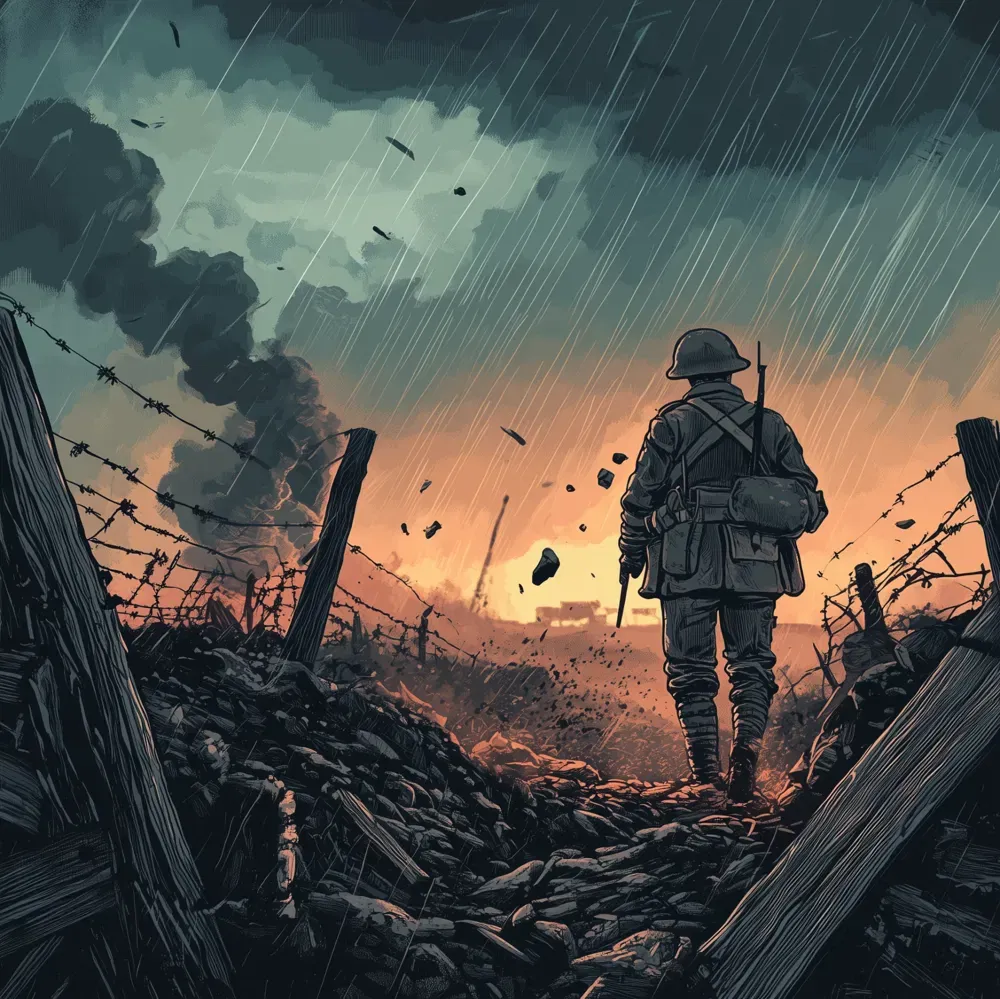 🗣️ 690💬 18.2kToken: 1267/1822
World War One Historical Fiction RPG
world war one historical fiction rpg | OCs | anypov
Welcome to this historical fiction rpg bot. The setting is during the first world war from 1914 to 1918. This bot i
- 🔞 NSFW
- 🧑🎨 OC
- 🏰 Historical
- 🪢 Scenario
- 👤 AnyPOV
- 🕊️🗡️ Dead Dove
- 💽 Music Mania
 🗣️ 14💬 39Token: 137/317
Sato and Akanji ●Your two friends.
These two idiots have been in your life since you started high school.
- 🔞 NSFW
- 👨🦰 Male
- 👩🦰 Female
- 🧑🎨 OC
- 👭 Multiple
- 🪢 Scenario
 🗣️ 216💬 5.8kToken: 881/910
Nova Academy (Superhero School)
An open-ended super school bot. I didn't find any, so, I decided to make one. Have fun, everyone! And don't forget to leave your reviews!
- 🔞 NSFW
- 👭 Multiple
- 🪢 Scenario
- 🎲 RPG
- 👤 AnyPOV
 🗣️ 13💬 89Token: 1081/1197
Project Hadal
Welcome to Project Hadal.
PROXY HIGHLY RECOMMENDED
Prologue: It is the year 2088. Earth has been partially colonized by aliens. You are a lazy, uned
- 🔞 NSFW
- 👽 Alien
- 👭 Multiple
- 🪢 Scenario
- 🎲 RPG
- 👤 AnyPOV
- ❤️🔥 Smut
- 🔦 Horror
From the same creator
 🗣️ 71💬 958Token: 1460/1654
The Circus of Wandering Shadows | roleplay
-ˋˏ ༻🎪༺ ˎˊ-
The "Circus of Wandering Shadows" is a traveling circus troupe that travels from city to city, bringing wonder and mystery. Each member of the circus has a
- 🔞 NSFW
- 👨🦰 Male
- 🧑🎨 OC
- 👭 Multiple
- 🪢 Scenario
- 🎲 RPG
- 👤 AnyPOV
 🗣️ 33💬 324Token: 643/1067
Orpheus – MYTHOLOGY
🏛🥀
He went to the Underworld for you, his love, his everything, and he will take you back to t- 🔞 NSFW
- 👨🦰 Male
- 🏰 Historical
- 💔 Angst
- ❤️🩹 Fluff
- 👩 FemPov
 🗣️ 67💬 1.1kToken: 1907/2551
James and Aren — husband and son
` — Your albino son came home bleeding from his training session, arguing with your husband, alias his step-father. ★
[TW: death, violence, blood, bullying, dif
- 🔞 NSFW
- 👨🦰 Male
- 🏰 Historical
- 👭 Multiple
- 💔 Angst
- 🕊️🗡️ Dead Dove
- 👩 FemPov
 🗣️ 201💬 1.4kToken: 236/447
William Morrison
﹙🏍✫⌒*・゚﹚
you and your biker boyfriend are exploring an abandoned building.
popular biker bf x nerdy skater gf
﹙🏍✫⌒*・
- 🔞 NSFW
- 👨🦰 Male
- 🧑🎨 OC
- ⛓️ Dominant
- 🪢 Scenario
- 👩 FemPov
 🗣️ 39💬 1.2kToken: 277/504
Beatrice
your girlfriend
🎀📜🖋
- 🔞 NSFW
- 👩🦰 Female
- 🧑🎨 OC
- 📚 Fictional
- 🙇 Submissive
- ❤️🩹 Fluff
- 👨 MalePov