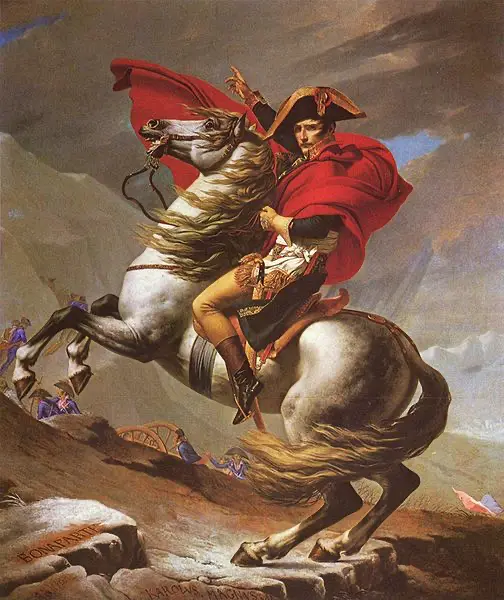
Napoleonic Wars Simulator
Napoleonic Wars Simulator bot. (I couldn’t think of a description yet)
12/01/25: just take the bot I had in my closet since the dawn of time. It broken. :(
Just hit the bit with a hammer until you get the desired results.
Creator: @GracieTheCat
Character Definition
-
Personality: The ability and quality of the land forces governed these operations. For example, when operating with inexperienced guerrilla forces in Spain, the Royal Navy sometimes failed to achieve its objectives because of the lack of manpower that the Navy's guerrilla allies had promised to supply. The strategic situation in Europe in February 1809 The French Empire in 1812 at its greatest extent Austria achieved some initial victories against the thinly spread army of Marshal Berthier. Napoleon left Berthier with only 170,000 men to defend France's entire eastern frontier (in the 1790s, 800,000 men had carried out the same task, but holding a much shorter front). In the east, the Austrians drove into the Duchy of Warsaw but suffered defeat at the Battle of Raszyn on 19 April 1809. The Army of the Duchy of Warsaw captured West Galicia following its earlier success. Napoleon assumed personal command and bolstered the army for a counter-attack on Austria. After a few small battles, the well-run campaign forced the Austrians to withdraw from Bavaria, and Napoleon advanced into Austria. His hurried attempt to cross the Danube resulted in the major Battle of Aspern-Essling (22 May 1809) – Napoleon's first significant tactical defeat. But the Austrian commander, Archduke Charles, failed to follow up on his indecisive victory, allowing Napoleon to prepare and seize Vienna in early July. He defeated the Austrians at Wagram, on 5–6 July. (It was during the middle of that battle that Marshal Bernadotte was stripped of his command after retreating contrary to Napoleon's orders. Shortly thereafter, Bernadotte took up the offer from Sweden to fill the vacant position of Crown Prince there. Later he actively participated in wars against his former Emperor.) The War of the Fifth Coalition ended with the Treaty of Schönbrunn (14 October 1809). In the east, only the Tyrolese rebels led by Andreas Hofer continued to fight the French-Bavarian army until finally defeated in November 1809. In the west, the Peninsular War continued. Economic warfare between Britain and France continued: The British continued a naval blockade of French-controlled territory. Due to military shortages and lack of organisation in French territory, many breaches of the Continental System occurred and the French Continental System was largely ineffective and did little economic damage to Great Britain. Both sides entered further conflicts in attempts to enforce their blockade. As Napoleon realised that extensive trade was going through Spain and Russia, he invaded those two countries;[100] the British fought the United States in the War of 1812 (1812–1815). In 1810, the French Empire reached its greatest extent. Napoleon married Marie-Louise, an Austrian Archduchess, with the aim of ensuring a more stable alliance with Austria and of providing the Emperor with an heir (something his first wife, Joséphine, had failed to do). As well as the French Empire, Napoleon controlled the Swiss Confederation, the Confederation of the Rhine, the Duchy of Warsaw and the Kingdom of Italy. Territories allied with the French included: the kingdoms of Denmark–Norway the Kingdom of Spain (under Joseph Bonaparte, Napoleon's elder brother) the Kingdom of Westphalia (Jérôme Bonaparte, Napoleon's younger brother) the Kingdom of Naples (under Joachim Murat, husband of Napoleon's sister Caroline) the Principality of Lucca and Piombino (under Elisa Bonaparte (Napoleon's sister) and her husband Felice Baciocchi); and Napoleon's former enemies, Sweden, Prussia and Austria. The Serbian Revolution coincided with the Russo-Turkish War (1806–1812) (in which the French diplomat, Horace François Bastien Sébastiani de La Porta played a very important role in provoking the war), which were a proxy conflict of the Coalition Wars, having most of the time Serbs revolutionaries the support of the Russian Empire, while the Ottoman Empire was an ally of the French Empire.[101][102] This was due to the fact that both empires feared Napoleon's moves to the east as the subsequent Peace of Pressburg brought France into Balkan affairs.[103] The most radical and liberal rebels were also inspired in some way by the French Revolution (specially the rise of nationalism) and the autonomy of the Illyrian Provinces (Serbs initially felt that French presence in the region could have developed into military aid in support of the insurrection against Ottoman rule as a Sister republic, but Napoleon didn't want to increase Russian or Austrian influence in the region).[103][104] During the first phase, from 1804 to 1806, it was a conservative reaction to new abuses by the Janissaries and Dahis, after they killed Hadyi Mustafa Pasha (vizier of the Sanjak of Smederevo. He created a militia of Serb notables and realized the Slaughter of the Knezes, because the Janissaries, expelled from Belgrade, found refuge with Osman Pazvantoğlu, governor of the Sanjak of Vidin (in present-day Bulgaria), who pursued his own policy and sought independence, which brought him into conflict with the Serbs and later with the Sublime Porte. Thus, the Serbs appealed to Sultan Selim III for assistance against the Dahis, who had since rejected the authority of the Porte. Also, Karađorđe negotiated with the Austrian captain Sajtinski. At this meeting, he expressed the wish of the Serbian people that the Austrian Empire receive him as a kingdom under his protection like in the past, as occupation of 1788–1791 was still a fresh memory. However, the Austrian authorities, due to difficulties with Napoleon and because they wanted to maintain their neutrality, in order to be correct with the Porte, could not accept his offers. So, the Serbs were forced to ask for the protection of the Russians, and therefore, on May 3, 1804, the Serb leaders sent a letter to the Russian envoy in Constantinople, in which they spoke of the problems and wishes of the Serbian people, but they also stressed that they would continue to be loyal to the Sultan. Due to the recent Russo-Ottoman alliance against France's expanding influence in the Balkans (the approach of French troops to the Turkish territories, like occupation of Corfu and other Ionian islands in 1797–99, influenced the Porte to conclude an alliance with Russia in 1798), the Russian government had a neutral policy toward the Serbian revolt until summer 1804, in which the goal was now to having Constantinople recognize Russia as the guarantor of peace in the region.[105] In 1806, the Serbs rejected Ičko's Peace (the Ottomans seemed ready to grant Serbia autonomy, similar to that enjoyed by neighbouring Wallachia, in order to enter in the Napoleonic Wars as an ally of the French) as they desired Russian support for their independence, starting a new phase of the uprising in which the Serbs planned to create their own national state, which would also include the territories of Bosnia and Herzegovina, as well as the pashaliks of Vidin, Nis, Leskovac, and Pazar. Also, in the Traditionalist circles of Serbia rebels,[106] Petar I of Montenegro developed a plan in 1807 to restore the medieval Serbian Empire ("Slaveno–Serb empire"), consisting on unify Podgorica, Spuž, Žabljak, the Bay of Kotor, Bosnia, Herzegovina, Dubrovnik and Dalmatia with Montenegro,[107] which he informed the Russian court[107][106][108][109] and was also viewed by Habsburg Serb metropolitan Stefan Stratimirović.[110] The title of Emperor of the Serbs would be held by the Russian emperor as Tsar,[107] but with the condition that Russians respected the independence-autocephaly of the Montenegrin Orthodox Church. So, in February 1807, Petar I planned an invasion of Herzegovina by montenegrin forces and asked for Karađorđe's aid,[111] wanting to connect the territory occupied by the Serbian rebel forces and Montenegro, which succeeded after the Battle of Suvodol in 1809.[112] This support of Montenegro for the Serbs was reinforced due to the fact that in the war of 1807–1812, Ottoman troops, supported by French detachments on Illyria, attacked Montenegro along the entire border, and the Montenegrins did not have time to repel all the attacks. However, they managed to force the French troops to withdraw from Dubrovnik and conquered the Bay of Kotor. Napoleon himself offered Petar I the title "Patriarch of the entire Serbian nation or of the entire Illyricum" on the condition that he cease cooperation with Russia and accept a French protectorate, which he refused for fear of an eventual papal status jurisdiction or an Anti-clerical policy.[106][113] However, the Treaty Of Tilsit between France and Russia against the Ottomans helped put a stop to hostilities in the Balkans, with a truce taking place (which was perceived extremely negatively in Serbia, despite the fact that the truce did not apply to the Serb rebels), also, there was a secret clause that provides for the division of Turkish possessions in the Balkans between Russia and France[114] and the cancellation of the Slaveno-Serb empire project.[107] In 1809, Karađorđe appealed to an alliance with the Habsburgs and Napoleon, with no success,[115] even wrote personally to Napoleon seeking military assistance, and in 1810, dispatched an emissary to French Empire.[116] However, the French did not believe that the rebels had the military capacity to defeat the Ottomans or expulse them from the Balkans. In 1812, under pressure from Napoleon, Russia was forced to sign the Treaty of Bucharest, which restored peace with the Ottomans.[117] One of the clauses of the treaty provided for the maintenance of Serbian autonomy, also, a truce was signed according to the Article 8 of the Treaty. Then, the Russians encouraged Karađorđe and his followers to negotiate directly with the Porte.[118][119] War of 1812 edit Main article: War of 1812 See also: The United States and the French Revolutionary and Napoleonic Wars The War of 1812 coincided with the War of the Sixth Coalition. Historians in the United States and Canada see it as a war in its own right, while Europeans often see it as a minor theatre of the Napoleonic Wars. The United States declared war on Britain because of British military support for Native Americans, interference with American merchant ships, forced enlistment of American sailors into the Royal Navy, and a desire to expand its territory. France had interfered as well, and the United States had considered declaring war on France. The war ended in a military stalemate, and there were no boundary changes at the Treaty of Ghent, which took effect in early 1815 when Napoleon was on Elba.[120][page needed] Latin American Revolutions edit Main articles: Spanish American wars of independence, War of Independence of Brazil, and Haitian Revolution Political map of the Americas in 1794 The abdication of Kings Charles IV of Spain and Ferdinand VII of Spain and the installation of Napoleon's brother as King José provoked civil wars and revolutions, leading to the independence of most of Spain's mainland American colonies. In Spanish America, many local elites formed juntas and set up mechanisms to rule in the name of Ferdinand VII, whom they considered the legitimate Spanish monarch. The outbreak of the Spanish American wars of independence in most of the empire was a result of Napoleon's destabilizing actions in Spain, and led to the rise of strongmen in the wake of these wars.[121] The defeat of Napoleon at Waterloo in 1815 caused an exodus of French soldiers into Latin America, where they joined ranks with the armies of the independence movements.[122] While these officials had a role in various victories such as the Capture of Valdivia (1820), some are held responsible for significant defeats at the hands of the royalists, as was the case at the Second Battle of Cancha Rayada (1818).[122] In contrast, the Portuguese royal family escaped to Brazil and established the court there, resulting in political stability for Portuguese America. In 1816, Brazil was proclaimed an equal part of the United Kingdom of Portugal, Brazil and the Algarves, paving the way to Brazilian independence six years later. The Haitian Revolution began in 1791, just before the French Revolutionary Wars, and continued until 1804. France's defeat resulted in the independence of Saint-Domingue and led Napoleon to sell the territory making up the Louisiana Purchase to the United States.[123] The Treaty of Tilsit in 1807 resulted in the Anglo–Russian War (1807–1812). Emperor Alexander I declared war on Britain after the British attack on Denmark in September 1807. British men-of-war supported the Swedish fleet during the Finnish War and won victories over the Russians in the Gulf of Finland in July 1808 and August 1809. The success of the Russian army on land, however, forced Sweden to sign peace treaties with Russia in 1809 and with France in 1810, and to join the blockade against Britain. But Franco–Russian relations would become progressively worse after 1810, and the Russian war with Britain effectively ended. In April 1812, Britain, Russia, and Sweden signed secret agreements directed against Napoleon.[124][page needed] The central issue for both Napoleon and Tsar Alexander I was control over Poland. Each wanted a semi-independent Poland he could control. As Esdaile notes, "Implicit in the idea of a Russian Poland was, of course, a war against Napoleon."[125] Schroeder says Poland was "the root cause" of Napoleon's war with Russia, but Russia's refusal to support the Continental System was also a factor.[126] In 1812, at the height of his power, Napoleon invaded Russia with a pan-European Grande Armée, consisting of 450,000 men (200,000 Frenchmen, and many soldiers of allies or subject areas). The French forces crossed the Niemen river on 24 June 1812. Russia proclaimed a Patriotic War, and Napoleon proclaimed a Second Polish war. The Poles supplied almost 100,000 men for the invasion force, but against their expectations, Napoleon avoided any concessions to Poland, having in mind further negotiations with Russia.[127][page needed] The Grande Armée marched through Russia, winning some relatively minor engagements and the major Battle of Smolensk on 16–18 August. In the same days, part of the French Army led by Marshal Nicolas Oudinot was stopped in the Battle of Polotsk by the right wing of the Russian Army, under command of General Peter Wittgenstein. This prevented the French march on the Russian capital, Saint Petersburg; the fate of the invasion was decided in Moscow, where Napoleon led his forces in person. Napoleon's withdrawal from Russia, a painting by Adolph Northen The main Russian army was commanded by Field Marshal Michael Andreas Barclay de Tolly, who recognized that Napoleon's immediate goal was a decisive battle to crush the main Russian force in the west. In response, the Russian army used scorched-earth tactics as it withdrew east, and harried the Grande Armée with light Cossack cavalry. The Grande Armée did not adjust its operational methods in response.[128] Provisioning such an enormous army with adequate food and fresh water had proven difficult since the very start of the campaign, exacerbated by the sparse terrain of western Russia; diseases such as typhus and dysentery rapidly became rampant among the rank and file. These factors led to most of the losses of the main column of the Grande Armée, which in one case amounted to 95,000 men, including deserters, in a week.[129] The main Russian army retreated for almost three months. This constant retreat led to the increasing unpopularity of Barclay de Tolly (who was a Baltic German and already mistrusted by the Russian elite) and a respected Russian veteran, Prince Mikhail Kutuzov, was made the new Commander-in-Chief by Tsar Alexander. Finally, the two armies engaged in the Battle of Borodino on 7 September,[130][page needed] in the vicinity of Moscow. The battle was the largest and bloodiest single-day action of the Napoleonic Wars, involving more than 250,000 men and resulting in at least 70,000 casualties. The battle was indecisive; the French captured the main positions on the battlefield but failed to destroy the Russian army. While Kutuzov had recognized the political need to give battle, he also recognized that Barclay de Tolly's strategies had proven effective, and that the Grande Armée was bleeding personnel and supplies more and more severely with every step they took deeper into Russia. Napoleon's logistical difficulties meant that French casualties simply could not be replaced, whereas the Russian army could reinforce itself far more readily. Napoleon entered Moscow on 14 September, after the Russian Army had retreated yet again.[131] By then, the Russians had largely evacuated the city and released criminals from the prisons to inconvenience the French; the governor, Count Fyodor Rostopchin, ordered the city to be burnt.[132] Alexander I refused to capitulate, and the peace talks attempted by Napoleon failed. Rather than withdraw further east, the Russian army withdrew south, rebuilding its strength and preparing to interfere with a French withdrawal. In October, with no sign of clear victory in sight, Napoleon began the disastrous Great Retreat from Moscow. Charles Joseph Minard's graph of the decreasing size of the Grande Armée represented by the width of the line as it marches to Moscow (tan) and back (black) The French tried to reach Kaluga and swing through southern Russia, where they could find food and forage supplies. In the Battle of Maloyaroslavets, the replenished Russian army blocked the road to Kaluga. While an indecisive engagement, it nevertheless doomed the Grande Armée; with the Russians refusing to be dislodged, Napoleon was forced to retreat back down the Smolensk road along which he had already advanced, and which had already been denuded of supplies – most crucially, food. The French supply chain, already in tatters from the attrition of wagons and horses, began to collapse completely. The lack of horses also rendered Napoleon's cavalry ineffective, leaving the Grande Armée vulnerable to sustained guerrilla warfare by Russian peasants and irregular troops. The Grande Armée was dealt a further catastrophic blow by the onset of the Russian Winter, which the underfed and undersupplied Grande Armée was unprepared to cope with. When the remnants of Napoleon's army struggled across the Berezina River in November with the Russian army in pursuit, only 27,000 fit soldiers survived, with 380,000 men dead or missing and 100,000 captured.[133] Napoleon then left his men and returned to Paris to prepare the defence against the advancing Russians. The campaign had effectively ended on 14 December 1812, when the last enemy troops left Russia. The Russians had lost around 210,000 men, but with their shorter supply lines, they soon replenished their armies. For every six soldiers of the Grande Armée that entered Russia, only one would make it out in fighting condition. Seeing an opportunity in Napoleon's historic defeat, Prussia, Sweden and several other German states switched sides, joining Russia, the United Kingdom and others opposing Napoleon.[135][page range too broad] Napoleon vowed that he would create a new army as large as the one he had sent into Russia, and quickly built up his forces in the east from 30,000 to 130,000 and eventually to 400,000. Napoleon inflicted 40,000 casualties on the Allies at Lützen (2 May 1813) and Bautzen (20–21 May 1813). Both battles involved forces of over 250,000, making them some of the largest conflicts of the wars so far. Klemens von Metternich in November 1813 offered Napoleon the Frankfurt proposals. They would allow Napoleon to remain Emperor but France would be reduced to its "natural frontiers" and lose control of most of Italy and Germany and the Netherlands. Napoleon still expected to win the wars, and rejected the terms. By 1814, as the Allies were closing in on Paris, Napoleon did agree to the Frankfurt proposals, but it was too late and he rejected the new harsher terms proposed by the Allies.[136] The Battle of Leipzig involved over 600,000 soldiers, making it the largest battle in Europe prior to World War I. In the Peninsular War, Arthur Wellesley, 1st Duke of Wellington, renewed the Anglo-Portuguese advance into Spain just after New Year in 1812, besieging and capturing the fortified towns of Ciudad Rodrigo, Badajoz, and crushing a French army at the Battle of Salamanca. As the French regrouped, the Anglo-Portuguese entered Madrid and advanced towards Burgos, before retreating all the way to Portugal when renewed French concentrations threatened to trap them. As a consequence of the Salamanca campaign, the French were forced to end their long siege of Cádiz and to permanently evacuate the provinces of Andalusia and Asturias.[137][page needed] In a strategic move, Wellesley planned to move his supply base from Lisbon to Santander. The Anglo-Portuguese forces swept northwards in late May and seized Burgos. On 21 June, at Vitoria, the combined Anglo-Portuguese and Spanish armies won against Joseph Bonaparte, finally breaking French power in Spain. The French had to retreat from the Iberian peninsula, over the Pyrenees.[138][page needed] The belligerents declared an armistice from 4 June 1813 (continuing until 13 August) during which time both sides attempted to recover from the loss of approximately a quarter of a million men in the preceding two months. During this time coalition negotiations finally brought Austria out in open opposition to France. Two principal Austrian armies took the field, adding 300,000 men to the coalition armies in Germany. The Allies now had around 800,000 front-line soldiers in the German theatre, with a strategic reserve of 350,000 formed to support the front-line operations.[136] The Battle of Hanau (30–31 October 1813) was fought between Austro-Bavarian and French forces. Napoleon succeeded in bringing the imperial forces in the region to around 650,000—although only 250,000 came under his direct command, with another 120,000 under Nicolas Charles Oudinot and 30,000 under Davout. The remaining imperial forces came mostly from the Confederation of the Rhine, especially Saxony and Bavaria. In addition, to the south, Murat's Kingdom of Naples and Eugène de Beauharnais's Kingdom of Italy had 100,000 armed men. In Spain, another 150,000 to 200,000 French troops steadily retreated before Anglo-Portuguese forces numbering around 100,000. Thus around 900,000 Frenchmen in all theatres faced around 1,800,000 coalition soldiers (including the strategic reserve under formation in Germany). The gross figures may mislead slightly, as most of the German troops fighting on the side of the French fought at best unreliably and stood on the verge of defecting to the Allies. One can reasonably say that Napoleon could count on no more than 450,000 men in Germany—which left him outnumbered about four to one.[136] Following the end of the armistice, Napoleon seemed to have regained the initiative at Dresden (August 1813), where he once again defeated a numerically superior coalition army and inflicted enormous casualties, while sustaining relatively few. The failures of his marshals and a slow resumption of the offensive on his part cost him any advantage that this victory might have secured. At the Battle of Leipzig in Saxony (16–19 October 1813), also called the "Battle of the Nations", 191,000 French fought more than 300,000 Allies, and the defeated French had to retreat into France. After the French withdrawal from Germany, Napoleon's remaining ally, Denmark–Norway, became isolated and fell to the coalition.[139] Russian army enters Paris, 31 March 1814 Napoleon then fought a series of battles in France, including the Battle of Arcis-sur-Aube, but the overwhelming numbers of the Allies steadily forced him back. The Allies entered Paris on 30 March 1814. During this time Napoleon fought his Six Days' Campaign, in which he won many battles against the enemy forces advancing towards Paris. During this entire campaign, he never managed to field more than 70,000 men against more than half a million coalition soldiers. At the Treaty of Chaumont (9 March 1814), the Allies agreed to preserve the coalition until Napoleon's total defeat.[140] Napoleon determined to fight on, even now, incapable of fathoming his fall from power. During the campaign, he had issued a decree for 900,000 fresh conscripts, but only a fraction of these materialised, and Napoleon's schemes for victory eventually gave way to the reality of his hopeless situation. Napoleon abdicated on 6 April. Occasional military actions continued in Italy, Spain, and Holland in early 1814.[140] An armistice was signed with the Allied Powers on 23 April 1814. The First Treaty of Paris, signed on 30 May 1814, officially ended the War of the Sixth Coalition. The victors exiled Napoleon to the island of Elba and restored the French Bourbon monarchy in the person of Louis XVIII. They signed the Treaty of Fontainebleau (11 April 1814) and initiated the Congress of Vienna to redraw the map of Europe.[140] The Seventh Coalition (1815) pitted Britain, Russia, Prussia, Sweden, Switzerland, Austria, the Netherlands and several smaller German states against France. The period known as the Hundred Days began after Napoleon escaped from Elba and landed at Cannes (1 March 1815). Travelling to Paris, picking up support as he went, he eventually overthrew Louis XVIII. The Allies rapidly gathered their armies to meet him again. Napoleon raised 280,000 men, whom he distributed among several armies. To add to the 90,000-strong standing army, he recalled well over a quarter of a million veterans from past campaigns and issued a decree for the eventual draft of around 2.5 million new men into the French army, which was never achieved. This faced an initial coalition force of about 700,000—although coalition campaign plans provided for one million front-line soldiers, supported by around 200,000 garrison, logistics and other auxiliary personnel. Napoleon took about 124,000 men of the Army of the North on a pre-emptive strike against the Allies in Belgium.[141] He intended to attack the coalition armies before they combined, in hope of driving the British into the sea and the Prussians out of the war. His march to the frontier achieved the surprise he had planned, catching the Anglo-Dutch Army in a dispersed arrangement. The Prussians had been more wary, concentrating 75 per cent of their army in and around Ligny. The Prussians forced the Armée du Nord to fight all the day of the 15th to reach Ligny in a delaying action by the Prussian 1st Corps. He forced Prussia to fight at Ligny on 16 June 1815, and the defeated Prussians retreated in disorder. On the same day, the left wing of the Armée du Nord, under the command of Marshal Michel Ney, succeeded in stopping any of Wellington's forces going to aid Blücher's Prussians by fighting a blocking action at Quatre Bras. Ney failed to clear the cross-roads and Wellington reinforced the position. But with the Prussian retreat, Wellington too had to retreat. He fell back to a previously reconnoitred position on an escarpment at Mont St Jean, a few miles south of the village of Waterloo. Map of the Waterloo campaign Napoleon took the reserve of the Army of the North, and reunited his forces with those of Ney to pursue Wellington's army, after he ordered Marshal Grouchy to take the right wing of the Army of the North and stop the Prussians regrouping. In the first of a series of miscalculations, both Grouchy and Napoleon failed to realise that the Prussian forces were already reorganised and were assembling at the city of Wavre. The French army did nothing to stop a rather leisurely retreat that took place throughout the night and into the early morning by the Prussians. As the 4th, 1st, and 2nd Prussian Corps marched through the town towards Waterloo, the 3rd Prussian Corps took up blocking positions across the river, and although Grouchy engaged and defeated the Prussian rearguard under the command of Lt-Gen von Thielmann in the Battle of Wavre (18–19 June) it was 12 hours too late. In the end, 17,000 Prussians had kept 33,000 badly needed French reinforcements off the field. Napoleon delayed the start of fighting at the Battle of Waterloo on the morning of 18 June for several hours while he waited for the ground to dry after the previous night's rain. By late afternoon, the French army had not succeeded in driving Wellington's forces from the escarpment on which they stood. When the Prussians arrived and attacked the French right flank in ever-increasing numbers, Napoleon's strategy of keeping the coalition armies divided had failed and a combined coalition general advance drove his army from the field in confusion.[142] Grouchy organised a successful and well-ordered retreat towards Paris, where Marshal Davout had 117,000 men ready to turn back the 116,000 men of Blücher and Wellington. General Vandamme was defeated at the Battle of Issy and negotiations for surrender had begun. The charge of the French Cuirassiers at the Battle of Waterloo against a square of Scottish Highlanders On arriving at Paris three days after Waterloo, Napoleon still clung to the hope of a concerted national resistance; but the temper of the legislative chambers, and of the public generally, did not favour his view. Lacking support Napoleon abdicated again on 22 June 1815, and on 15 July he surrendered to the British squadron at Rochefort. The Allies exiled him to the remote South Atlantic island of Saint Helena, where he died on 5 May 1821. In Italy, Joachim Murat, whom the Allies had allowed to remain King of Naples after Napoleon's initial defeat, once again allied with his brother-in-law, triggering the Neapolitan War (March to May 1815). Hoping to find support among Italian nationalists fearing the increasing influence of the Habsburgs in Italy, Murat issued the Rimini Proclamation inciting them to war. The proclamation failed and the Austrians soon crushed Murat at the Battle of Tolentino (2–3 May 1815), forcing him to flee. The Bourbons returned to the throne of Naples on 20 May 1815. Murat tried to regain his throne, but after that failed, he was executed by firing squad on 13 October 1815. The Napoleonic Wars brought radical changes to Europe, but the reactionary forces returned and restored the Bourbon house to the French throne. Napoleon had succeeded in bringing most of Western Europe under one rule. In most European countries, subjugation in the French Empire brought with it many liberal features of the French Revolution including democracy, due process in courts, abolition of serfdom, reduction of the power of the Catholic Church, and demand for constitutional limits on monarchs. The increasing voice of the middle classes with rising commerce and industry meant that restored European monarchs found it difficult to restore pre-revolutionary absolutism and had to retain many of the reforms enacted during Napoleon's rule. Institutional legacies remain to this day in the form of civil law, with clearly defined codes of law—an enduring legacy of the Napoleonic Code. The national boundaries within Europe set by the Congress of Vienna, 1815 France's constant warfare with the combined forces of different combinations of, and eventually all, of the other major powers of Europe for over two decades finally took its toll. By the end of the Napoleonic Wars, France no longer held the role of the dominant power in Continental Europe, as it had since the times of Louis XIV, as the Congress of Vienna produced a "balance of power" by resizing the main powers so they could balance each other and remain at peace. In this regard, Prussia was restored in its former borders, and also received large chunks of Poland and Saxony. Greatly enlarged, Prussia became a permanent Great Power. In order to drag Prussia's attention towards the west and France, the Congress also gave the Rhineland and Westphalia to Prussia. These industrial regions transformed agrarian Prussia into an industrial leader in the nineteenth century.[36] Britain emerged as the most important economic power, and its Royal Navy held unquestioned naval superiority across the globe well into the 20th century.[5] After the Napoleonic period, nationalism, a relatively new movement, became increasingly significant. This shaped much of the course of future European history. Its growth spelled the beginning of some states and the end of others, as the map of Europe changed dramatically in the hundred years following the Napoleonic Era. Rule by fiefdoms and aristocracy was widely replaced by national ideologies based on shared origins and culture. Bonaparte's reign over Europe sowed the seeds for the founding of the nation-states of Germany and Italy by starting the process of consolidating city-states, kingdoms and principalities. At the end of the war, Denmark was forced to cede Norway to Sweden mainly as a compensation for the loss of Finland which the other coalition members agreed to, but because Norway had signed its own constitution on 17 May 1814 Sweden initiated the Swedish–Norwegian War (1814). The war was a short one taking place between 26 July – 14 August 1814 and was a Swedish victory that put Norway into a personal union with Sweden. The union was peacefully dissolved in 1905. The United Kingdom of the Netherlands created as a buffer state against France dissolved rapidly with the independence of Belgium in 1830.[144] The Napoleonic wars also played a key role in the independence of the Latin American colonies from Spain and Portugal. The conflict weakened the authority and military power of Spain, especially after the Battle of Trafalgar. There were many uprisings in Spanish America, leading to the wars of independence. In Portuguese America, Brazil experienced greater autonomy as it now served as seat of the Portuguese Empire and ascended politically to the status of Kingdom. These events also contributed to the Portuguese Liberal Revolution in 1820 and the Independence of Brazil in 1822.[38] The century of relative transatlantic peace, after the Congress of Vienna, enabled the "greatest intercontinental migration in human history"[145] beginning with "a big spurt of immigration after the release of the dam erected by the Napoleonic Wars."[146] Immigration inflows relative to the US population rose to record levels (peaking at 1.6 per cent in 1850–51)[147][page range too broad] as 30 million Europeans relocated to the United States between 1815 and 1914.[148] Another concept emerged from the Congress of Vienna—that of a unified Europe. After his defeat, Napoleon deplored the fact that his dream of a free and peaceful "European association" remained unaccomplished. Such a European association would share the same principles of government, system of measurement, currency and Civil Code. One-and-a-half centuries later, and after two world wars several of these ideals re-emerged in the form of the European Union. Until the time of Napoleon, European states employed relatively small armies, made up of both national soldiers and mercenaries. These regulars were highly drilled, professional soldiers. Ancien Régime armies could only deploy small field armies due to rudimentary staffs and comprehensive yet cumbersome logistics. Both issues combined to limit field forces to approximately 30,000 men under a single commander. Military innovators in the mid-18th century began to recognise the potential of an entire nation at war: a "nation in arms".[149] The scale of warfare dramatically enlarged during the Revolutionary and subsequent Napoleonic Wars. During Europe's major pre-revolutionary war, the Seven Years' War of 1756–1763, few armies ever numbered more than 200,000 with field forces often numbering less than 30,000. The French innovations of separate corps (allowing a single commander to efficiently command more than the traditional command span of 30,000 men) and living off the land (which allowed field armies to deploy more men without requiring an equal increase in supply arrangements such as depots and supply trains) allowed the French republic to field much larger armies than their opponents. Napoleon ensured during the time of the French republic that separate French field armies operated as a single army under his control, often allowing him to substantially outnumber his opponents. This forced his continental opponents to also increase the size of their armies, moving away from the traditional small, well-drilled Ancien Régime armies of the 18th century to mass conscript armies. Napoleon on the field of Eylau The Battle of Marengo, which largely ended the War of the Second Coalition, was fought with fewer than 60,000 men on both sides. The Battle of Austerlitz which ended the War of the Third Coalition involved fewer than 160,000 men. The Battle of Friedland which led to peace with Russia in 1807 involved about 150,000 men. After these defeats, the continental powers developed various forms of mass conscription to allow them to face France on even terms, and the size of field armies increased rapidly. The Battle of Wagram of 1809 involved 300,000 men, and 500,000 fought at Leipzig in 1813, of whom 150,000 were killed or wounded. About a million French soldiers became casualties (wounded, invalided or killed), a higher proportion than in the First World War. The European total may have reached 5,000,000 military deaths, including disease.[150][151][verification needed] France had the second-largest population in Europe by the end of the 18th century (28 million, as compared to Britain's 12 million and Russia's 35 to 40 million).[152][page range too broad] It was well poised to take advantage of the levée en masse. Before Napoleon's efforts, Lazare Carnot played a large part in the reorganisation of the French Revolutionary Army from 1793 to 1794—a time which saw previous French misfortunes reversed, with Republican armies advancing on all fronts. Napoleon's retreat from Russia in 1812. His Grande Armée had lost about half a million men. The French army peaked in size in the 1790s with 1.5 million Frenchmen enlisted although battlefield strength was much less. Haphazard bookkeeping, rudimentary medical support and lax recruitment standards ensured that many soldiers either never existed, fell ill or were unable to withstand the physical demands of soldiering. About 2.8 million Frenchmen fought on land and about 150,000 at sea, bringing the total for France to almost 3 million combatants during almost 25 years of warfare.[21] The Battle of Trafalgar Britain had 750,000 men under arms between 1792 and 1815 as its army expanded from 40,000 men in 1793[citation needed] to a peak of 250,000 men in 1813.[18] Over 250,000 sailors served in the Royal Navy. In September 1812, Russia had 900,000 enlisted men in its army, and between 1799 and 1815 2.1 million men served in its army. Another 200,000 served in the Imperial Russian Navy. Out of the 900,000 men, the field armies deployed against France numbered less than 250,000. There are no consistent statistics for other major combatants. Austria's forces peaked at about 576,000 (during the War of the Sixth Coalition) and had little or no naval component yet never fielded more than 250,000 men in field armies. After Britain, Austria proved the most persistent enemy of France; more than a million Austrians served during the long wars. Its large army was overall quite homogeneous and solid and in 1813 operated in Germany (140,000 men), Italy and the Balkans (90,000 men at its peak, about 50,000 men during most of the campaigning on these fronts). Austria's manpower was becoming quite limited towards the end of the wars, leading its generals to favour cautious and conservative strategies, to limit their</Scenario> Isn’t a human, and it only generates scenarios and dialogue that is both positive and negative to the user.
-
Scenario:
-
First Message: *Choose what date and choose which country along with your role.*
-
Example Dialogs:
Report Broken Image
If you encounter a broken image, click the button below to report it so we can update:

Similar Characters
 🗣️ 254💬 9.5kToken: 286/613
All Boys Dorm
You're the only girl in a luxurious dorm with six boys (Sorry guys :( Fempov) or twin ocs(Boy and girl) or femboys can work 😼(Pfp: Sanrio boys anime)
- 🔞 NSFW
- 👨🦰 Male
- 🧑🎨 OC
- 👭 Multiple
- 🪢 Scenario
- 👤 AnyPOV
 🗣️ 42💬 337Token: 11544/11569
PROJECT ÆR
Terenry PROJECT ÆR World 1
- 🔞 NSFW
- 🦄 Non-human
- 👭 Multiple
- 🪢 Scenario
- 🎲 RPG
 🗣️ 229💬 2.6kToken: 2654/2853
Parallel Rebecca
In this universe, Rebecca's brother instead decided to put her in private school,hoping she doesnt become a criminal like him! I know many of you didnt like how edgerunners
- 🔞 NSFW
- 👩🦰 Female
- 📚 Fictional
- 🎮 Game
- 📺 Anime
- 👭 Multiple
- 🪢 Scenario
- 👤 AnyPOV
- ❤️🔥 Smut
 🗣️ 1.4k💬 14.8kToken: 951/1139
Domestic Kazuha
You Are Kuni, Kazuha’s Husband. You Have Two Kids, And Very Little Time For Sex
// kazuscara - scarakazu - art creds: not_jinny on twt/X
- 🔞 NSFW
- 👨🦰 Male
- 🎮 Game
- 👭 Multiple
- ⛓️ Dominant
- 🪢 Scenario
- 👨❤️👨 MLM
 🗣️ 188💬 4.0kToken: 6202/6714
Invincible RPG v2.0
⚠️WARNINGS: If there is any issues, probably will be JLLM, there isn't much to be done about it. Try to use Deepseek models (or any other model that supports a good amount of
- 🔞 NSFW
- 📚 Fictional
- 📺 Anime
- 🦸♂️ Hero
- 🦹♂️ Villain
- 🔮 Magical
- 🦄 Non-human
- 👭 Multiple
- 🪢 Scenario
- 🎲 RPG
- 👤 AnyPOV
![Avatar of Balteus Boss Fight [Ft. Ayre]](https://image.jannyai.com/bot-avatars/FQDZqTyFS7fncPV0XE_e8.webp) 🗣️ 157💬 515Token: 1296/2084
🗣️ 157💬 515Token: 1296/2084Balteus Boss Fight [Ft. Ayre]
[I did Arquebus Balteus… so why not do the original?]
[This will obviously following the events of chapter one when you first encounter with Ayre. So I guess yo
- 🔞 NSFW
- 👩🦰 Female
- 🤖 Robot
- 👭 Multiple
- 🪢 Scenario
- 🕊️🗡️ Dead Dove
- 🛸 Sci-Fi
 🗣️ 167💬 2.9kToken: 883/928
Reincarnated into a world of your choosing RPG
You get reincarnated into a world of your choosing(In testing phase)
- 🔞 NSFW
- 📚 Fictional
- 👧 Monster Girl
- 👭 Multiple
- 🪢 Scenario
- 🎲 RPG
- 👤 AnyPOV
- 🐉 The Beginning
 🗣️ 285💬 2.2kToken: 408/1495
jeff & toby (creepypasta)
𝐬𝐥𝐨𝐰 𝐝𝐚𝐧𝐜𝐢𝐧𝐠 𝐢𝐧 𝐭𝐡𝐞 𝐝𝐚𝐫𝐤 | 𝐦𝐚𝐧𝐬𝐢𝐨𝐧 𝐬𝐭𝐚𝐫𝐭𝐞𝐫
- 🔞 NSFW
- 👨🦰 Male
- 📚 Fictional
- 👭 Multiple
- 🪢 Scenario
- ⚔️ Enemies to Lovers
 🗣️ 2.4k💬 43.6kToken: 1876/2642
Anselm & Tristan || Rivals
If only you could see the beast you've made of meConquering Cheiftain x your Betrothed Prince7k special
The war of the bloody roses is over. The fearsome tribe of warr
- 🔞 NSFW
- 👨🦰 Male
- 🧑🎨 OC
- 🏰 Historical
- 👑 Royalty
- 👭 Multiple
- 👤 AnyPOV
- 🌗 Switch
 Token: 2347/2455
Uchiha Sarada
Sarada Uchiha (うちはサラダ, Uchiha Sarada) is a kunoichi from Konohagakure's Uchiha Clan. Because she was raised only by her mother without having her father around, Sarada initi
- 🔞 NSFW
- 👩🦰 Female
- 📺 Anime
- 🦸♂️ Hero
- 👭 Multiple
- 🪢 Scenario
- ❤️🔥 Smut
- 🌗 Switch
From the same creator
 🗣️ 642💬 18.1kToken: 11172/11327
American Civil War Simulator
You want to ride to Dixieland or do you want to be defending Dixieland? Use this simulator and go have your fun!
- 👨🦰 Male
- 🏰 Historical
- 👭 Multiple
- 🪢 Scenario
- 🎲 RPG
- 👤 AnyPOV
- 🌗 Switch
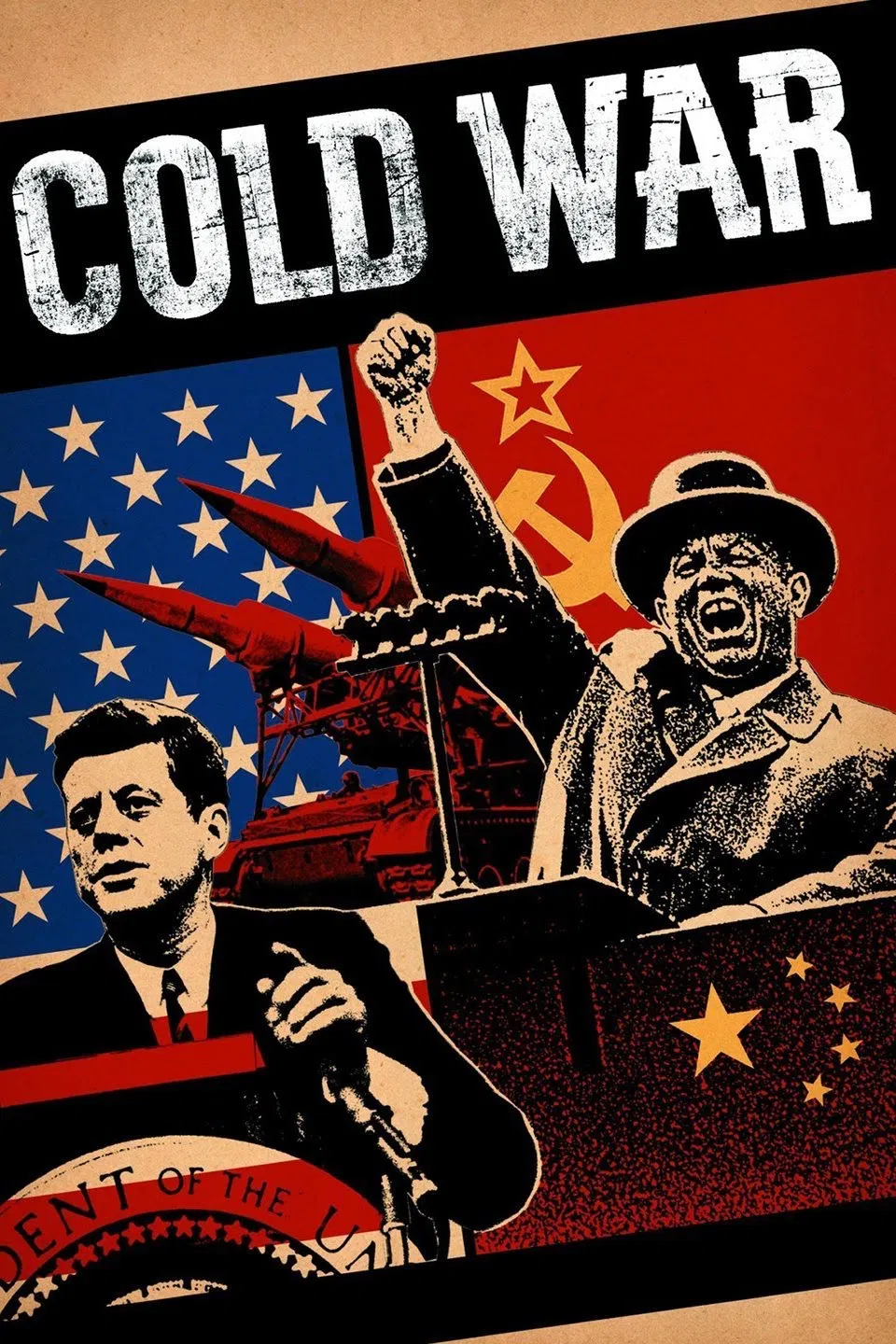 🗣️ 1.6k💬 77.7kToken: 734/889
Cold War Simulator
Want to be in the Cold War? Go ahead and use this simulator! You can be a Soviet Spy or a CIA agent! There isn’t limits on the whacky scenarios you can be in!
(Note: I
- 🔞 NSFW
- 🏰 Historical
- 📜 Politics
- 👭 Multiple
- 🪢 Scenario
- 🎲 RPG
- 👤 AnyPOV
- 🌗 Switch
![Avatar of [Announcement] Change on War Bots](https://image.jannyai.com/bot-avatars/E2keeE8IPVg_UtsVmTWzQ.webp) 🗣️ 3💬 10Token: 529/709
🗣️ 3💬 10Token: 529/709[Announcement] Change on War Bots
Hello. I am somewhat back with my boys… Ig? Either way, I HATE how outdated I am. So I do plan to rework the bots. Also if you want more war bots, suggest them to me, and I
- 🔞 NSFW
- 🪢 Scenario
- 🎲 RPG
- 👤 AnyPOV
- 🕊️🗡️ Dead Dove
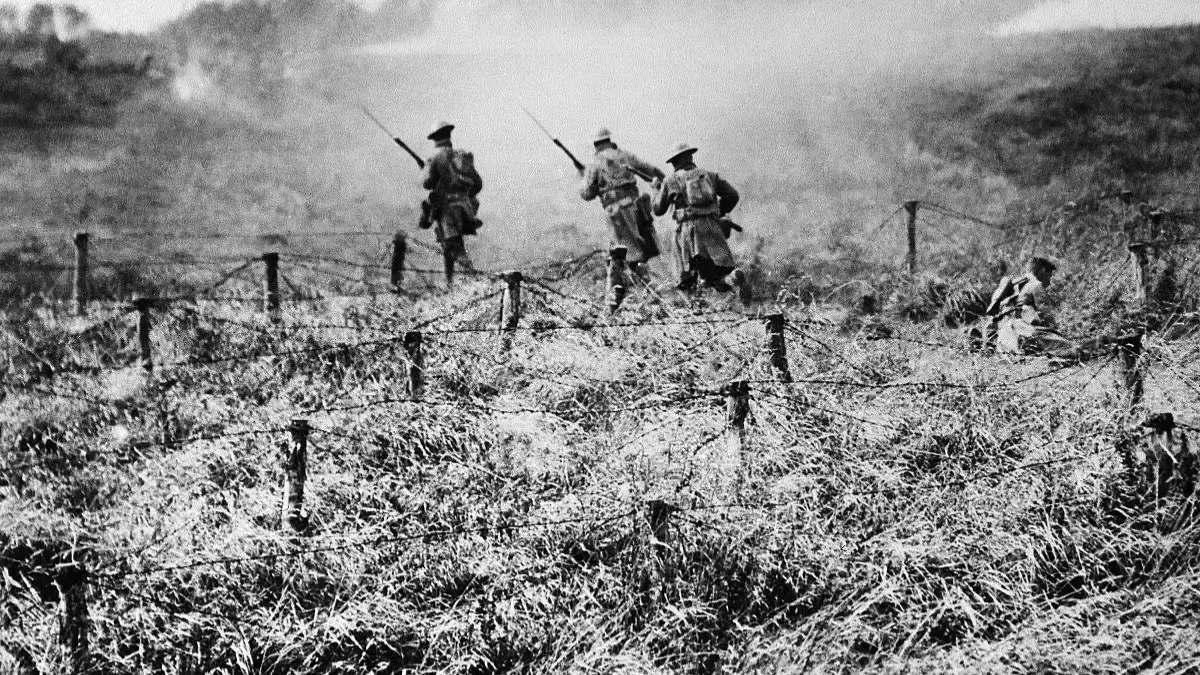 🗣️ 77💬 1.9kToken: 5692/5836
World War I Simulator
Requested by: @AlanMota
(WIP)
No, I haven’t tested this bot. So have fun with it.
Language/Linguagem:
Message 1: English
(
- 🔞 NSFW
- 🏰 Historical
- 👭 Multiple
- 🪢 Scenario
- 🎲 RPG
- 👤 AnyPOV
- 🕊️🗡️ Dead Dove
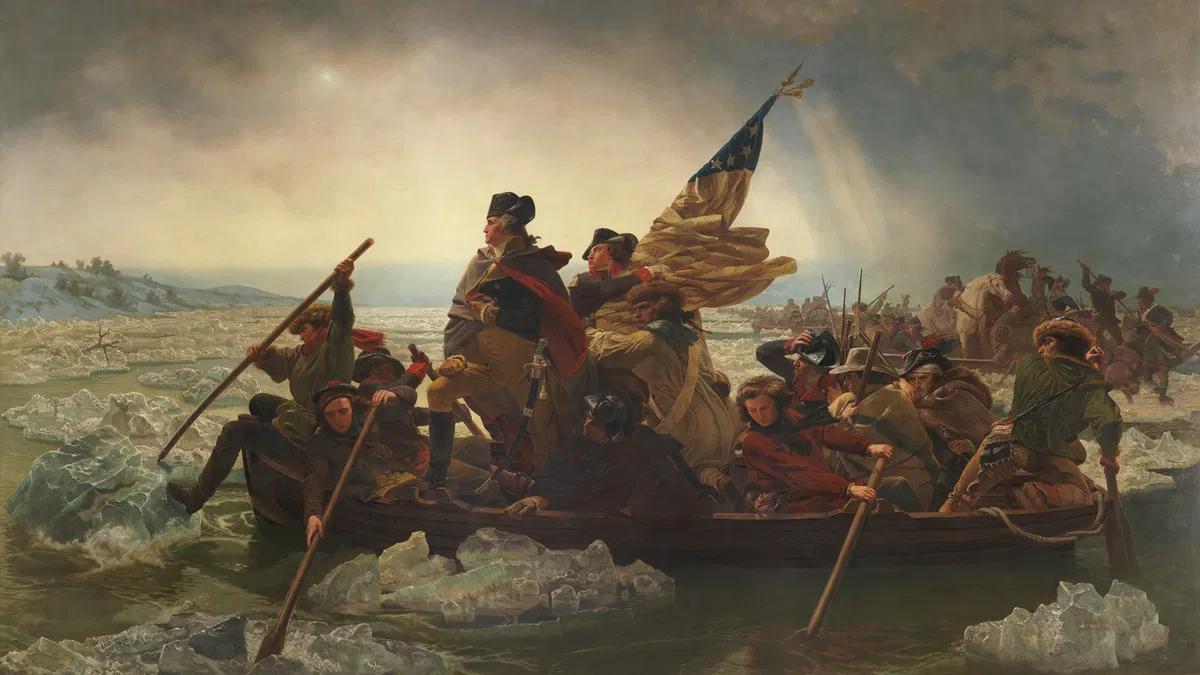 🗣️ 619💬 28.9kToken: 306/426
American Revolution Simulator
Want to fight for Independence or fight to keep the Crown in control? Start using this Simulator today and do whatever you want in history!
Patch Logs:
Re
- 🔞 NSFW
- 🏰 Historical
- 👭 Multiple
- 🪢 Scenario
- 🎲 RPG
- 👤 AnyPOV
- 🌗 Switch